Partners Neurology, Massachusetts General Hospital, Brigham and Women's Hospital, Harvard Medical School, Boston, Massachusetts 02114, USA.
Biol Psychiatry. 2012 Oct 1;72(7):595-603. doi: 10.1016/j.biopsych.2012.04.028. Epub 2012 Jun 1.
Transcranial magnetic stimulation (TMS) to the left dorsolateral prefrontal cortex (DLPFC) is used clinically for the treatment of depression. However, the antidepressant mechanism remains unknown and its therapeutic efficacy remains limited. Recent data suggest that some left DLPFC targets are more effective than others; however, the reasons for this heterogeneity and how to capitalize on this information remain unclear.
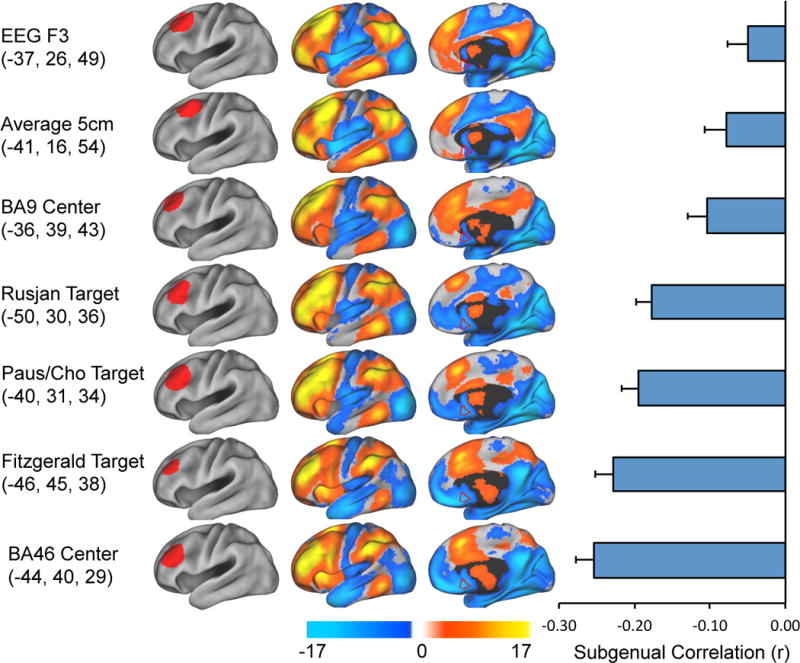
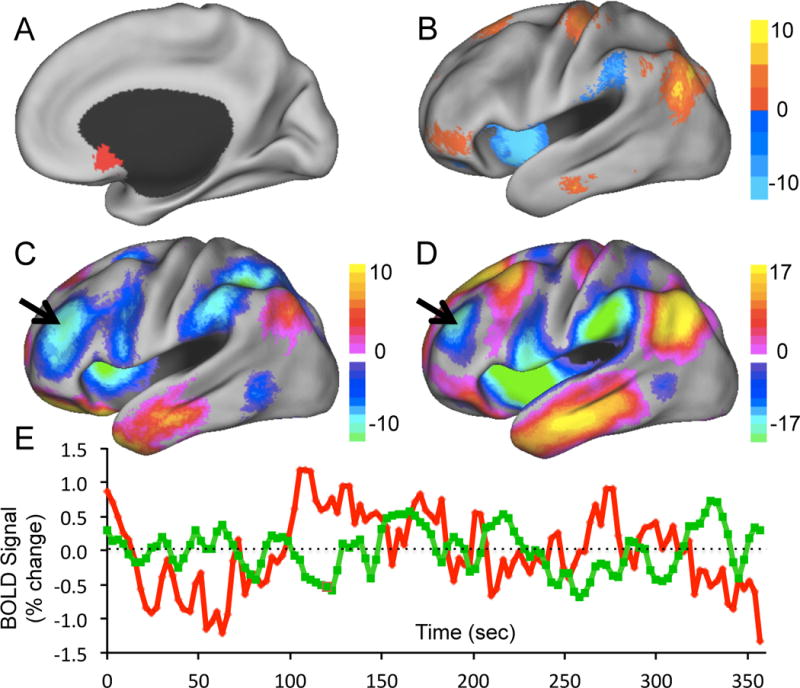
Intrinsic (resting state) functional magnetic resonance imaging data from 98 normal subjects were used to compute functional connectivity with various left DLPFC TMS targets employed in the literature. Differences in functional connectivity related to differences in previously reported clinical efficacy were identified. This information was translated into a connectivity-based targeting strategy to identify optimized left DLPFC TMS coordinates. Results in normal subjects were tested for reproducibility in an independent cohort of 13 patients with depression.
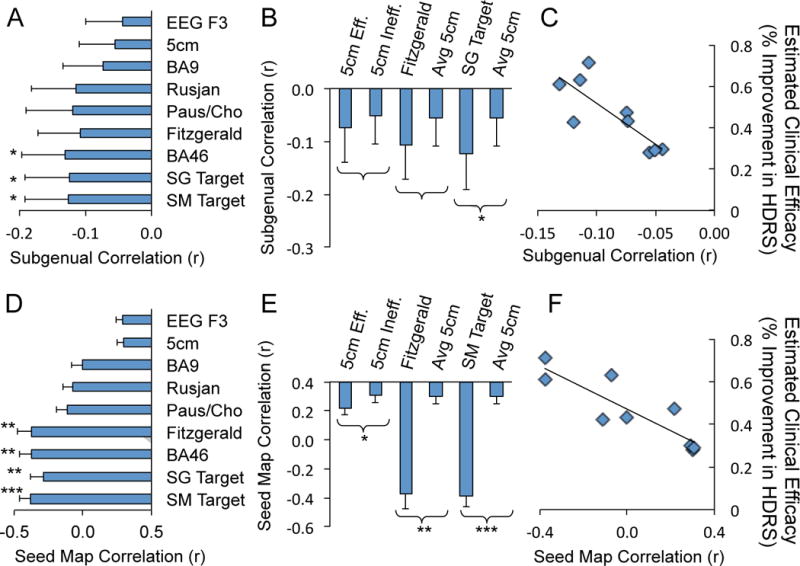
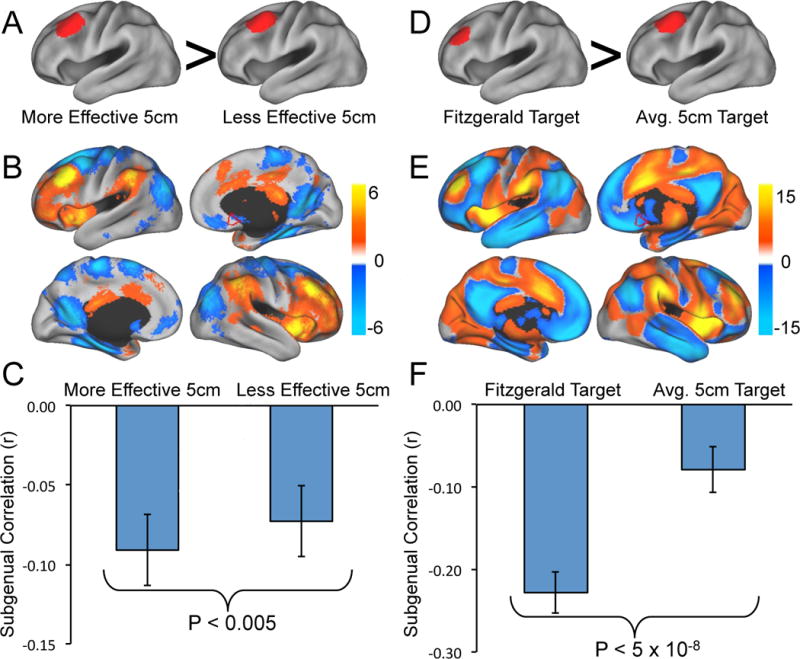
Differences in functional connectivity were related to previously reported differences in clinical efficacy across a distributed set of cortical and limbic regions. Dorsolateral prefrontal cortex TMS sites with better clinical efficacy were more negatively correlated (anticorrelated) with the subgenual cingulate. Optimum connectivity-based stimulation coordinates were identified in Brodmann area 46. Results were reproducible in patients with depression.
Reported antidepressant efficacy of different left DLPFC TMS sites is related to the anticorrelation of each site with the subgenual cingulate, potentially lending insight into the antidepressant mechanism of TMS and suggesting a role for intrinsically anticorrelated networks in depression. These results can be translated into a connectivity-based targeting strategy for focal brain stimulation that might be used to optimize clinical response.
经颅磁刺激(TMS)作用于左侧背外侧前额叶皮层(DLPFC)被用于临床治疗抑郁症。然而,其抗抑郁机制仍不清楚,治疗效果也有限。最近的数据表明,一些左侧 DLPFC 的靶点比其他靶点更有效;然而,造成这种异质性的原因以及如何利用这些信息仍不清楚。
利用 98 名正常受试者的静息态功能磁共振成像数据,计算了与文献中使用的各种左侧 DLPFC TMS 靶点的功能连接。确定了与先前报道的临床疗效差异相关的功能连接差异。将这些信息转化为基于连接的靶向策略,以确定优化的左侧 DLPFC TMS 坐标。在 13 名抑郁症患者的独立队列中测试了正常受试者的结果的可重复性。
功能连接的差异与先前报道的不同临床疗效相关,涉及皮质和边缘区域的分布式集合。临床疗效较好的背外侧前额叶皮层 TMS 部位与扣带回亚区的负相关性(反相关性)更强。在布罗德曼区 46 确定了最佳的基于连接的刺激坐标。结果在抑郁症患者中具有可重复性。
不同左侧 DLPFC TMS 部位的抗抑郁疗效与每个部位与扣带回亚区的反相关性有关,这可能为 TMS 的抗抑郁机制提供了一些见解,并提示内在反相关网络在抑郁症中的作用。这些结果可以转化为基于连接的靶向策略,用于优化临床反应的局灶性脑刺激。