Division of Child, Adolescent & Family Psychiatry, University of Louisville School of Medicine, Bingham Clinic, 200 East Chestnut Street, Louisville, KY, 40202, USA.
Pediatr Rheumatol Online J. 2012 Jun 7;10(1):15. doi: 10.1186/1546-0096-10-15.
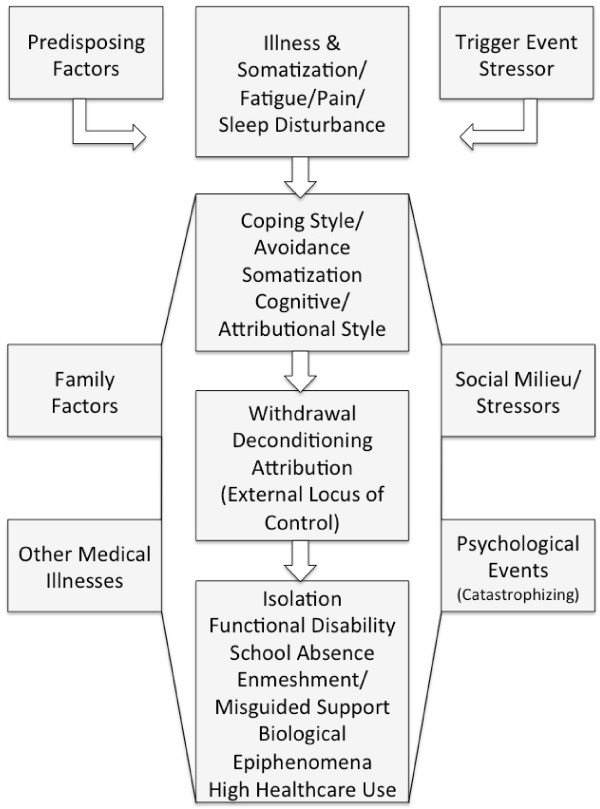
Chronic pain in children and adolescents is associated with major disruption to developmental experiences crucial to personal adjustment, quality of life, academic, vocational and social success. Caring for these patients involves understanding cognitive, affective, social and family dynamic factors associated with persistent pain syndromes. Evaluation and treatment necessitate a comprehensive multimodal approach including psychological and behavioral interventions that maximize return to more developmentally appropriate physical, academic and social activities. This article will provide an overview of major psychosocial factors impacting on pediatric pain and disability, propose an explanatory model for conceptualizing the development and maintenance of pain and functional disability in medically difficult-to-explain pain syndromes, and review representative evidence-based cognitive behavioral and systemic treatment approaches for improving functioning in this pediatric population.
儿童和青少年的慢性疼痛与发育经历的重大中断有关,这些经历对个人适应、生活质量、学业、职业和社会成功至关重要。照顾这些患者需要了解与持续疼痛综合征相关的认知、情感、社会和家庭动态因素。评估和治疗需要采用包括心理和行为干预在内的综合多模式方法,最大限度地恢复更适合发展的身体、学业和社会活动。本文将概述影响儿科疼痛和残疾的主要心理社会因素,提出一个解释模型,用于概念化医学上难以解释的疼痛综合征中疼痛和功能障碍的发展和维持,并回顾代表性的循证认知行为和系统治疗方法,以改善这一儿科人群的功能。