NorLux, Neuro-Oncology Laboratory, Department of Biomedicine, University of Bergen, Bergen, Norway.
Neuro Oncol. 2012 Aug;14(8):979-93. doi: 10.1093/neuonc/nos135. Epub 2012 Jun 7.
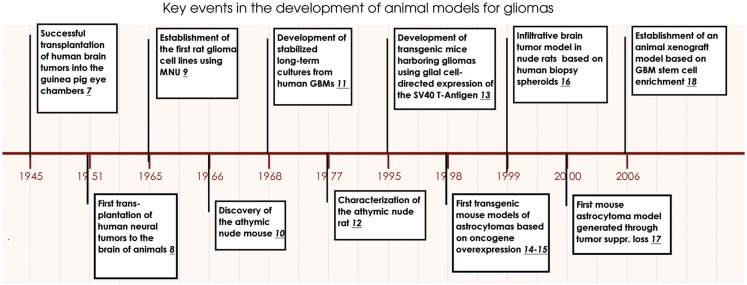
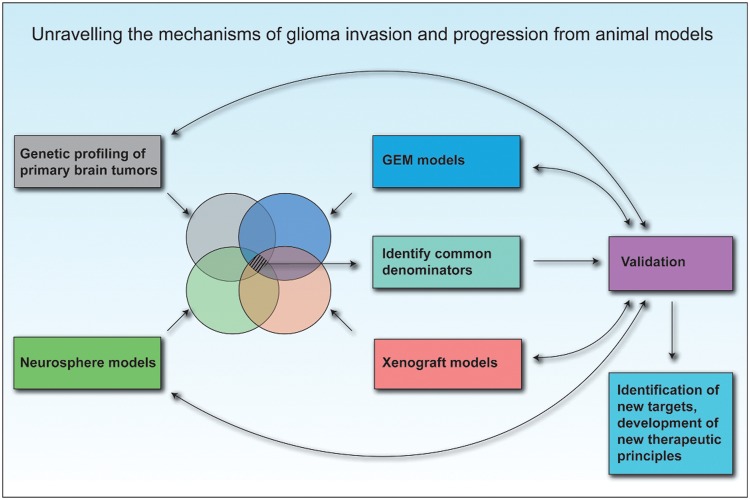
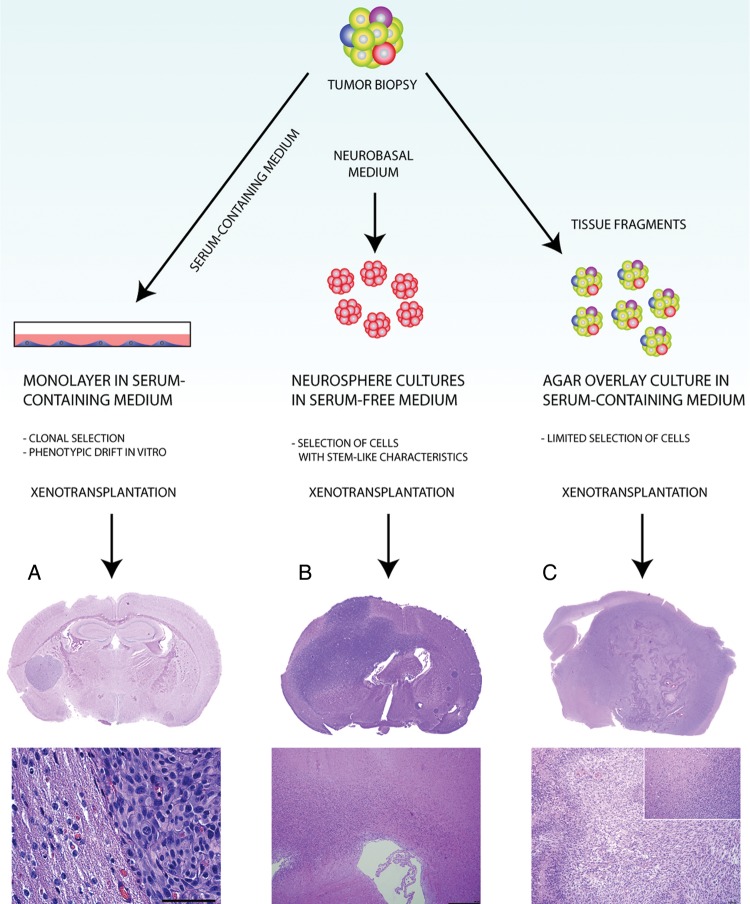
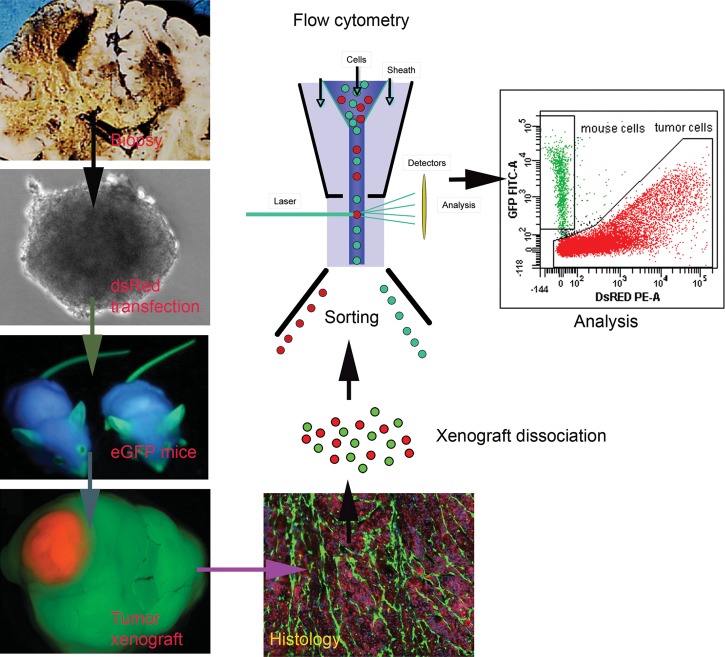
Animal modeling for primary brain tumors has undergone constant development over the last 60 years, and significant improvements have been made recently with the establishment of highly invasive glioblastoma models. In this review we discuss the advantages and pitfalls of model development, focusing on chemically induced models, various xenogeneic grafts of human cell lines, including stem cell-like cell lines and biopsy spheroids. We then discuss the development of numerous genetically engineered models available to study mechanisms of tumor initiation and progression. At present it is clear that none of the current animal models fully reflects human gliomas. Yet, the various model systems have provided important insight into specific mechanisms of tumor development. In particular, it is anticipated that a combined comprehensive knowledge of the various models currently available will provide important new knowledge on target identification and the validation and development of new therapeutic strategies.
原发性脑肿瘤的动物模型在过去 60 年中不断发展,最近随着高度侵袭性神经胶质瘤模型的建立取得了重大进展。在这篇综述中,我们讨论了模型开发的优缺点,重点介绍了化学诱导模型、各种异种移植的人类细胞系,包括类干细胞细胞系和活检球体。然后,我们讨论了目前可用于研究肿瘤起始和进展机制的多种基因工程模型的发展。目前很明显,目前没有一种动物模型能完全反映人类的神经胶质瘤。然而,各种模型系统为肿瘤发展的特定机制提供了重要的见解。特别是,预计目前可用的各种模型的综合知识将为目标鉴定以及新的治疗策略的验证和开发提供重要的新知识。