Avian Research Centre, Faculty of Land and Food Systems, The University of British Columbia, Vancouver, BC, Canada.
Genet Sel Evol. 2012 Jun 8;44(1):20. doi: 10.1186/1297-9686-44-20.
Two atherosclerosis-susceptible and -resistant Japanese quail (Coturnix japonica) strains obtained by divergent selection are commonly used as models to study atherosclerosis, but no genetic characterization of their phenotypic differences has been reported so far. Our objective was to examine possible differences in the expression of genes involved in cholesterol metabolism and transport in the liver between these two strains and to evaluate the value of this model to analyze the gene system affecting cholesterol metabolism and transport.
A factorial study with both strains (atherosclerosis-susceptible versus atherosclerosis-resistant) and two diets (control versus cholesterol) was carried out. The mRNA concentrations of four genes involved in cholesterol biosynthesis (HMGCR, FDFT1, SQLE and DHCR7) and three genes in cholesterol transport (ABCG5, ABCG8 and APOA1) were assayed using real-time quantitative PCR. Plasma lipids were also assayed.
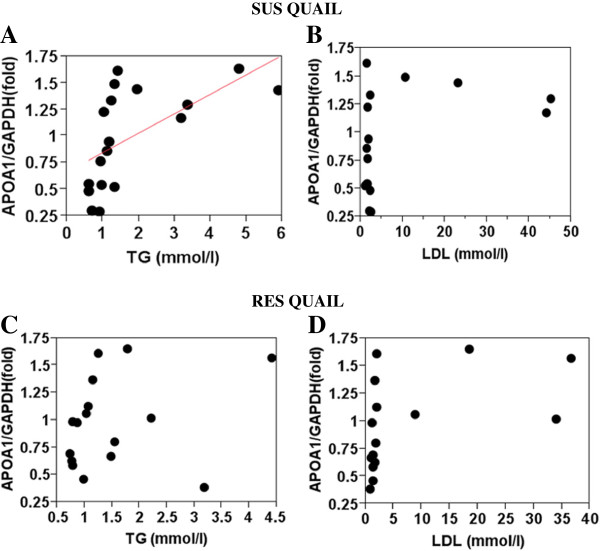
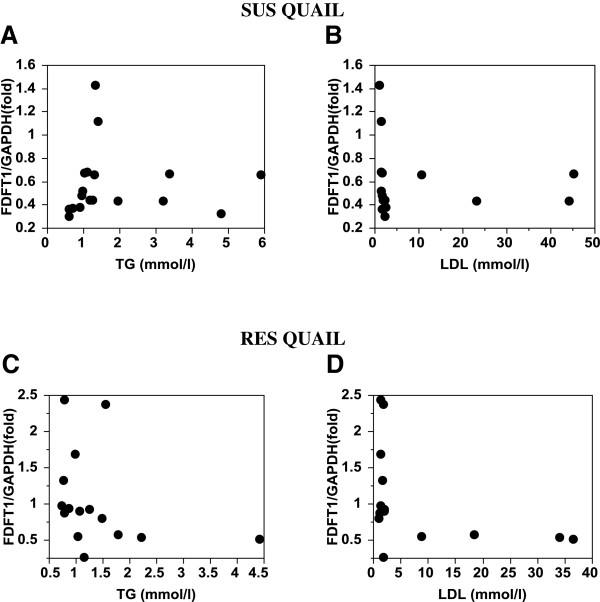
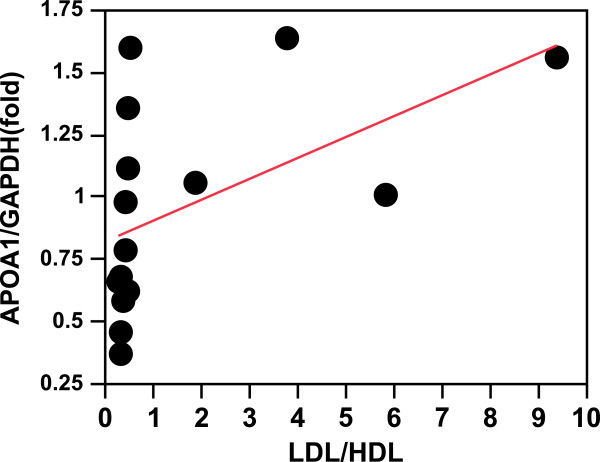
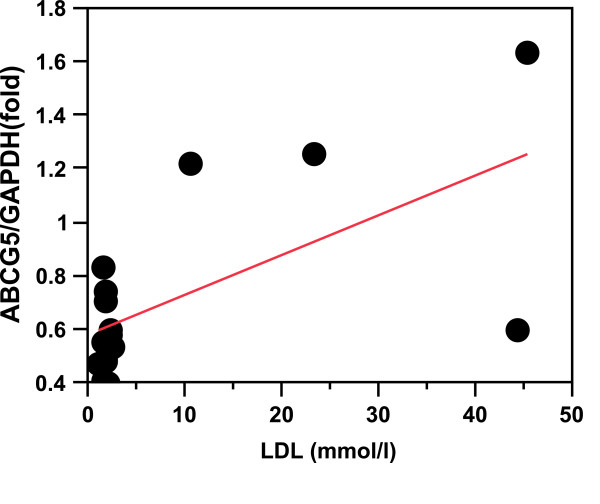
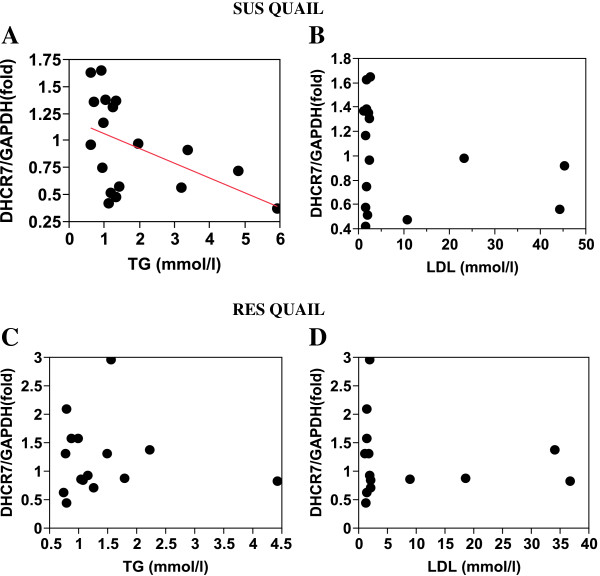
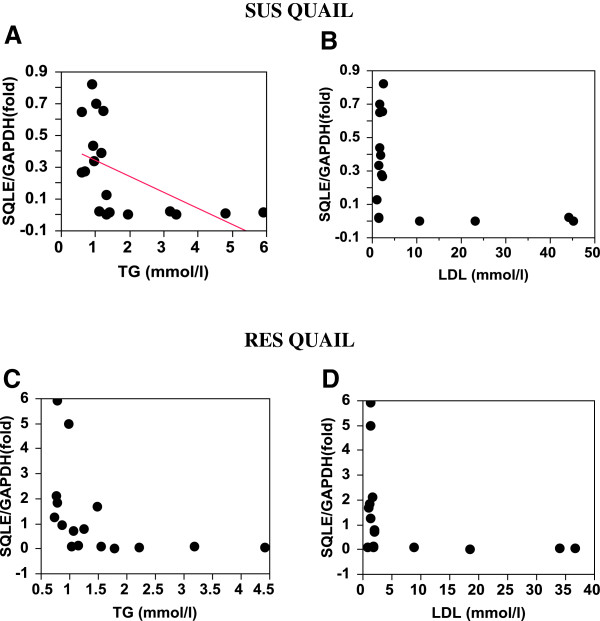
Expression of ABCG5 (control diet) and ABCG8 (regardless of dietary treatment) and expression of HMGCR, FDFT1 and SQLE (regardless of dietary treatment) were significantly higher in the atherosclerosis-resistant than in the atherosclerosis-susceptible strain. Plasma triglyceride and LDL levels, and LDL/HDL ratio were significantly higher in the atherosclerosis-susceptible than in the atherosclerosis-resistant strain fed the cholesterol diet. In the atherosclerosis-susceptible strain, ABCG5 expression regressed significantly and positively on plasma LDL level, whereas DHCR7 and SQLE expression regressed significantly and negatively on plasma triglyceride level.
Our results provide support for the hypothesis that the atherosclerosis-resistant strain metabolizes and excretes cholesterol faster than the atherosclerosis-susceptible strain. We have also demonstrated that these quail strains are a useful model to study cholesterol metabolism and transport in relation with atherosclerosis.
两种通过分歧选择获得的易患和抗动脉粥样硬化的日本鹌鹑(Coturnix japonica)品系常用于动脉粥样硬化的研究模型,但迄今为止尚未报道其表型差异的遗传特征。我们的目的是研究这两个品系之间肝脏中胆固醇代谢和转运相关基因表达的可能差异,并评估该模型分析影响胆固醇代谢和转运的基因系统的价值。
采用因子设计,在两个品系(易患动脉粥样硬化与抗动脉粥样硬化)和两种饮食(对照与胆固醇)之间进行研究。使用实时定量 PCR 测定了胆固醇生物合成的四个基因(HMGCR、FDFT1、SQLE 和 DHCR7)和胆固醇转运的三个基因(ABCG5、ABCG8 和 APOA1)的 mRNA 浓度。还测定了血浆脂质。
在抗动脉粥样硬化品系中,ABCG5(对照饮食)和 ABCG8(无论饮食处理如何)以及 HMGCR、FDFT1 和 SQLE(无论饮食处理如何)的表达显著高于易患动脉粥样硬化品系。在喂胆固醇饮食的易患动脉粥样硬化品系中,血浆甘油三酯和 LDL 水平以及 LDL/HDL 比值显著高于抗动脉粥样硬化品系。在易患动脉粥样硬化品系中,ABCG5 的表达与血浆 LDL 水平呈显著正相关,而 DHCR7 和 SQLE 的表达与血浆甘油三酯水平呈显著负相关。
我们的结果支持这样一种假设,即抗动脉粥样硬化品系比易患动脉粥样硬化品系更快地代谢和排泄胆固醇。我们还证明,这些鹌鹑品系是研究与动脉粥样硬化相关的胆固醇代谢和转运的有用模型。