The State Key Laboratory of Animal Nutrition, Institute of Animal Sciences, Chinese Academy of Agricultural Sciences, Beijing, China.
Avian Research Centre, Faculty of Land and Food Systems, University of British Columbia, Vancouver, British Columbia, Canada.
Sci Rep. 2018 Feb 5;8(1):2381. doi: 10.1038/s41598-018-20508-9.
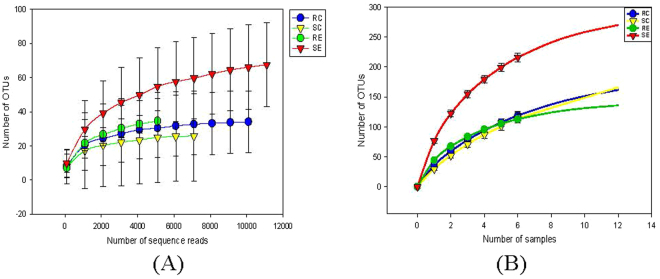
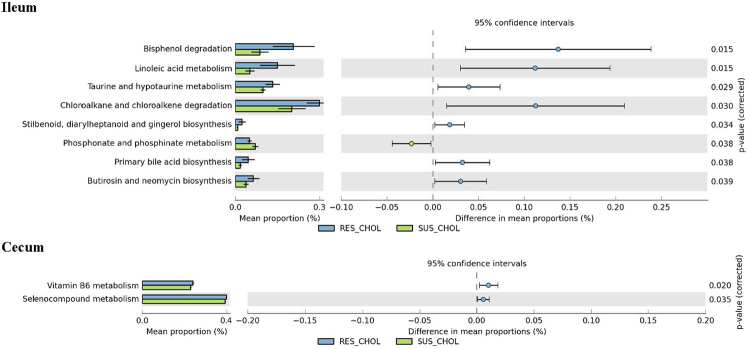
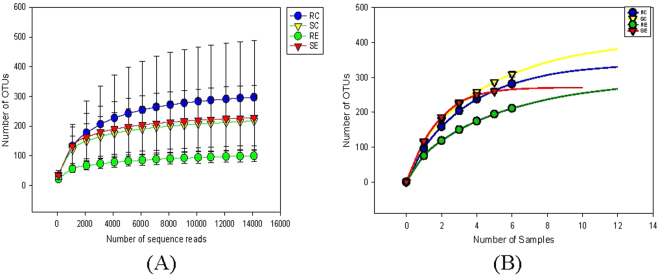
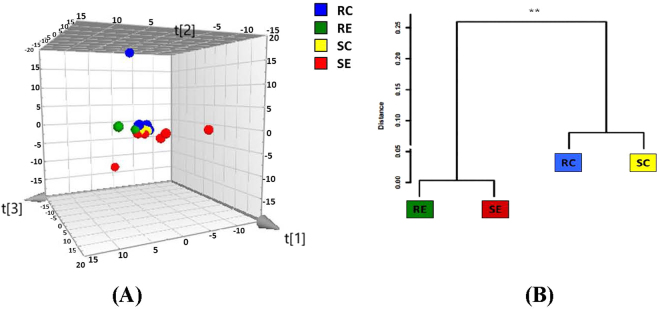
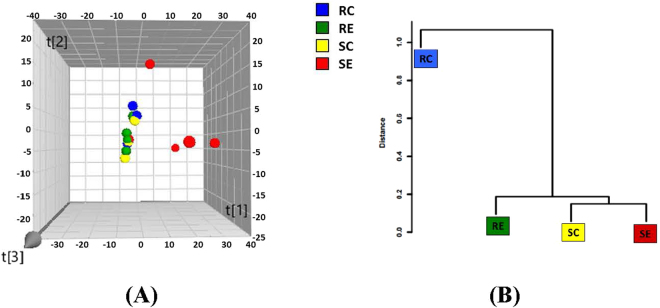
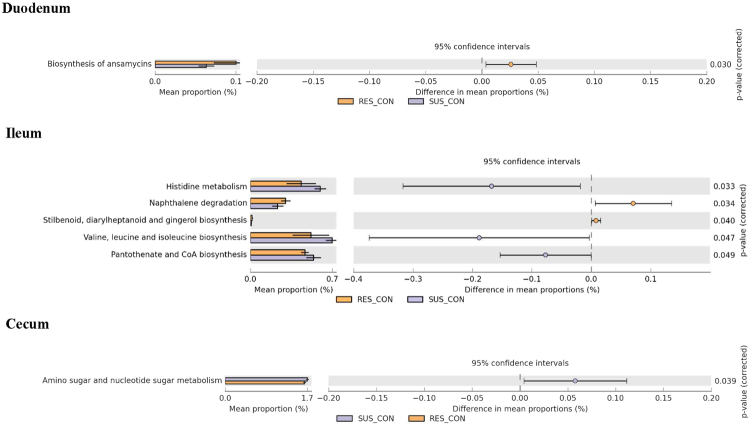
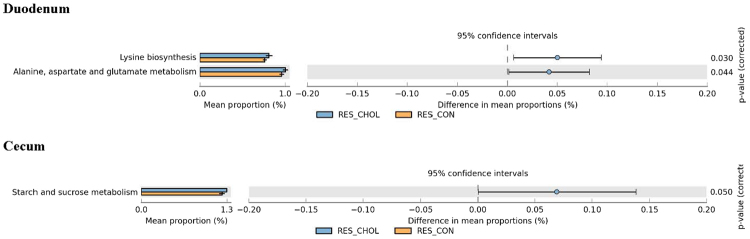
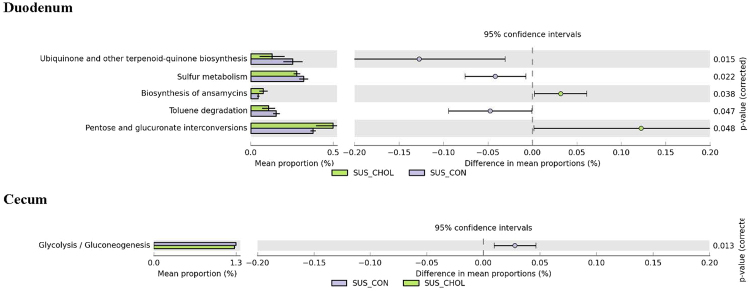
Our previous study has shown that genetic selection for susceptibility/resistance to diet-induced atherosclerosis has affected the Japanese quail's cecal environment to accommodate distinctly different cecal microbiota. In this study, we fed the Atherosclerosis-resistant (RES) and -susceptable (SUS) quail a regular and a cholesterol enriched diet to examine the interaction of host genotype and diet on the diversity, composition, and metabolic functions of the duodenal and ileal microbiota with relations to atherosclerosis development. In the duodenal content, 9 OTUs (operational taxonomic units) were identified whose abundance had significant positive correlations with plasma total cholesterol, LDL level and/or LDL/HDL ratio. In the ileal content, 7 OTUs have significant correlation with plasma HDL. Cholesterol fed RES hosted significantly less Escherichia and unclassified Enterobacteriaceae (possibly pathogenic) in their duodenum than SUS fed the same diet. Dietary cholesterol significantly decreased the duodenal microbiome of SUS's biosynthesis of Ubiquinone and other terpenoid-quinone. Cholesterol fed RES had significantly more microbiome genes for Vitamin B6, selenocompound, taurine and hypotaurine, and Linoleic acid metabolism; Bisphenol degradation; primary bile acid, and butirosin and neomycin biosynthesis than SUS on the same diet. Microbiome in the ileum and ceca of RES contributed significantly towards the resistance to diet induced atherosclerosis.
我们之前的研究表明,对饮食诱导的动脉粥样硬化的易感性/抗性的遗传选择已经影响了鹌鹑盲肠的环境,以适应明显不同的盲肠微生物群。在这项研究中,我们用普通饲料和富含胆固醇的饲料喂养抗动脉粥样硬化(RES)和易感(SUS)鹌鹑,以研究宿主基因型和饮食对十二指肠和回肠微生物群的多样性、组成和代谢功能的相互作用,以及与动脉粥样硬化发展的关系。在十二指肠内容物中,鉴定出 9 个 OTU(操作分类单元),其丰度与血浆总胆固醇、LDL 水平和/或 LDL/HDL 比值有显著正相关。在回肠内容物中,有 7 个 OTU 与血浆 HDL 有显著相关性。与 SUS 相比,RES 对富含胆固醇的饮食在其十二指肠中定植的大肠杆菌和未分类的肠杆菌科(可能是致病性的)显著较少。饮食胆固醇显著降低了 SUS 生物合成泛醌和其他萜烯醌的十二指肠微生物组。与 SUS 相比,RES 对胆固醇的饮食有更多的微生物组基因来编码维生素 B6、硒化合物、牛磺酸和次牛磺酸以及亚油酸代谢;双酚降解;初级胆汁酸、布替罗星和新霉素生物合成。盲肠微生物组对 RES 抵抗饮食诱导的动脉粥样硬化有显著贡献。