Olson Katherine E, O'Brien Marita A, Rogers Wendy A, Charness Neil
Georgia Institute of Technology, Atlanta, Georgia, USA.
Ageing Int. 2011 Mar;36(1):123-145. doi: 10.1007/s12126-010-9077-9.
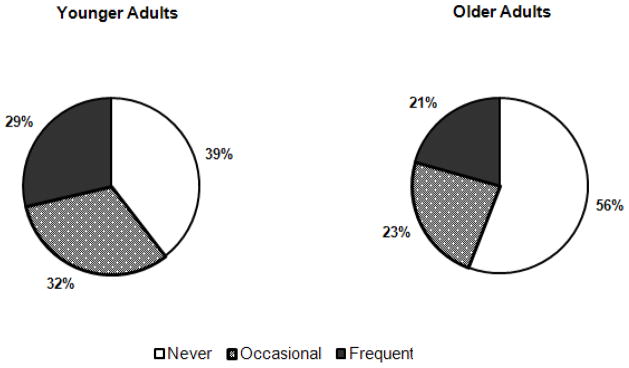
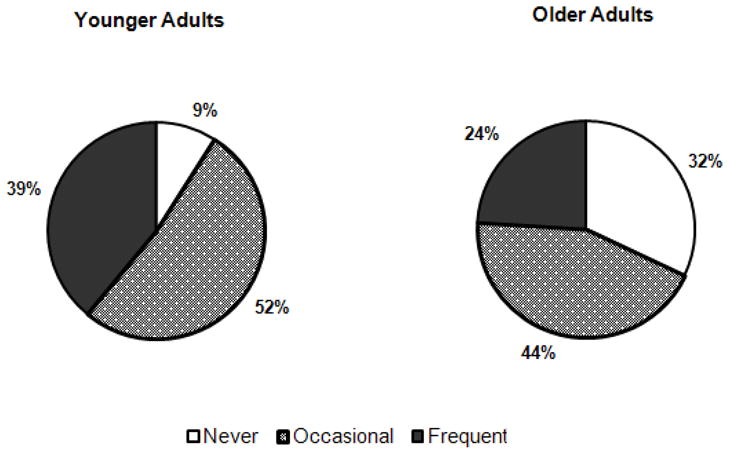
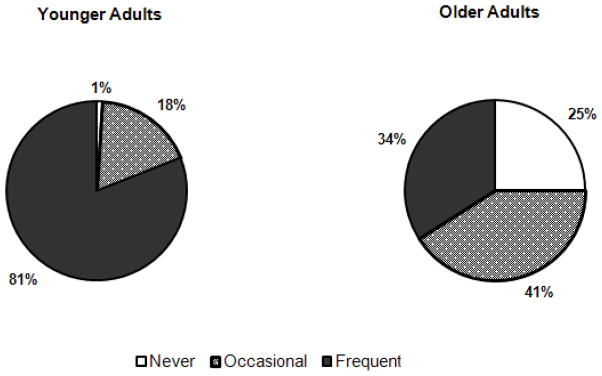
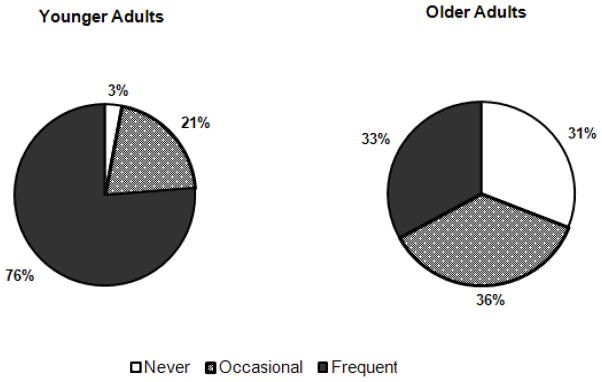
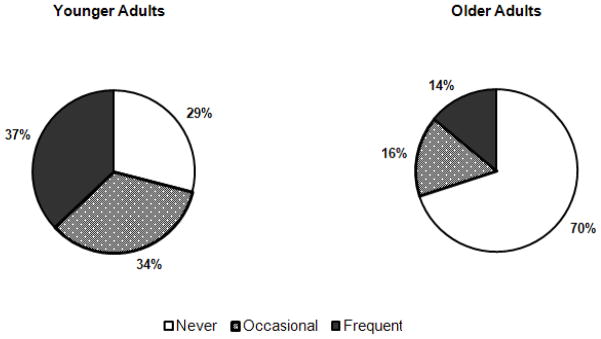
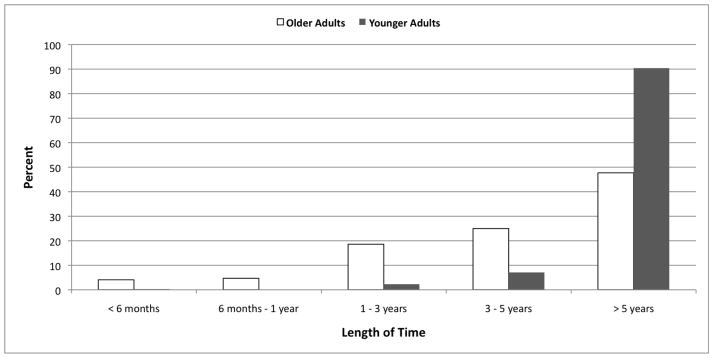
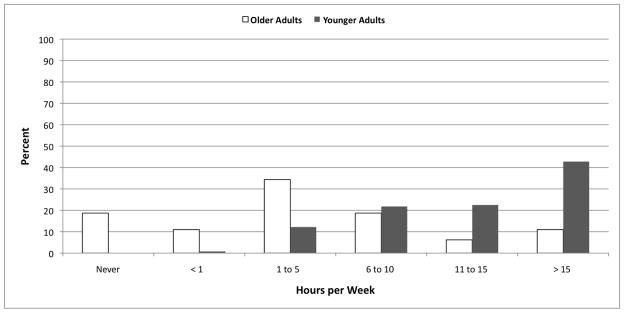
When we think of technology-savvy consumers, older adults are typically not the first persons that come to mind. The common misconception is that older adults do not want to use or cannot use technology. But for an increasing number of older adults, this is not true (Pew Internet and American Life Project, 2003). Older adults do use technologies similar to their younger counterparts, but perhaps at different usage rates. Previous research has identified that there may be subgroups of older adults, "Silver Surfers", whose adoption patterns mimic younger adults (Pew Internet and American Life Project, 2003). Much of the previous research on age-related differences in technology usage has only investigated usage broadly -- from a "used" or "not used" standpoint. The present study investigated age-related differences in overall usage of technologies, as well as frequency of technology usage (i.e., never, occasional, or frequent). METHODS: The data were gathered through a questionnaire from younger adults (N=430) and older adults (N=251) in three geographically separate and ethnically diverse areas of the United States. RESULTS: We found that younger adults use a greater breadth of technologies than older adults. However, age-related differences in usage and the frequency of use depend on the technology domain. CONCLUSION: This paper presents technology usage and frequency data to highlight age-related differences and similarities. The results provide insights into older and younger adults' technology-use patterns, which in turn provide a basis for expectations about knowledge differences. Designers and trainers can benefit from understanding experience and knowledge differences.
当我们想到精通技术的消费者时,老年人通常不是首先想到的人群。常见的误解是老年人不想使用或不能使用技术。但对于越来越多的老年人来说,情况并非如此(皮尤互联网与美国生活项目,2003年)。老年人确实使用与年轻人类似的技术,但使用频率可能不同。先前的研究已经确定,可能存在老年人群体,即“银色冲浪者”,他们的采用模式与年轻人相似(皮尤互联网与美国生活项目,2003年)。先前关于技术使用中年龄相关差异的许多研究仅从宽泛的角度调查使用情况——从“使用过”或“未使用过”的角度。本研究调查了技术总体使用方面的年龄相关差异以及技术使用频率(即从不、偶尔或频繁)。
通过问卷调查收集了来自美国三个地理上分开且种族多样地区的年轻人(N = 430)和老年人(N = 251)的数据。
我们发现年轻人使用的技术范围比老年人更广。然而,使用情况和使用频率方面的年龄相关差异取决于技术领域。
本文呈现了技术使用情况和频率数据,以突出年龄相关的差异和相似之处。研究结果为了解老年人和年轻人的技术使用模式提供了见解,进而为有关知识差异的预期提供了依据。设计师和培训师可以从了解经验和知识差异中受益。