Benaroya Research Institute, Seattle, Washington, USA.
Diabetes. 2012 Aug;61(8):2066-73. doi: 10.2337/db11-1538. Epub 2012 Jun 11.
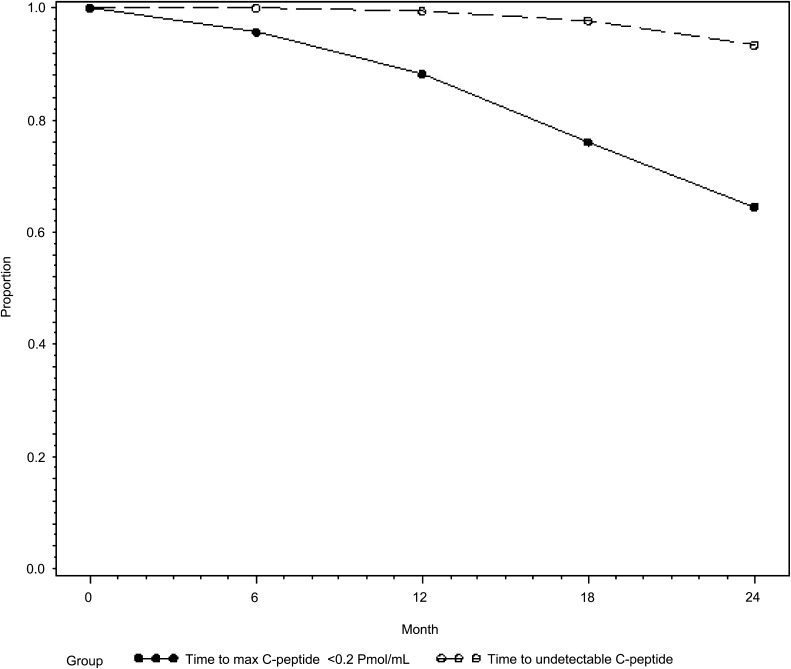
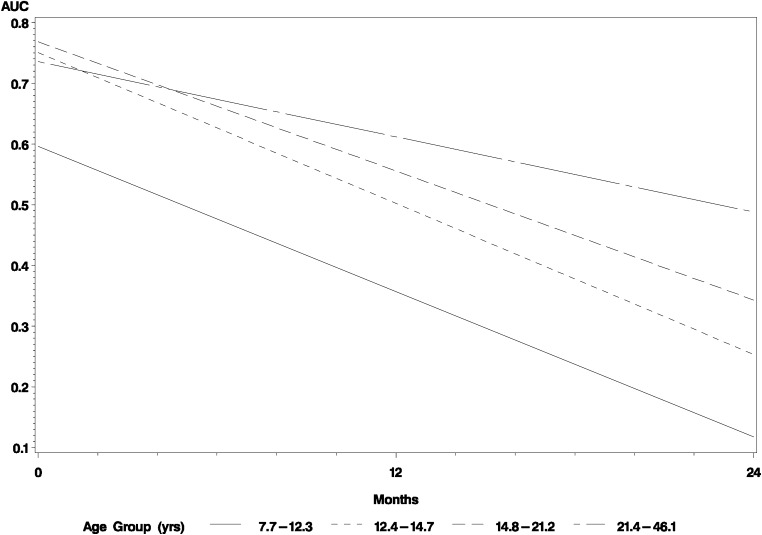
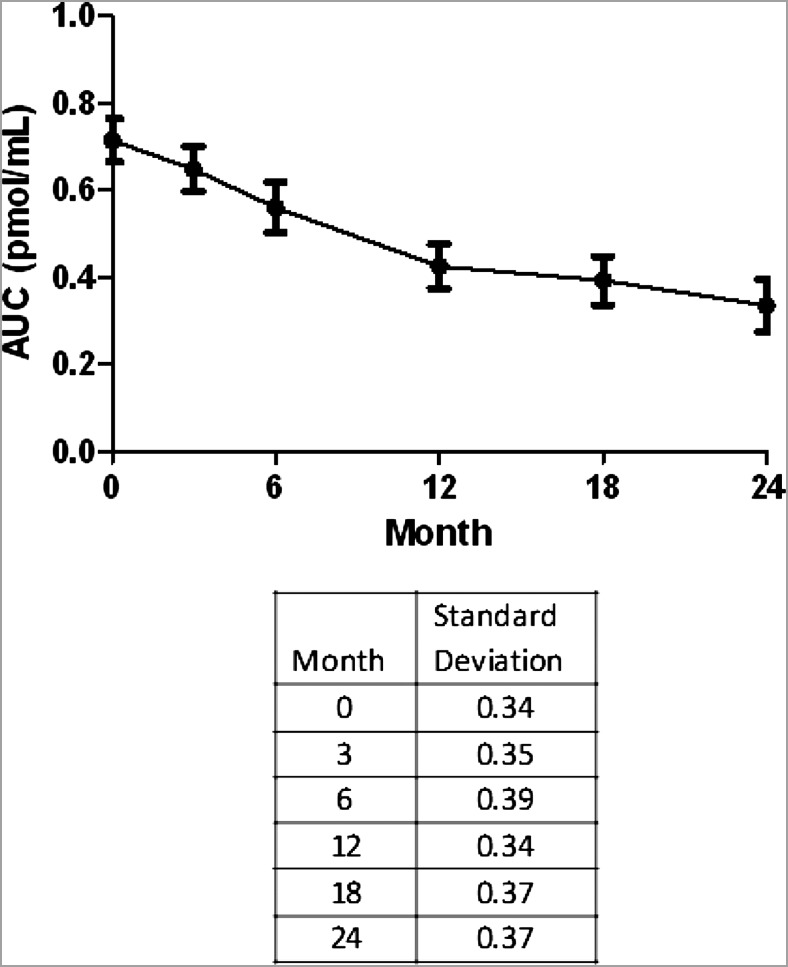
Interpretation of clinical trials to alter the decline in β-cell function after diagnosis of type 1 diabetes depends on a robust understanding of the natural history of disease. Combining data from the Type 1 Diabetes TrialNet studies, we describe the natural history of β-cell function from shortly after diagnosis through 2 years post study randomization, assess the degree of variability between patients, and investigate factors that may be related to C-peptide preservation or loss. We found that 93% of individuals have detectable C-peptide 2 years from diagnosis. In 11% of subjects, there was no significant fall from baseline by 2 years. There was a biphasic decline in C-peptide; the C-peptide slope was -0.0245 pmol/mL/month (95% CI -0.0271 to -0.0215) through the first 12 months and -0.0079 (-0.0113 to -0.0050) from 12 to 24 months (P < 0.001). This pattern of fall in C-peptide over time has implications for understanding trial results in which effects of therapy are most pronounced early and raises the possibility that there are time-dependent differences in pathophysiology. The robust data on the C-peptide obtained under clinical trial conditions should be used in planning and interpretation of clinical trials.
解读临床试验以改变 1 型糖尿病诊断后β细胞功能的下降,取决于对疾病自然史的深入了解。我们结合 1 型糖尿病试验网研究的数据,描述了从诊断后不久到研究随机分组后 2 年的β细胞功能自然史,评估了患者之间的变异程度,并探讨了可能与 C 肽保存或丢失相关的因素。我们发现,93%的个体在诊断后 2 年内可检测到 C 肽。在 11%的受试者中,到 2 年时没有从基线显著下降。C 肽呈双相下降;在最初 12 个月内,C 肽斜率为-0.0245 pmol/mL/月(95%CI-0.0271 至-0.0215),而在 12 至 24 个月期间为-0.0079(-0.0113 至-0.0050)(P<0.001)。这种 C 肽随时间下降的模式对理解治疗效果在早期最为明显的试验结果具有重要意义,并提出了在病理生理学上可能存在时间依赖性差异的可能性。在临床试验条件下获得的关于 C 肽的可靠数据应在临床试验的规划和解读中加以利用。