Ripamonti Ugo, Teare June, Ferretti Carlo
Bone Research Unit, Faculty of Health Sciences, School of Physiology, Medical Research Council/University of the Witwatersrand Johannesburg, South Africa.
Front Physiol. 2012 Jun 7;3:172. doi: 10.3389/fphys.2012.00172. eCollection 2012.
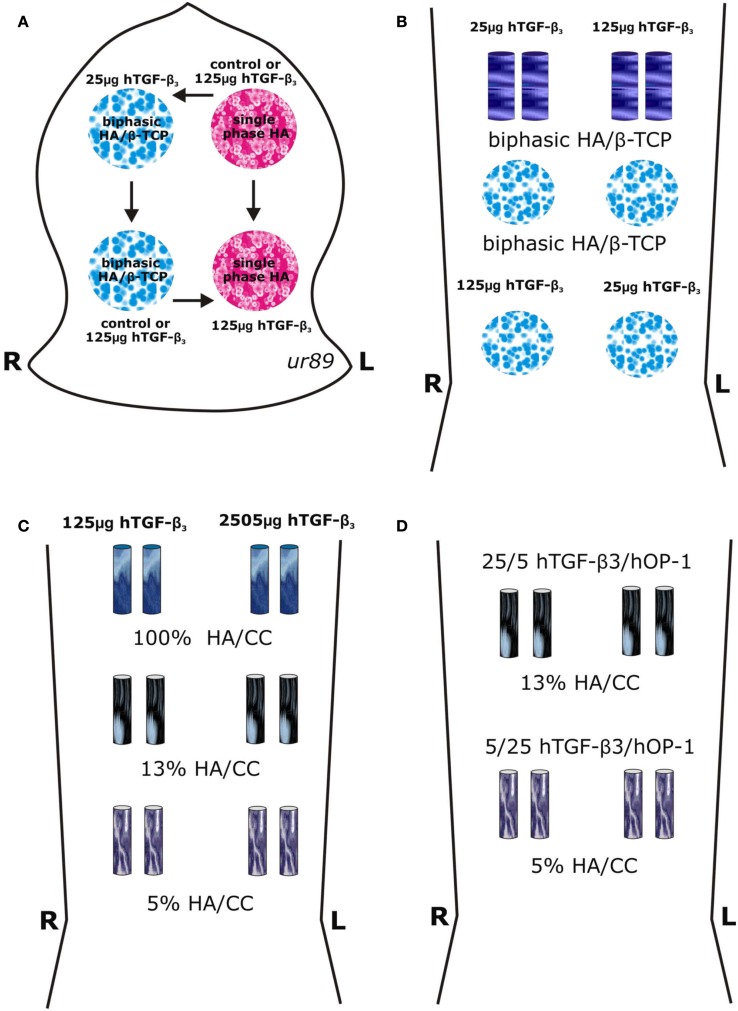
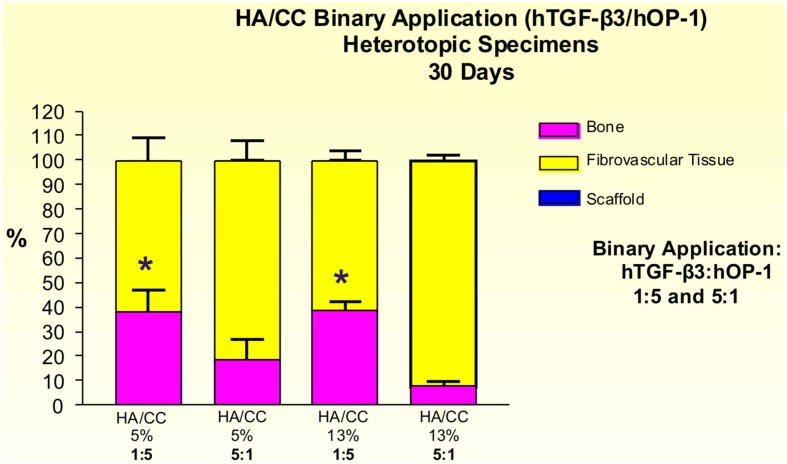
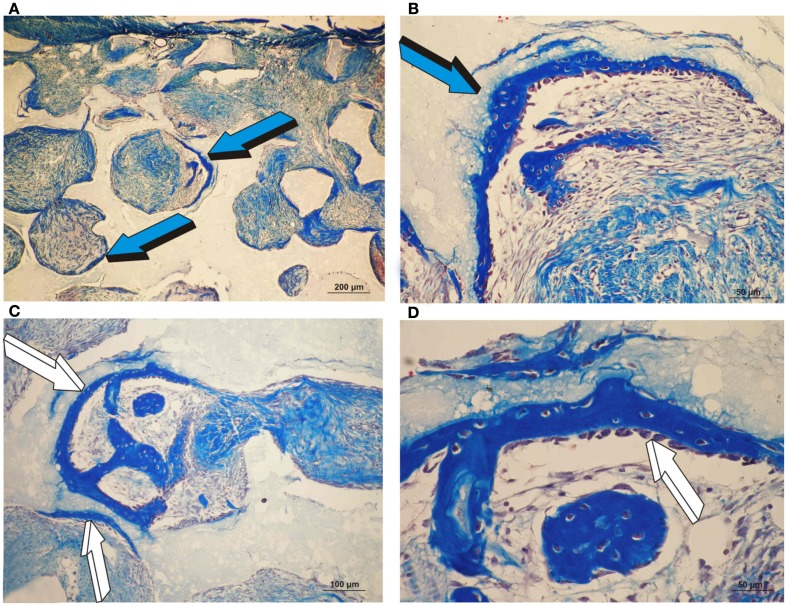
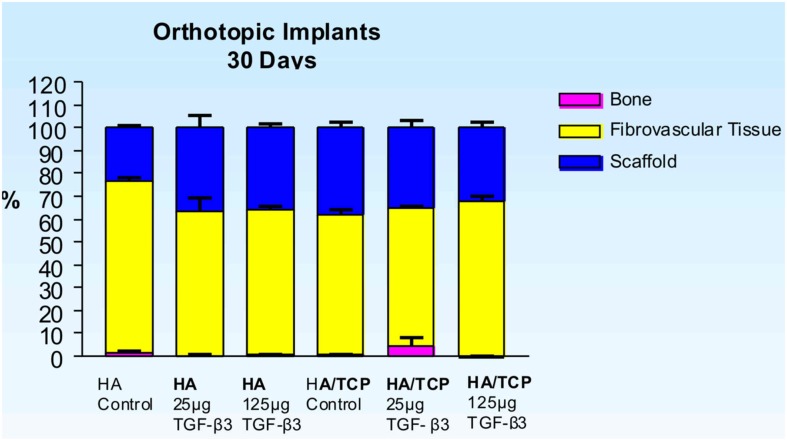
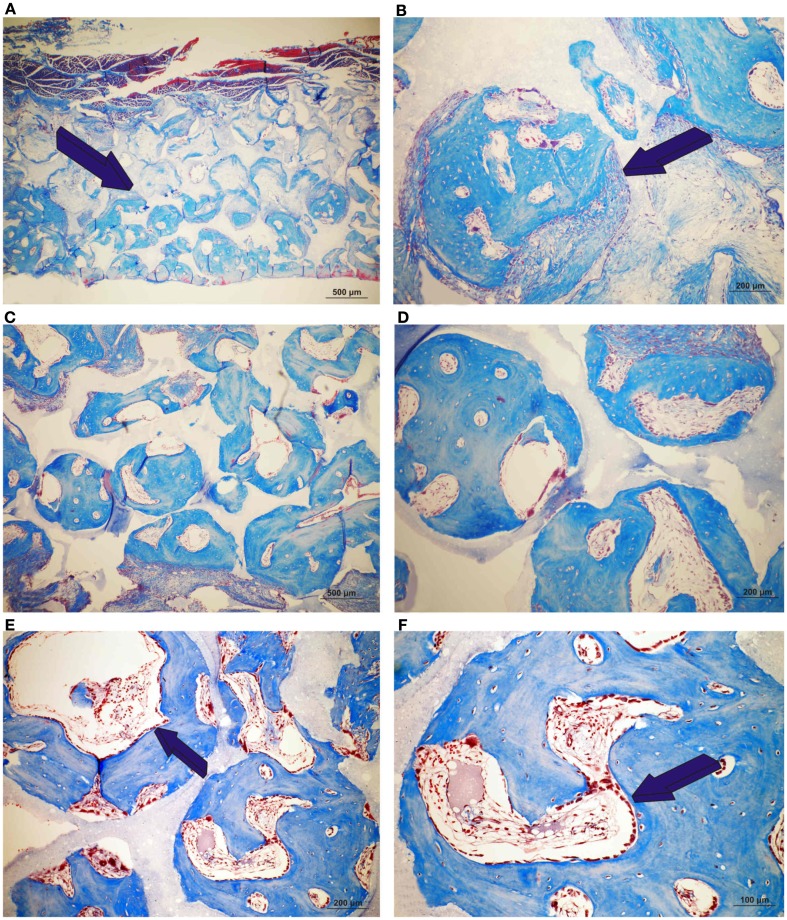
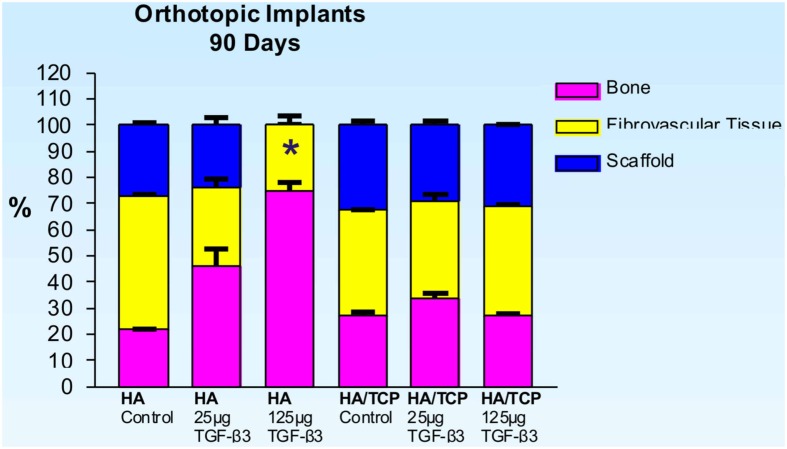
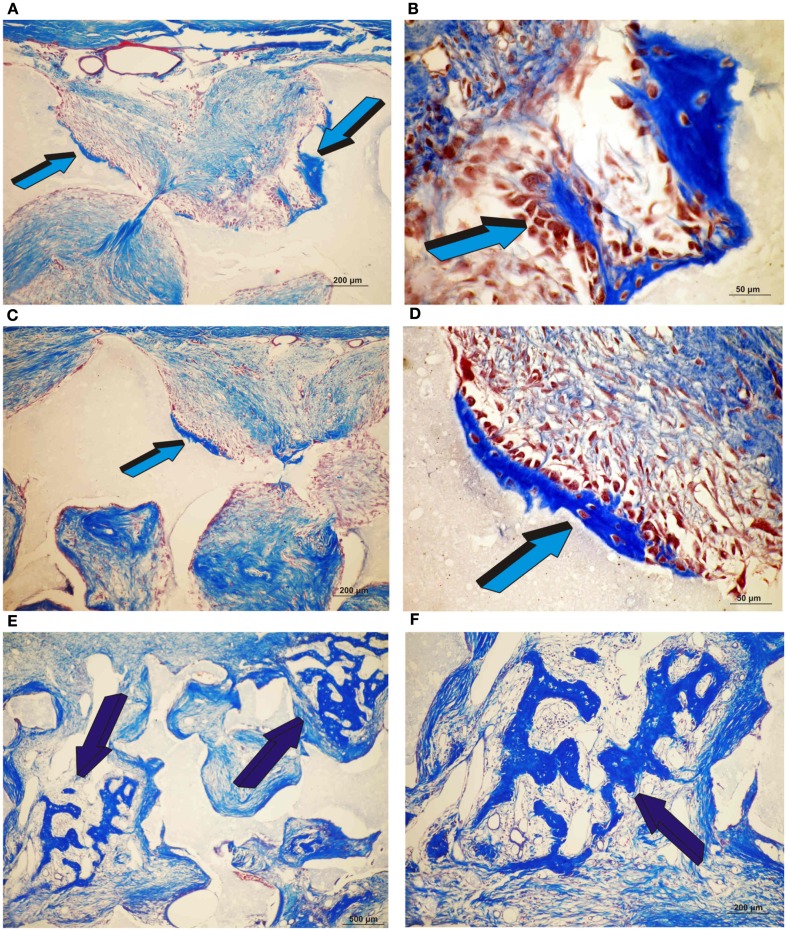
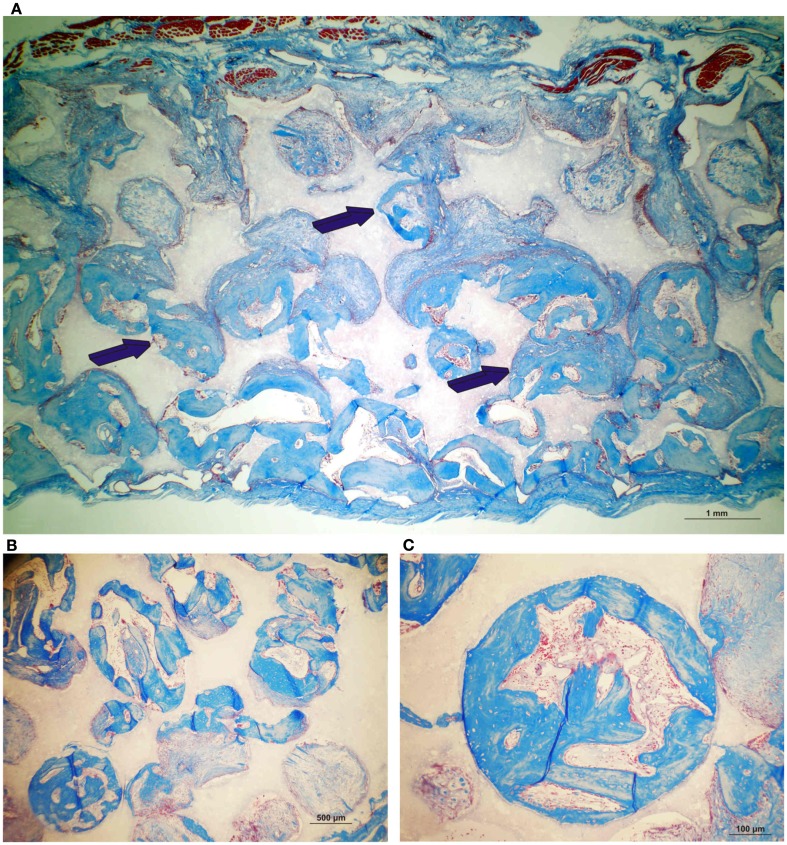
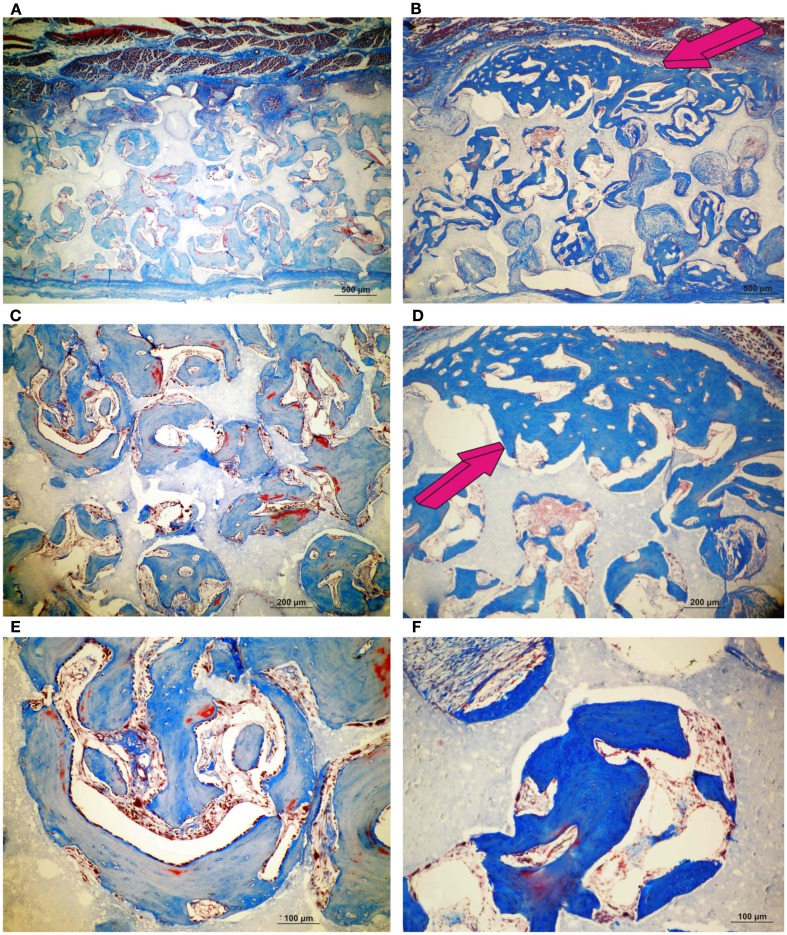
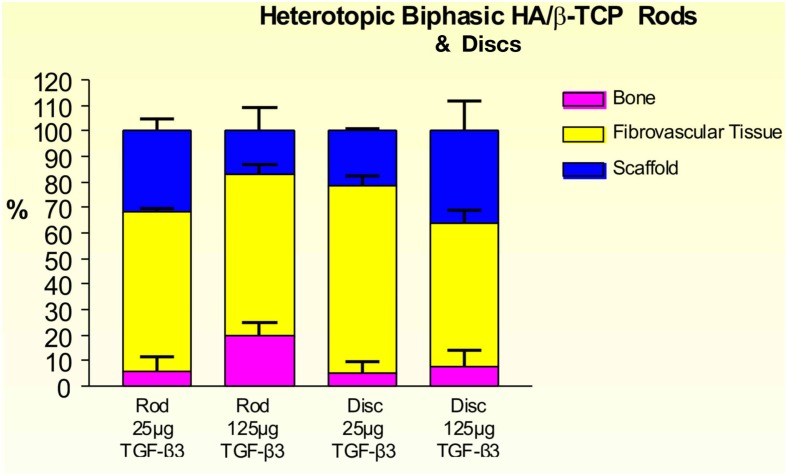
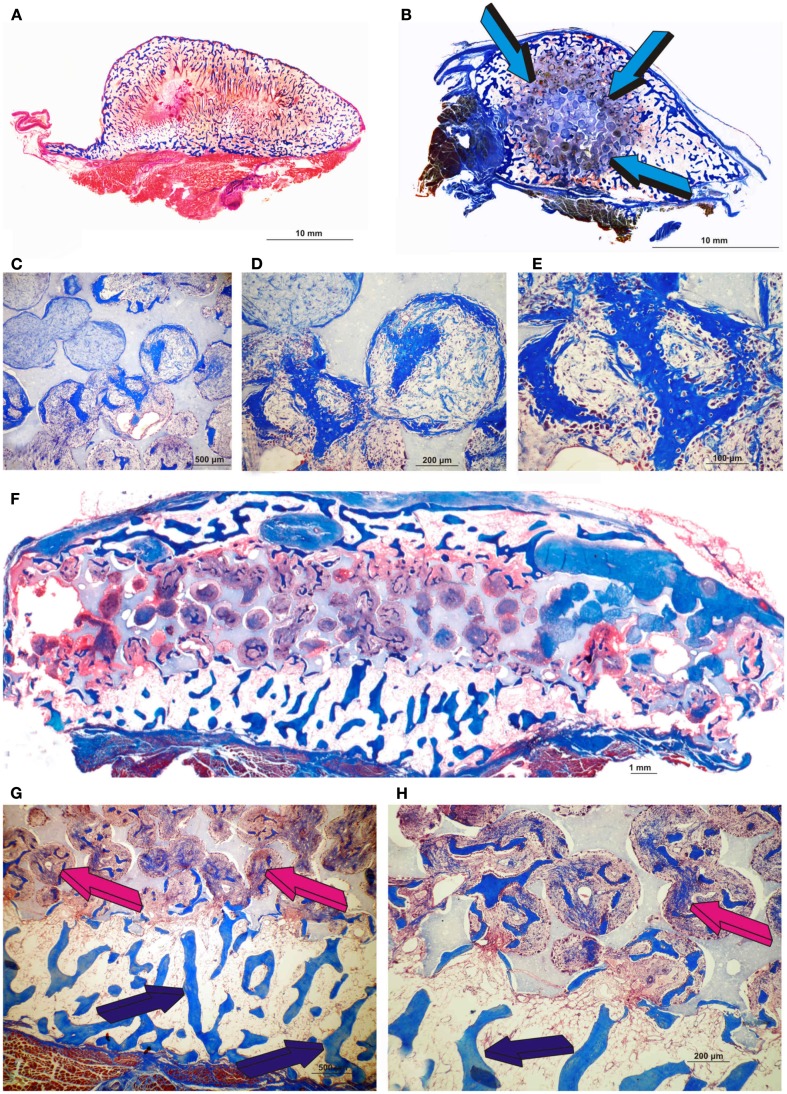
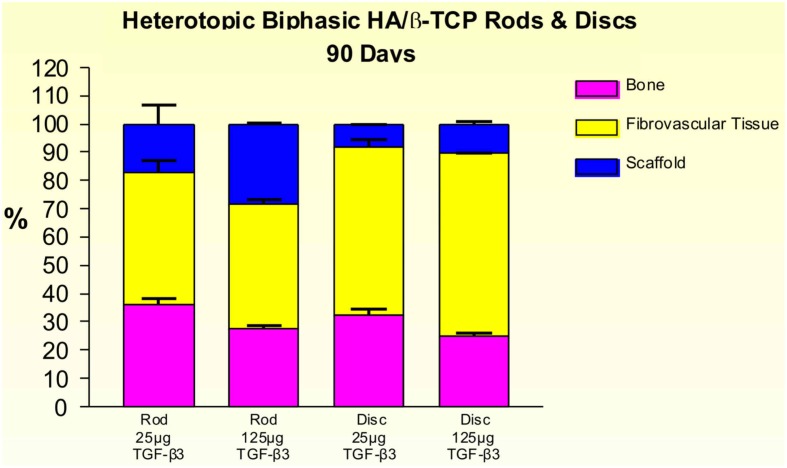
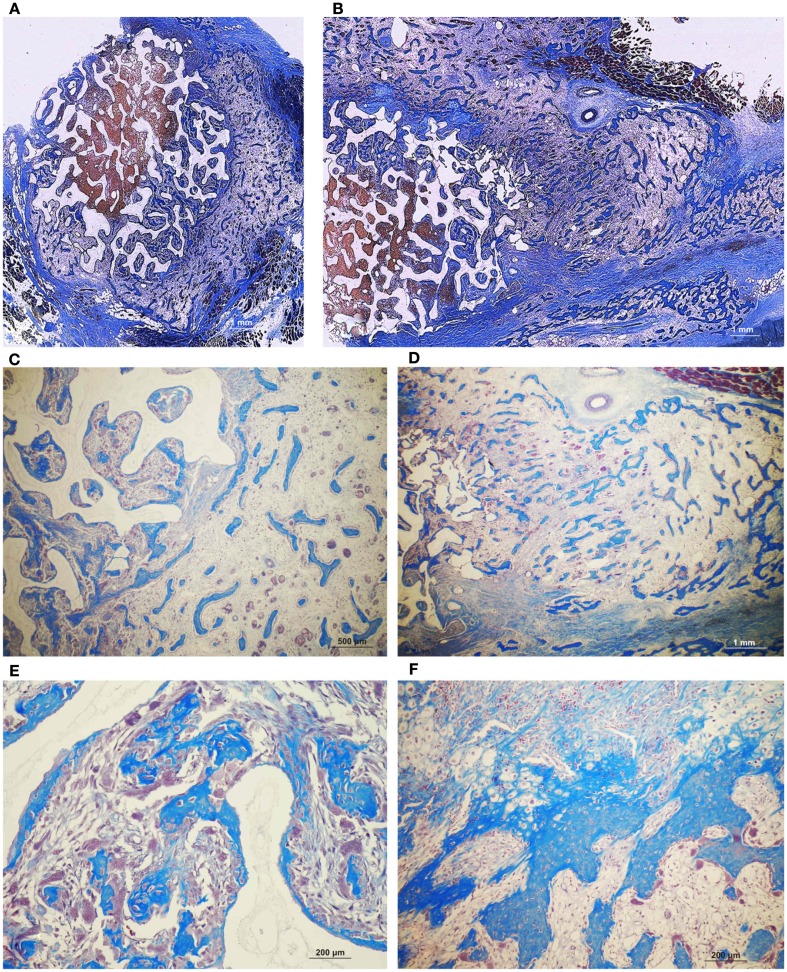
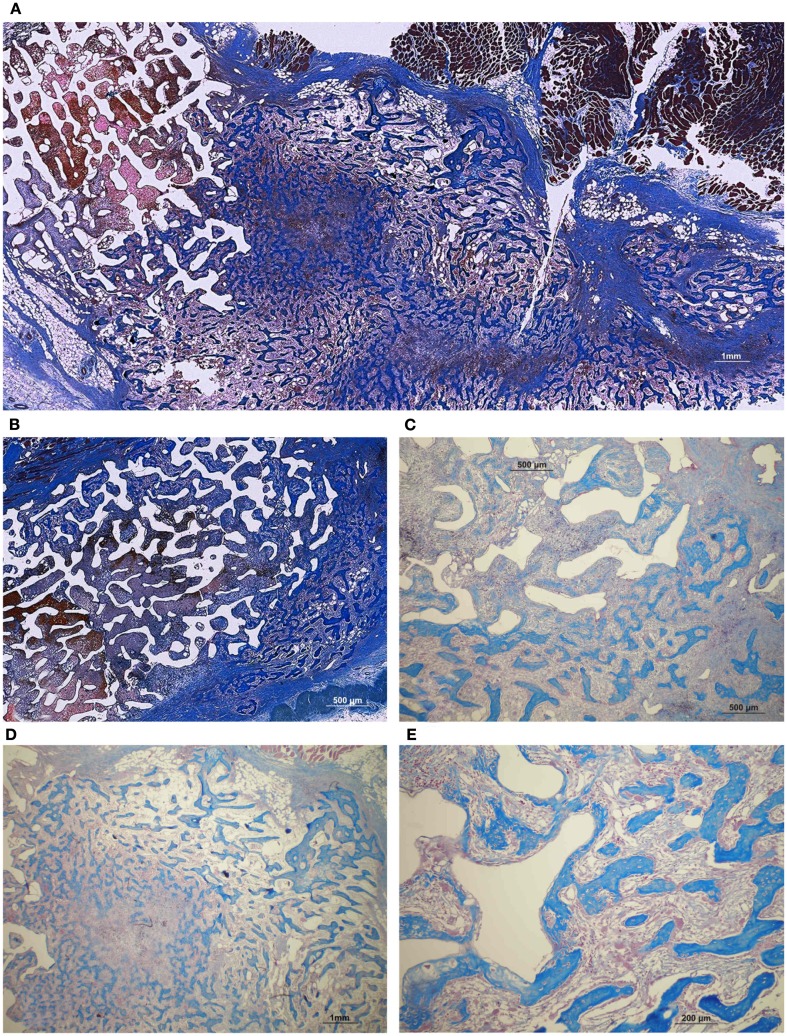
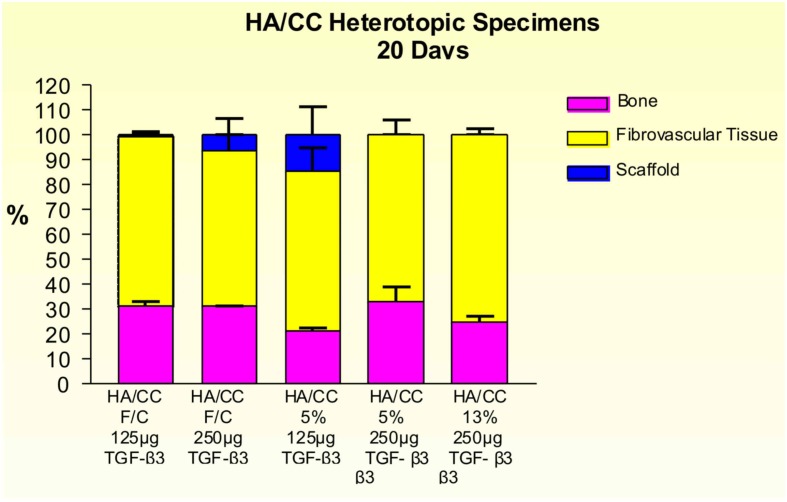
Macroporous single phase hydroxyapatite (HA) and biphasic HA/β-tricalcium phosphate with 33% post-sinter hydroxyapatite (HA/β-TCP) were combined with 25 or 125 μg recombinant human transforming growth factor-β3 (hTGF-β(3)) to engineer a super activated bioreactor implanted in orthotopic calvarial and heterotopic rectus abdominis muscle sites and harvested on day 30 and 90. Coral-derived calcium carbonate fully converted (100%) and partially converted to 5 and 13% hydroxyapatite/calcium carbonate (5 and 13% HA/CC) pre-loaded with 125 and 250 μg hTGF-β(3), and 1:5 and 5:1 binary applications of hTGF-β(3): hOP-1 by weight, were implanted in the rectus abdominis and harvested on day 20 and 30, respectively, to monitor spatial/temporal morphogenesis by high doses of hTGF-β(3). Bone formation was assessed on decalcified paraffin-embedded sections by measuring the fractional volume of newly formed bone. On day 30 and 90, single phase HA implants showed greater amounts of bone when compared to biphasic specimens; 5 and 13% HA/CC pre-loaded with 125 and 250 μg hTGF-β(3) showed substantial induction of bone formation; 250 μg hTGF-β(3) induced as yet unreported massive induction of bone formation as early as 20 days prominently outside the profile of the macroporous constructs. The induction of bone formation is controlled by the implanted ratio of the recombinant morphogens, i.e., the 1:5 hTGF-β(3):hOP-1 ratio by weight was greater than the inverse ratio. The unprecedented tissue induction by single doses of 250 μg hTGF-β(3) resulting in rapid bone morphogenesis of vast mineralized ossicles with multiple trabeculations surfaced by contiguous secreting osteoblasts is the novel molecular and morphological frontier for the induction of bone formation in clinical contexts.
将大孔单相羟基磷灰石(HA)和含33%烧结后羟基磷灰石的双相HA/β - 磷酸三钙(HA/β - TCP)与25或125μg重组人转化生长因子 - β3(hTGF - β3)结合,构建超级活化生物反应器,将其植入原位颅骨和异位腹直肌部位,并在第30天和第90天收获。将完全转化(100%)和部分转化为5%和13%羟基磷灰石/碳酸钙(5%和13% HA/CC)且预加载125和250μg hTGF - β3的珊瑚衍生碳酸钙,以及hTGF - β3与hOP - 1按重量比1:5和5:1的二元应用,分别植入腹直肌,并在第20天和第30天收获,以监测高剂量hTGF - β3引起的空间/时间形态发生。通过测量新形成骨的体积分数,在脱钙石蜡包埋切片上评估骨形成情况。在第30天和第90天,与双相标本相比,单相HA植入物显示出更多的骨量;预加载125和250μg hTGF - β3的5%和13% HA/CC显示出显著的骨形成诱导作用;250μg hTGF - β3早在20天时就诱导出了尚未报道的大量骨形成,且显著超出大孔构建体的范围。骨形成的诱导受重组形态发生素植入比例的控制,即按重量计1:5的hTGF - β3:hOP - 1比例大于反比。单剂量250μg hTGF - β3前所未有的组织诱导作用导致大量矿化小骨快速骨形态发生,其具有多个小梁,表面有连续分泌的成骨细胞,这是临床环境中诱导骨形成的新分子和形态学前沿。