Center for Studies in Physics and Biology, The Rockefeller University, New York, New York, United States of America.
PLoS One. 2012;7(6):e37994. doi: 10.1371/journal.pone.0037994. Epub 2012 Jun 6.
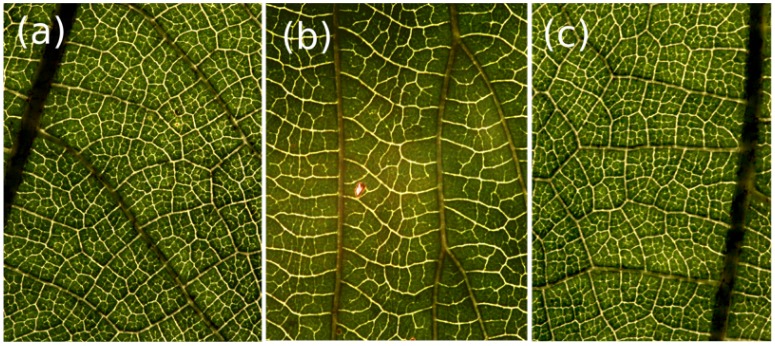
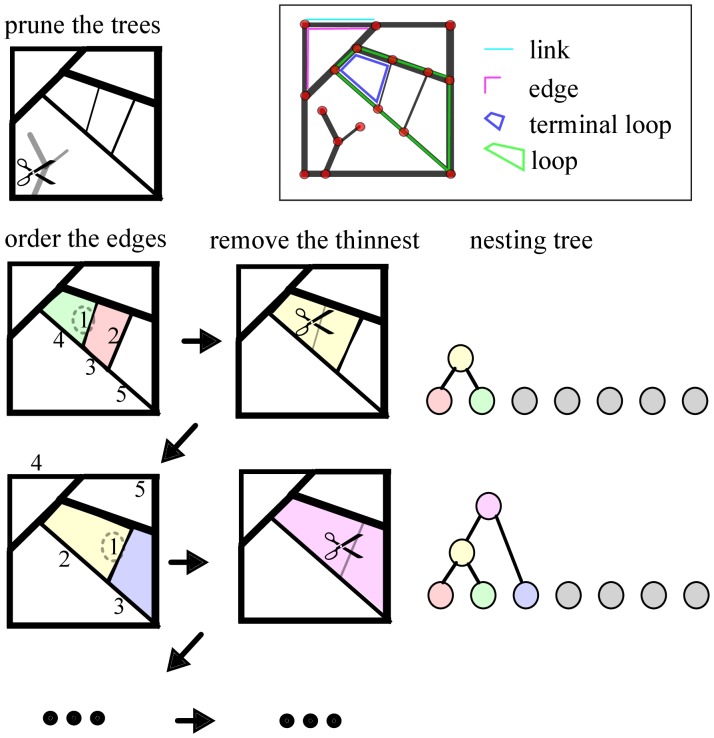
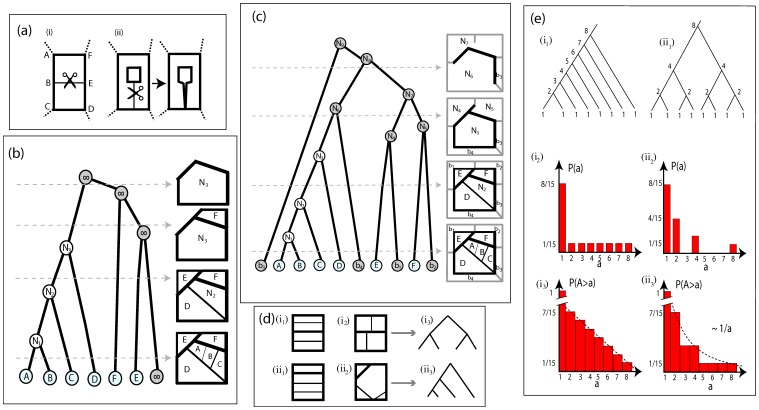
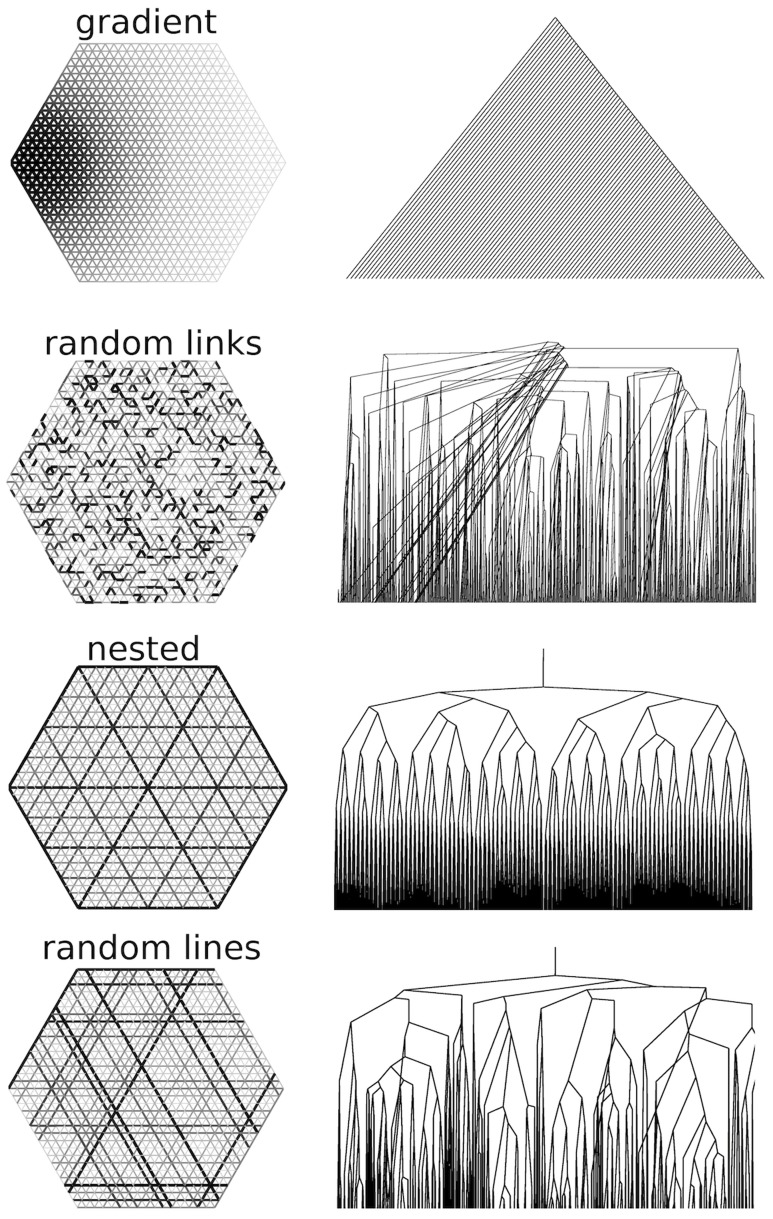
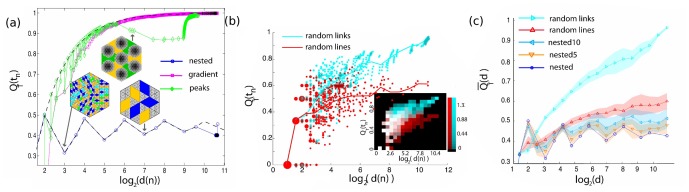
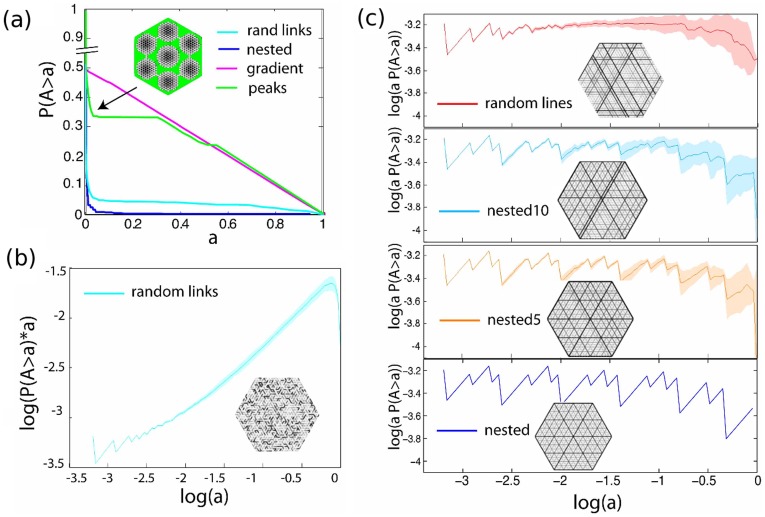
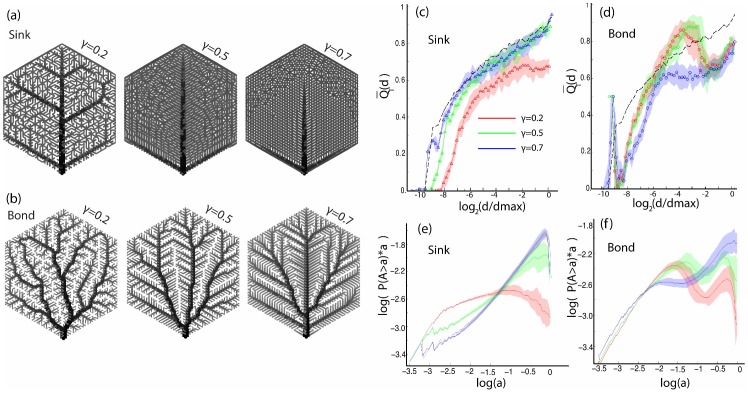
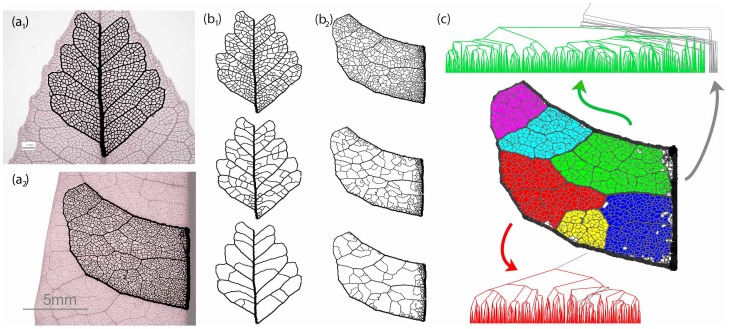
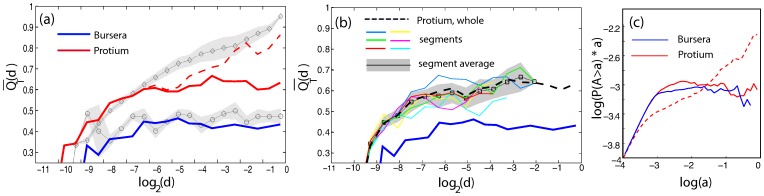
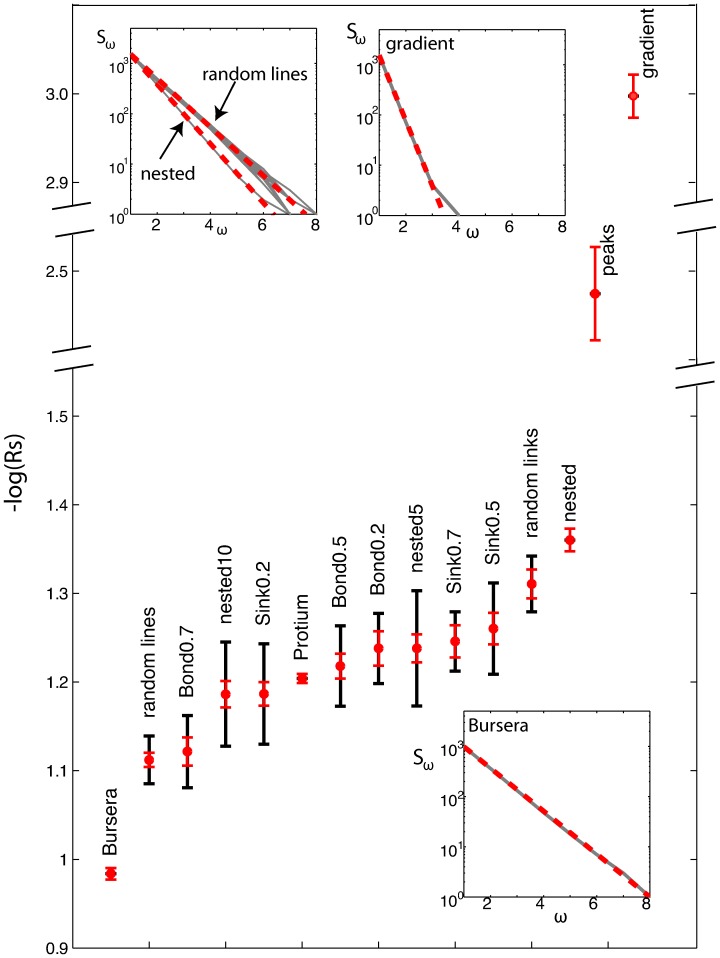
Biology presents many examples of planar distribution and structural networks having dense sets of closed loops. An archetype of this form of network organization is the vasculature of dicotyledonous leaves, which showcases a hierarchically-nested architecture containing closed loops at many different levels. Although a number of approaches have been proposed to measure aspects of the structure of such networks, a robust metric to quantify their hierarchical organization is still lacking. We present an algorithmic framework, the hierarchical loop decomposition, that allows mapping loopy networks to binary trees, preserving in the connectivity of the trees the architecture of the original graph. We apply this framework to investigate computer generated graphs, such as artificial models and optimal distribution networks, as well as natural graphs extracted from digitized images of dicotyledonous leaves and vasculature of rat cerebral neocortex. We calculate various metrics based on the asymmetry, the cumulative size distribution and the Strahler bifurcation ratios of the corresponding trees and discuss the relationship of these quantities to the architectural organization of the original graphs. This algorithmic framework decouples the geometric information (exact location of edges and nodes) from the metric topology (connectivity and edge weight) and it ultimately allows us to perform a quantitative statistical comparison between predictions of theoretical models and naturally occurring loopy graphs.
生物学中有许多平面分布和结构网络的例子,这些网络具有密集的封闭环集。这种网络组织形式的一个原型是双子叶植物叶片的脉管系统,它展示了一种层次嵌套的结构,其中包含许多不同层次的封闭环。尽管已经提出了许多方法来测量这些网络结构的各个方面,但仍然缺乏一种用于量化其层次组织的稳健指标。我们提出了一种算法框架,即层次循环分解,该框架允许将有环网络映射到二叉树,在树的连通性中保留原始图的结构。我们将该框架应用于研究计算机生成的图形,例如人工模型和最优分配网络,以及从数字化的双子叶植物叶片和大鼠大脑新皮质脉管系统图像中提取的自然图形。我们根据相应树的不对称性、累积大小分布和施特勒分支比计算各种度量,并讨论这些数量与原始图的结构组织之间的关系。该算法框架将几何信息(边和节点的精确位置)与度量拓扑(连通性和边权重)解耦,最终使我们能够在理论模型的预测和自然出现的有环图之间进行定量统计比较。