Al-Quds Nutrition and Health Research Center, Faculty of Medicine, Al-Quds University, Abu-Deis, P.O. Box 20760, West Bank, Palestine.
Parasit Vectors. 2012 Jun 18;5:121. doi: 10.1186/1756-3305-5-121.
Many cases of cutaneous leishmaniasis (CL) have been recorded in the Jenin District based on their clinical appearance. Here, their parasites have been characterized in depth.
Leishmanial parasites isolated from 12 human cases of CL from the Jenin District were cultured as promastigotes, whose DNA was extracted. The ITS1 sequence and the 7SL RNA gene were analysed as was the kinetoplast minicircle DNA (kDNA) sequence. Excreted factor (EF) serotyping and multilocus enzyme electrophoresis (MLEE) were also applied.
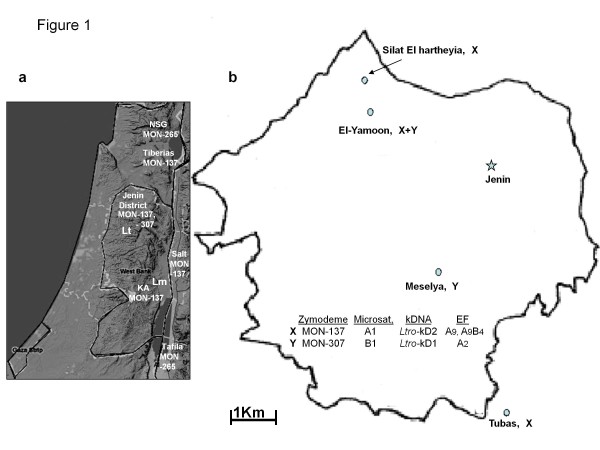
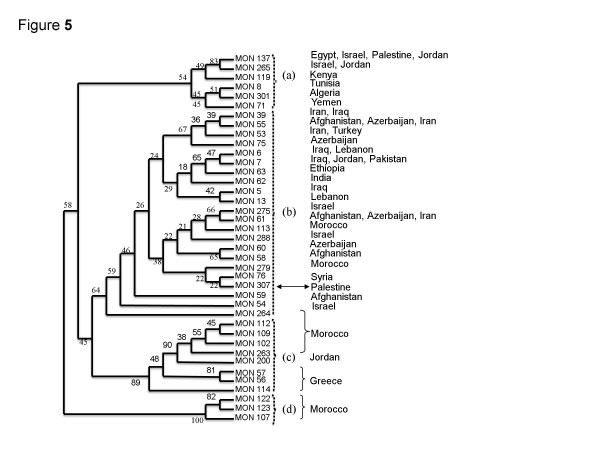
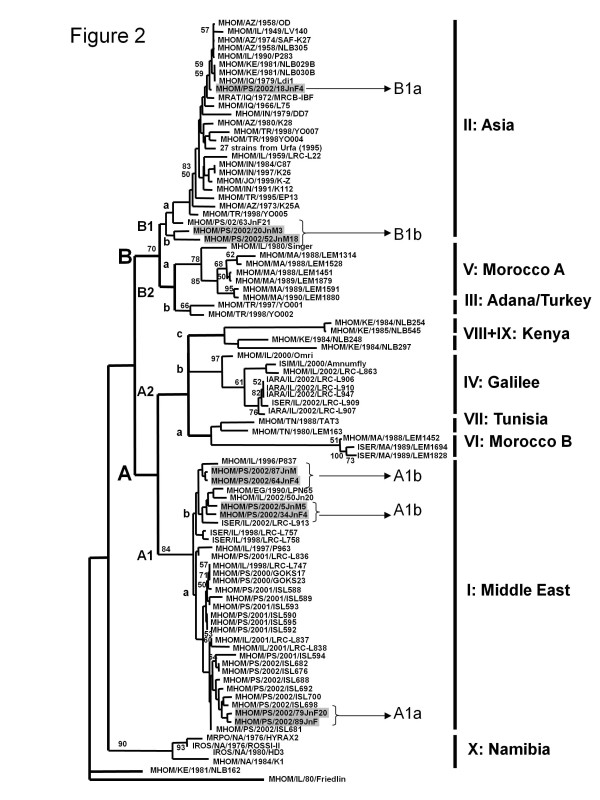
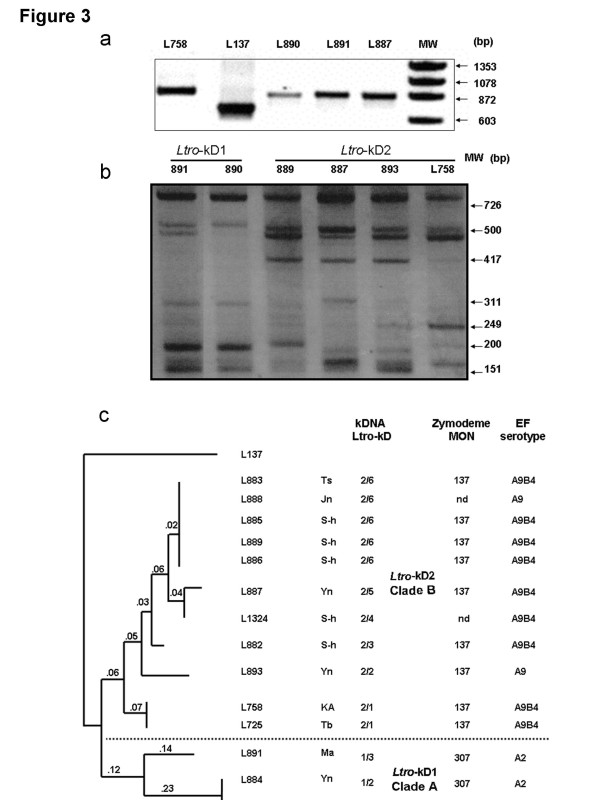
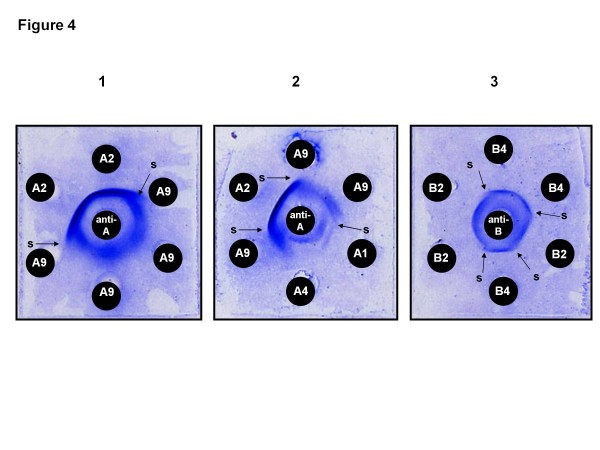
This extensive characterization identified the strains as Leishmania tropica of two very distinct sub-types that parallel the two sub-groups discerned by multilocus microsatellite typing (MLMT) done previously. A high degree of congruity was displayed among the results generated by the different analytical methods that had examined various cellular components and exposed intra-specific heterogeneity among the 12 strains.Three of the ten strains subjected to MLEE constituted a new zymodeme, zymodeme MON-307, and seven belonged to the known zymodeme MON-137. Ten of the 15 enzymes in the profile of zymodeme MON-307 displayed different electrophoretic mobilities compared with the enzyme profile of the zymodeme MON-137. The closest profile to that of zymodeme MON-307 was that of the zymodeme MON-76 known from Syria.Strains of the zymodeme MON-307 were EF sub-serotype A2 and those of the zymodeme MON-137 were either A9 or A9B4. The sub-serotype B4 component appears, so far, to be unique to some strains of L. tropica of zymodeme MON-137. Strains of the zymodeme MON-137 displayed a distinctive fragment of 417 bp that was absent in those of zymodeme MON-307 when their kDNA was digested with the endonuclease RsaI. kDNA-RFLP after digestion with the endonuclease MboI facilitated a further level of differentiation that partially coincided with the geographical distribution of the human cases from which the strains came.
The Palestinian strains that were assigned to different genetic groups differed in their MLEE profiles and their EF types. A new zymodeme, zymodeme MON-307 was discovered that seems to be unique to the northern part of the Palestinian West Bank. What seemed to be a straight forward classical situation of L. tropica causing anthroponotic CL in the Jenin District might be a more complex situation, owing to the presence of two separate sub-types of L. tropica that, possibly, indicates two separate transmission cycles involving two separate types of phlebotomine sand fly vector.
根据临床表现,杰宁地区已记录了许多皮肤利什曼病(CL)病例。在这里,对其寄生虫进行了深入的特征描述。
从杰宁地区 12 例 CL 人类病例中分离出利什曼原虫,培养为前鞭毛体,提取其 DNA。分析了 ITS1 序列和 7SL RNA 基因,以及动基体微环 DNA(kDNA)序列。还进行了分泌因子(EF)血清分型和多位点酶电泳(MLEE)。
这种广泛的特征描述确定了这些菌株为利什曼热带的两个非常不同的亚型,与先前通过多位点微卫星分型(MLMT)确定的两个亚群平行。不同分析方法生成的结果之间存在高度一致性,这些方法检查了各种细胞成分,并揭示了 12 株之间的种内异质性。对 MLEE 进行了测试的十种菌株中的三种构成了一个新的酶谱型,酶谱型 MON-307,七种属于已知的酶谱型 MON-137。在 MON-307 酶谱型的 15 种酶中,有 10 种的电泳迁移率与 MON-137 酶谱型的酶谱型不同。与 MON-307 酶谱型最接近的是已知来自叙利亚的 MON-76 酶谱型。MON-307 酶谱型的菌株为 EF 亚血清型 A2,而 MON-137 酶谱型的菌株为 A9 或 A9B4。到目前为止,B4 亚血清型似乎是 MON-137 酶谱型一些利什曼热带菌株所特有的。MON-137 酶谱型菌株显示出一个独特的 417bp 片段,而 MON-307 酶谱型菌株在 RsaI 内切酶消化时不存在该片段。用内切酶 MboI 消化后的 kDNA-RFLP 有助于进一步的分化水平,这与菌株来源的人类病例的地理分布部分吻合。
分配到不同遗传群的巴勒斯坦菌株在 MLEE 图谱和 EF 类型上存在差异。发现了一个新的酶谱型,即 MON-307 酶谱型,它似乎仅存在于巴勒斯坦西岸北部地区。在杰宁地区,似乎是由两种不同的利什曼热带亚种引起的、以人类为宿主的 CL 引起的简单经典情况,可能是一种更为复杂的情况,因为可能存在两种不同的传播周期,涉及两种不同类型的嗜人锥蝇沙蝇媒介。