Division of Neurogenetics, Center for Neurological Diseases and Cancer, Nagoya University Graduate School of Medicine, 65 Tsurumai, Showa-ku, Nagoya 466-8550, Japan.
Oxid Med Cell Longev. 2012;2012:353152. doi: 10.1155/2012/353152. Epub 2012 Jun 8.
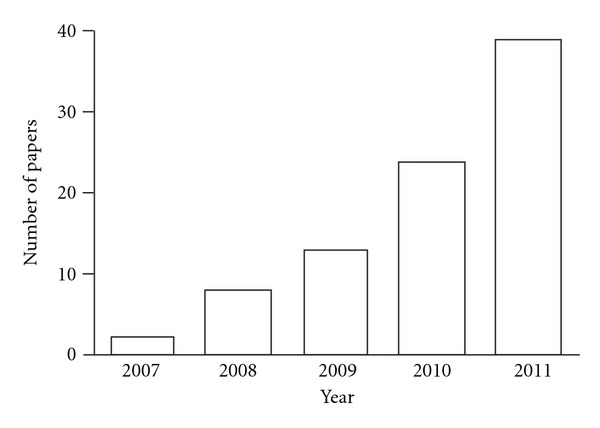
Effects of molecular hydrogen on various diseases have been documented for 63 disease models and human diseases in the past four and a half years. Most studies have been performed on rodents including two models of Parkinson's disease and three models of Alzheimer's disease. Prominent effects are observed especially in oxidative stress-mediated diseases including neonatal cerebral hypoxia; Parkinson's disease; ischemia/reperfusion of spinal cord, heart, lung, liver, kidney, and intestine; transplantation of lung, heart, kidney, and intestine. Six human diseases have been studied to date: diabetes mellitus type 2, metabolic syndrome, hemodialysis, inflammatory and mitochondrial myopathies, brain stem infarction, and radiation-induced adverse effects. Two enigmas, however, remain to be solved. First, no dose-response effect is observed. Rodents and humans are able to take a small amount of hydrogen by drinking hydrogen-rich water, but marked effects are observed. Second, intestinal bacteria in humans and rodents produce a large amount of hydrogen, but an addition of a small amount of hydrogen exhibits marked effects. Further studies are required to elucidate molecular bases of prominent hydrogen effects and to determine the optimal frequency, amount, and method of hydrogen administration for each human disease.
在过去的四年半时间里,已有 63 种疾病模型和人类疾病的文献记录了分子氢对各种疾病的影响。大多数研究都是在啮齿动物身上进行的,包括两种帕金森病模型和三种阿尔茨海默病模型。在氧化应激介导的疾病中,特别是在氧化应激介导的疾病中,观察到了显著的效果,包括新生儿脑缺氧、帕金森病、脊髓、心脏、肺、肝、肾和肠的缺血/再灌注、肺、心脏、肾和肠的移植。迄今为止,已经研究了六种人类疾病:2 型糖尿病、代谢综合征、血液透析、炎症性和线粒体肌病、脑干梗死以及辐射引起的不良反应。然而,仍有两个谜团有待解决。首先,没有观察到剂量反应效应。啮齿动物和人类可以通过饮用富氢水摄取少量氢气,但观察到明显的效果。其次,人和啮齿动物的肠道细菌会产生大量的氢气,但添加少量氢气就会产生明显的效果。需要进一步的研究来阐明显著的氢效应的分子基础,并确定对每种人类疾病进行氢治疗的最佳频率、量和方法。