van Mierlo Trevor, Voci Sabrina, Lee Sharon, Fournier Rachel, Selby Peter
Evolution Health Systems Inc, San Francisco, CA 94103, United States.
J Med Internet Res. 2012 Jun 26;14(3):e66. doi: 10.2196/jmir.1854.
Online social networks are popular components of behavior-change websites. Research has identified the participation of certain network members who assume leadership roles by providing support, advice, and direction to other members. In the literature, these individuals have been variously defined as key players, posters, active users, or caretakers. Despite their identification, very little research has been conducted on the contributions or demographic characteristics of this population. For this study, we collectively categorized key players, posters, active users, and caretakers as superusers.
To analyze data from two large but distinct Web-assisted tobacco interventions (WATI) to help gain insight into superuser demographic characteristics and how they use social networks.
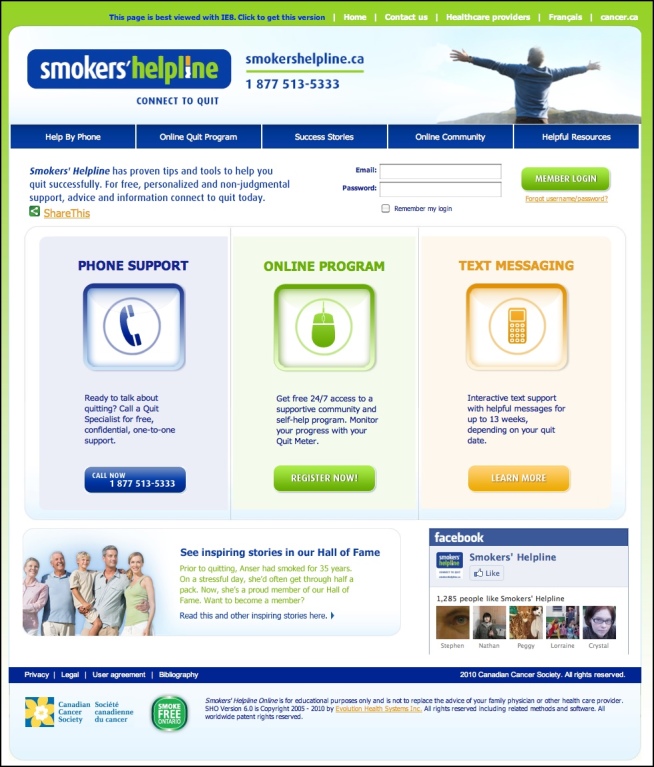
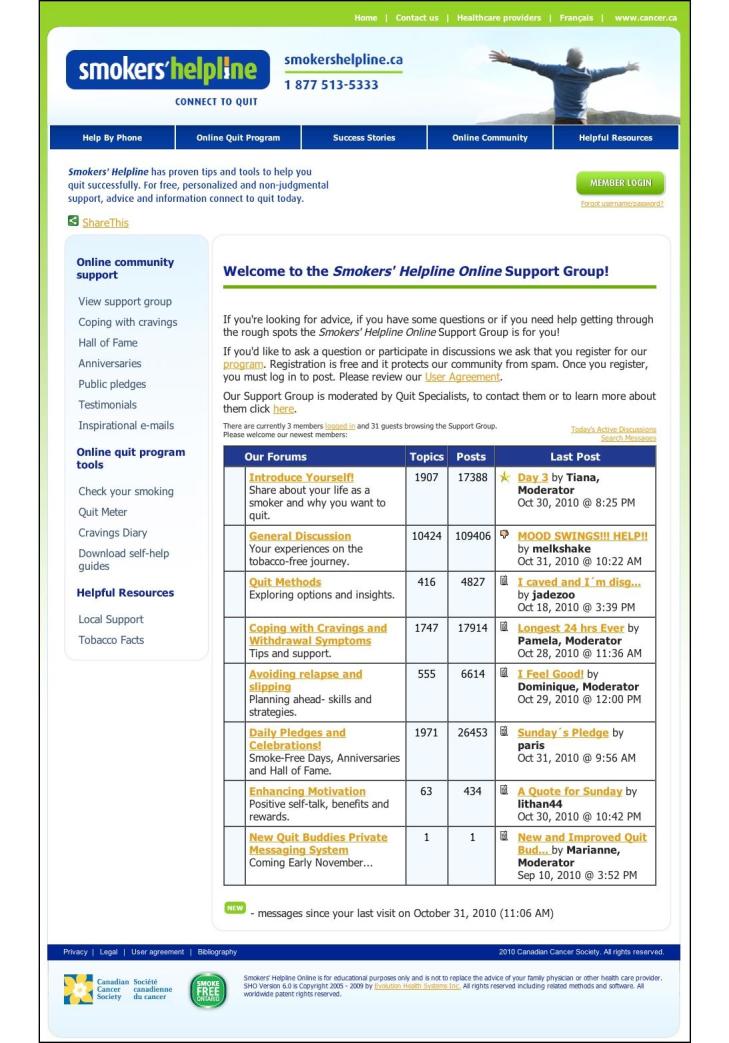
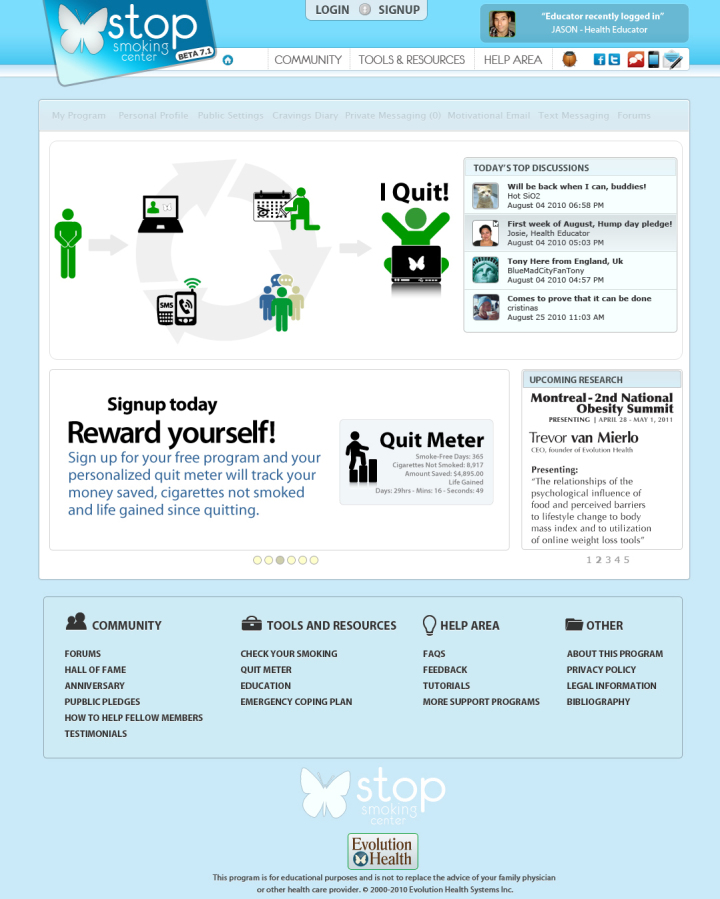
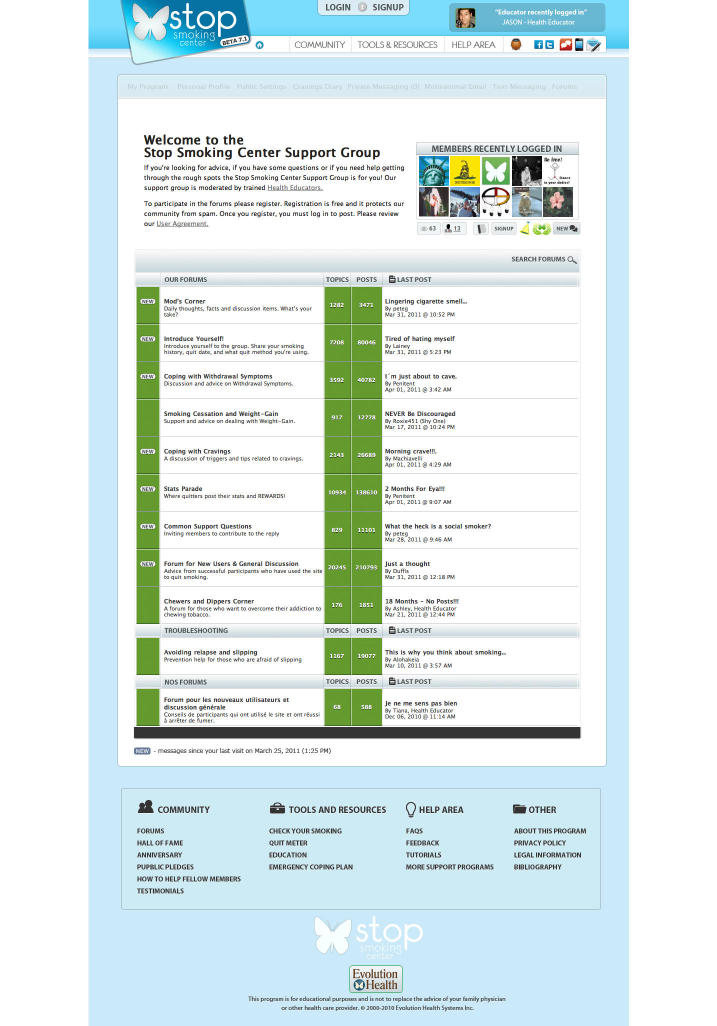
We extracted cross-sectional data sets containing posting behaviors and demographic characteristics from a free, publicly funded program (the Canadian Cancer Society's Smokers' Helpline Online: SHO), and a free, privately run program (StopSmokingCenter.net: SSC).
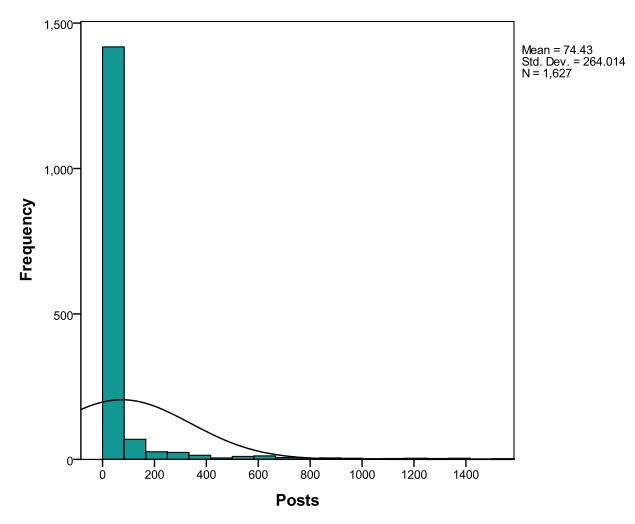
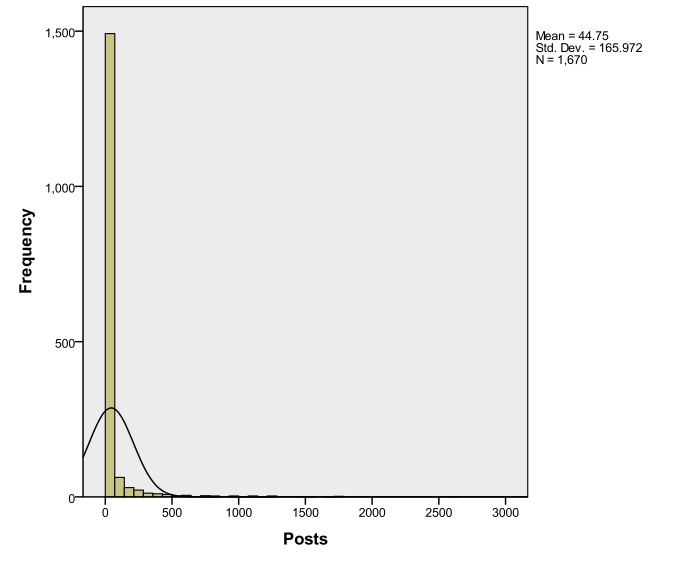
Within the reporting period (SHO: June 26, 2008 to October 12, 2010; SSC: May 17, 2007 to October 12, 2010), 21,128 individuals registered for the SHO and 11,418 registered for the SSC. Within the same period, 1670 (7.90%) registrants made at least one post in the SHO social network, and 1627 (14.25%) registrants made at least one post in the SSC social network. SHO and SSC superusers accounted for 0.4% (n = 95) and 1.1% (n = 124) of all registrants, and 5.7% (95/1670) and 7.62% (124/1627) of all social network participants, and contributed to 34.78% (29,422/84,599) and 46.22% (61,820/133,753) of social network content, respectively. Despite vast differences in promotion and group management rules, and contrary to the beliefs of group moderators, there were no statistically significant differences in demographic characteristics between the two superuser groups.
To our knowledge, this is the first study that compared demographic characteristics and posting behavior from two separate eHealth social networks. Despite vast differences in promotional efforts and management styles, both WATI attracted superusers with similar characteristics. As superusers drive network traffic, organizations promoting or supporting WATI should dedicate resources to encourage superuser participation. Further research regarding member dynamics and optimization of social networks for health care purposes is required.
在线社交网络是行为改变类网站的常见组成部分。研究发现,某些网络成员会通过为其他成员提供支持、建议和指导来发挥领导作用。在文献中,这些人被分别定义为关键参与者、发帖者、活跃用户或管理员。尽管已识别出这些人,但针对该群体的贡献或人口统计学特征的研究却很少。在本研究中,我们将关键参与者、发帖者、活跃用户和管理员统称为超级用户。
分析来自两项大型但不同的网络辅助烟草干预(WATI)的数据,以深入了解超级用户的人口统计学特征以及他们如何使用社交网络。
我们从一个免费的公共资助项目(加拿大癌症协会的在线戒烟热线:SHO)和一个免费的私人运营项目(StopSmokingCenter.net:SSC)中提取了包含发帖行为和人口统计学特征的横断面数据集。
在报告期内(SHO:2008年6月26日至2010年10月12日;SSC:2007年5月17日至2010年10月12日),21128人注册了SHO,11418人注册了SSC。在同一时期,1670名(7.90%)注册者在SHO社交网络中至少发布了一篇帖子,1627名(14.25%)注册者在SSC社交网络中至少发布了一篇帖子。SHO和SSC的超级用户分别占所有注册者的0.4%(n = 95)和1.1%(n = 124),占所有社交网络参与者的5.7%(95/1670)和7.62%(124/1627),分别贡献了社交网络内容的34.78%(29422/84599)和