Tianjin Key Laboratory for Advanced Signal Processing, Civil Aviation University of China, Tianjin 300300, China.
Sensors (Basel). 2012;12(3):3627-40. doi: 10.3390/s120303627. Epub 2012 Mar 15.
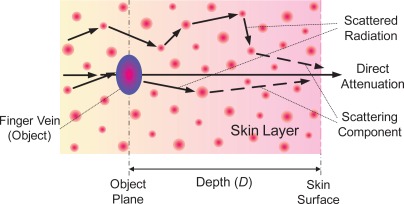
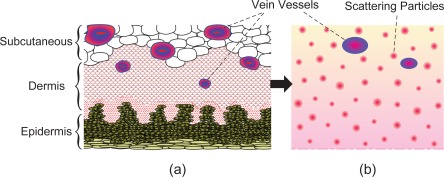
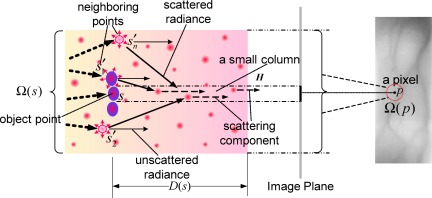
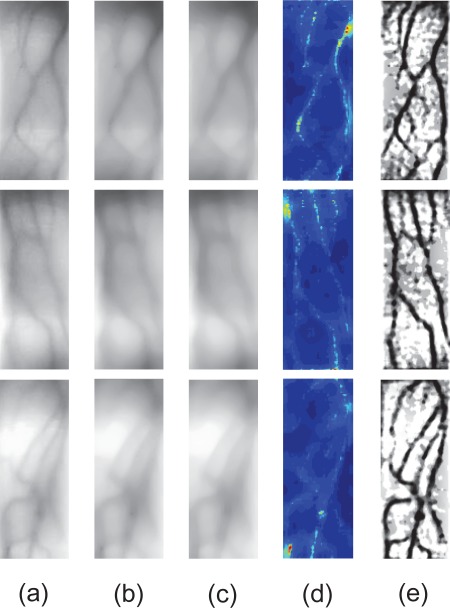
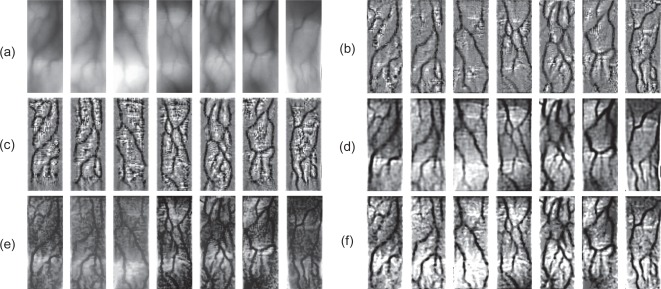
Finger-vein recognition has received increased attention recently. However, the finger-vein images are always captured in poor quality. This certainly makes finger-vein feature representation unreliable, and further impairs the accuracy of finger-vein recognition. In this paper, we first give an analysis of the intrinsic factors causing finger-vein image degradation, and then propose a simple but effective image restoration method based on scattering removal. To give a proper description of finger-vein image degradation, a biological optical model (BOM) specific to finger-vein imaging is proposed according to the principle of light propagation in biological tissues. Based on BOM, the light scattering component is sensibly estimated and properly removed for finger-vein image restoration. Finally, experimental results demonstrate that the proposed method is powerful in enhancing the finger-vein image contrast and in improving the finger-vein image matching accuracy.
手指静脉识别最近受到了越来越多的关注。然而,手指静脉图像的质量通常很差。这使得手指静脉特征表示变得不可靠,并进一步降低了手指静脉识别的准确性。在本文中,我们首先分析了导致手指静脉图像退化的内在因素,然后提出了一种简单而有效的基于散射去除的图像恢复方法。为了对手指静脉图像退化进行适当的描述,根据生物组织中光传播的原理,我们提出了一种特定于手指静脉成像的生物光学模型(BOM)。基于 BOM,可以合理估计光散射分量,并对手指静脉图像进行适当的恢复。最后,实验结果表明,所提出的方法在增强手指静脉图像对比度和提高手指静脉图像匹配精度方面非常有效。