Hillung Julia, Cuevas José M, Elena Santiago F
Instituto de Biología Molecular y Celular de Plantas, Consejo Superior de Investigaciones Científicas-Universidad Politécnica de Valencia Valencia, Spain.
Front Microbiol. 2012 Jun 25;3:229. doi: 10.3389/fmicb.2012.00229. eCollection 2012.
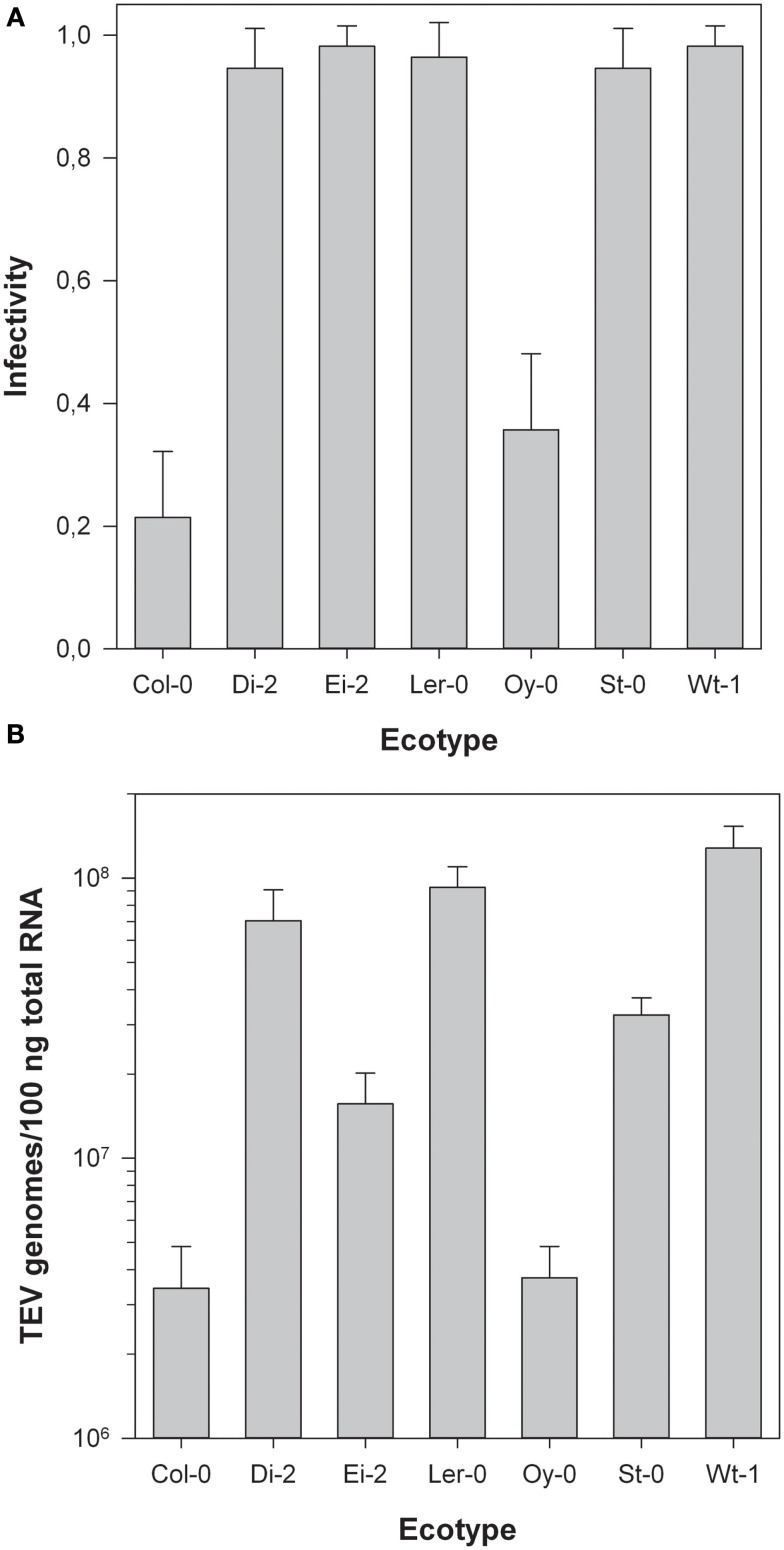
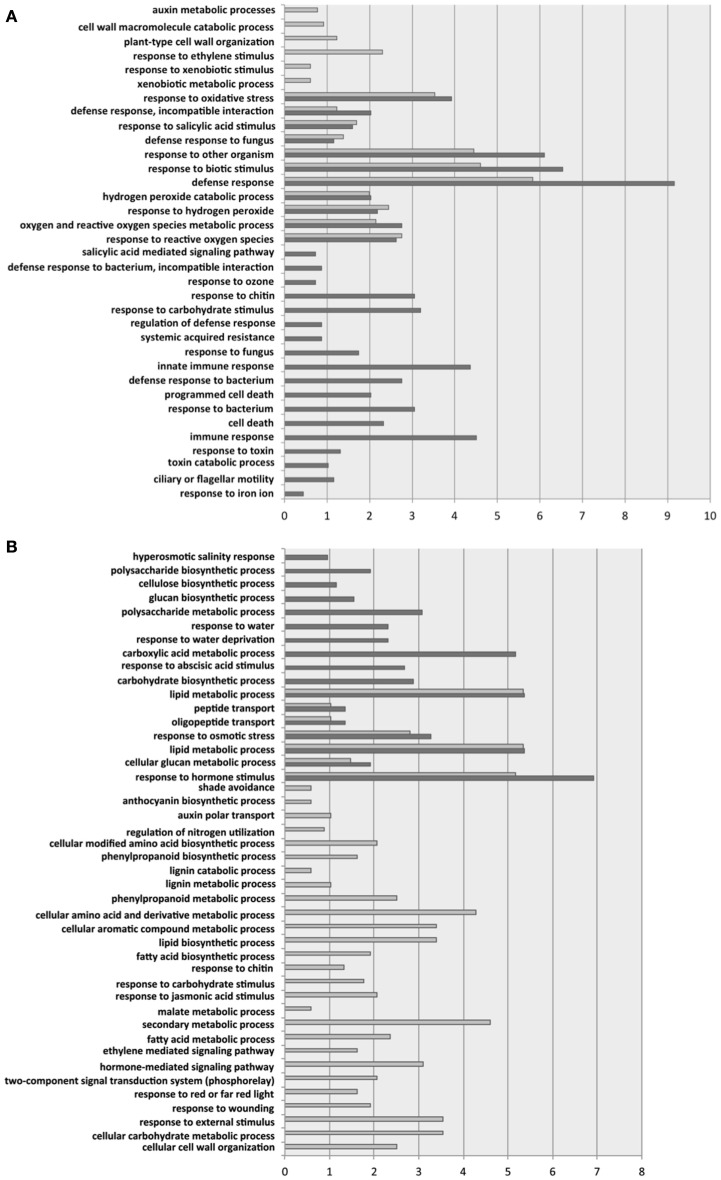
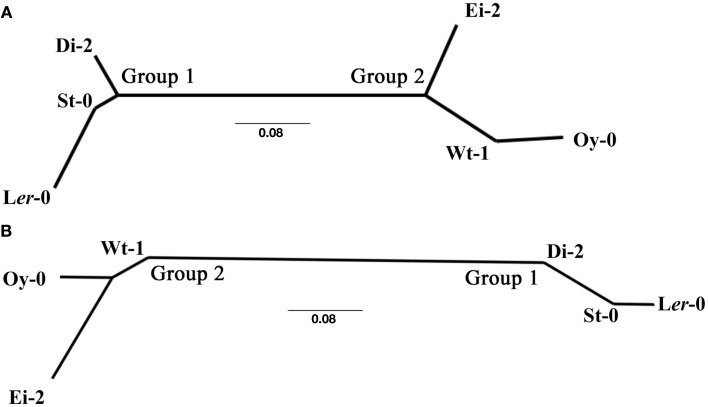
The use of high-throughput transcript profiling techniques has opened the possibility of identifying, in a single experiment, multiple host mRNAs whose levels of accumulation are altered in response to virus infection. Several studies have used this approach to analyze the response of Arabidopsis thaliana to the infection by different RNA and DNA viruses. However, the possible differences in response of genetically heterogeneous ecotypes of the plant to the same virus have never been addressed before. Here we have used a strain of Tobacco etch potyvirus (TEV) experimentally adapted to A. thaliana ecotype Ler-0 and a set of seven plant ecotypes to tackle this question. Each ecotype was inoculated with the same amount of the virus and the outcome of infection characterized phenotypically (i.e., virus infectivity, accumulation, and symptoms development). Using commercial microarrays containing probes for more than 43,000 A. thaliana transcripts, we explored the effect of viral infection on the plant transcriptome. In general, we found that ecotypes differ in the way they perceive and respond to the virus. Some ecotypes developed strong symptoms and accumulated large amounts of viral genomes, while others only developed mild symptoms and accumulated less virus. At the transcriptomic level, ecotypes could be classified into two groups according to the particular genes whose expression was altered upon infection. Moreover, a functional enrichment analyses showed that the two groups differed in the nature of the altered biological processes. For the group constituted by ecotypes developing milder symptoms and allowing for lower virus accumulation, genes involved in abiotic stresses and in the construction of new tissues tend to be up-regulated. For those ecotypes in which infection was more severe and productive, defense genes tend to be up-regulated, deviating the necessary resources from building new tissues.
高通量转录谱分析技术的应用使得在单个实验中鉴定多个宿主mRNA成为可能,这些mRNA的积累水平会因病毒感染而发生改变。多项研究已采用这种方法来分析拟南芥对不同RNA和DNA病毒感染的反应。然而,此前从未探讨过该植物基因异质生态型对同一病毒反应可能存在的差异。在此,我们使用了一株经实验适应拟南芥生态型Ler-0的烟草蚀纹马铃薯Y病毒(TEV)毒株以及一组七种植物生态型来解决这个问题。每种生态型均接种相同量的病毒,并对感染结果进行表型特征分析(即病毒感染力、积累量和症状发展情况)。我们使用含有针对超过43,000个拟南芥转录本探针的商业微阵列,探究了病毒感染对植物转录组的影响。总体而言,我们发现不同生态型在感知和应对病毒的方式上存在差异。一些生态型出现强烈症状并积累大量病毒基因组,而另一些则仅出现轻微症状且积累的病毒较少。在转录组水平上,根据感染后表达发生改变的特定基因,生态型可分为两组。此外,功能富集分析表明,两组在改变的生物学过程的性质上存在差异。对于症状较轻且病毒积累量较低的生态型组成的组,参与非生物胁迫和新组织构建的基因往往上调。对于那些感染更严重且更易产生病毒的生态型,防御基因往往上调,从而将构建新组织所需的资源转移。