Cell Molecular Biology and Genomics Group, Department of Biology, Norwegian University of Science and Technology Trondheim, Norway.
Department of Chemical Engineering, Norwegian University of Science and Technology Trondheim, Norway.
Front Plant Sci. 2013 Dec 26;4:532. doi: 10.3389/fpls.2013.00532. eCollection 2013.
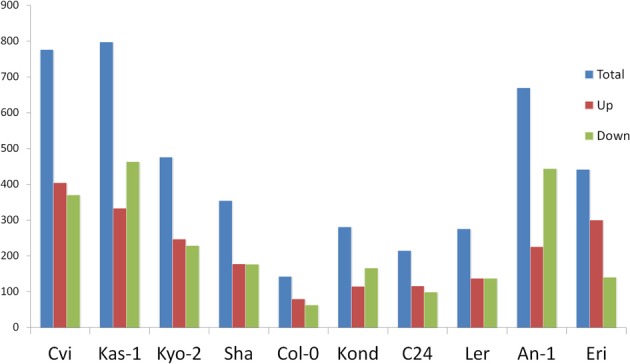
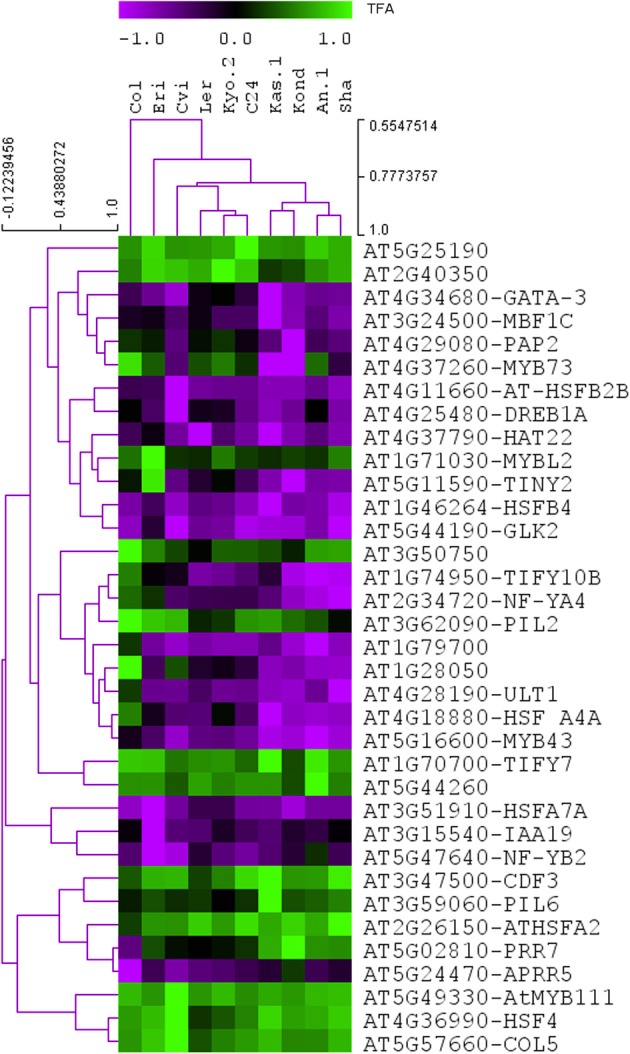
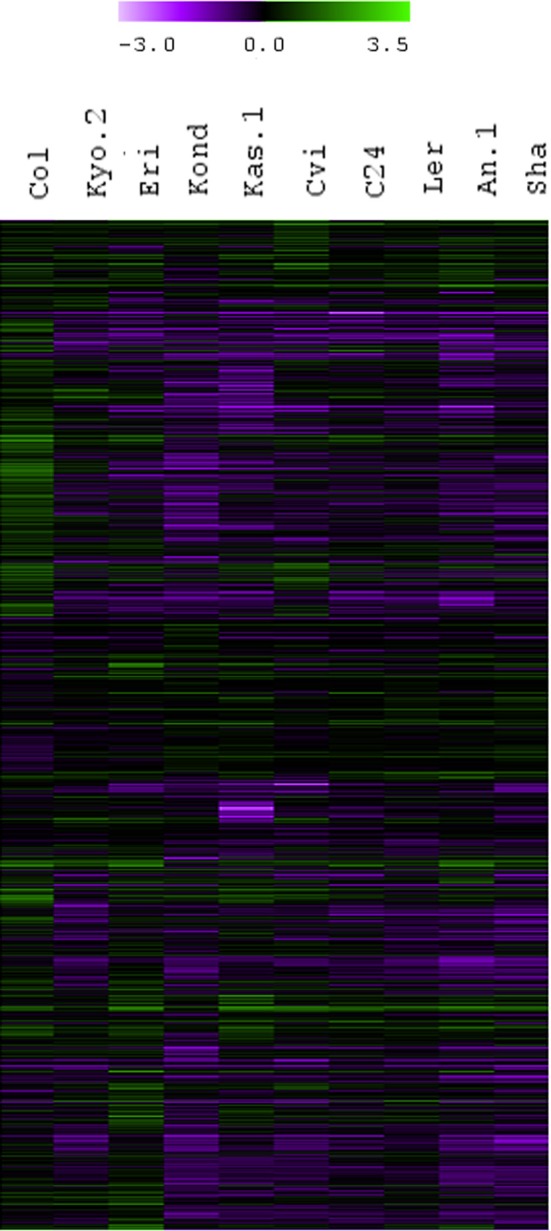
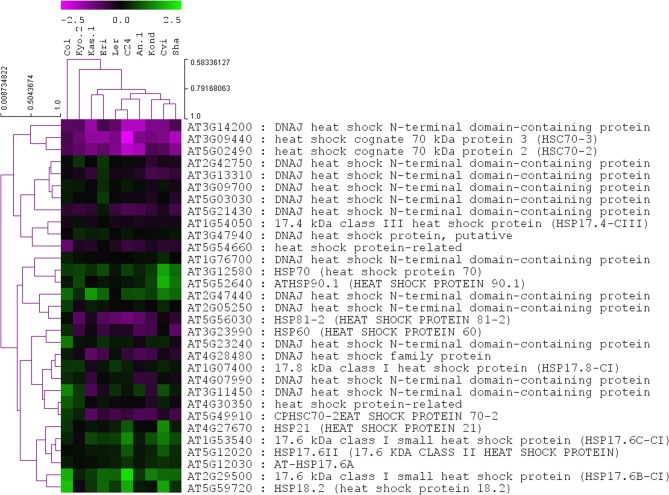
In the scenario of global warming and climate change, heat stress is a serious threat to crop production worldwide. Being sessile, plants cannot escape from heat. Plants have developed various adaptive mechanisms to survive heat stress. Several studies have focused on diversity of heat tolerance levels in divergent Arabidopsis thaliana (A. thaliana) ecotypes, but comprehensive genome scale understanding of heat stress response in plants is still lacking. Here we report the genome scale transcript responses to heat stress of 10 A. thaliana ecotypes (Col, Ler, C24, Cvi, Kas1, An1, Sha, Kyo2, Eri, and Kond) originated from different geographical locations. During the experiment, A. thaliana plants were subjected to heat stress (38°C) and transcript responses were monitored using Arabidopsis NimbleGen ATH6 microarrays. The responses of A. thaliana ecotypes exhibited considerable variation in the transcript abundance levels. In total, 3644 transcripts were significantly heat regulated (p < 0.01) in the 10 ecotypes, including 244 transcription factors and 203 transposable elements. By employing a systems genetics approach- Network Component Analysis (NCA), we have constructed an in silico transcript regulatory network model for 35 heat responsive transcription factors during cellular responses to heat stress in A. thaliana. The computed activities of the 35 transcription factors showed ecotype specific responses to the heat treatment.
在全球变暖与气候变化的背景下,热应激是全世界范围内作物生产面临的严峻威胁。由于植物不能移动,它们无法逃避热应激。植物已经发展出各种适应机制来应对热应激。一些研究集中在不同拟南芥(Arabidopsis thaliana)生态型之间耐热水平的多样性上,但对植物热应激反应的综合全基因组理解仍然缺乏。在这里,我们报告了来自不同地理位置的 10 个拟南芥生态型(Col、Ler、C24、Cvi、Kas1、An1、Sha、Kyo2、Eri 和 Kond)在受到热应激(38°C)时的全基因组转录反应。在实验过程中,使用 Arabidopsis NimbleGen ATH6 微阵列监测拟南芥的转录反应。拟南芥生态型的反应在转录物丰度水平上表现出相当大的差异。在 10 个生态型中,共有 3644 个转录物(p < 0.01)受到显著的热调控,包括 244 个转录因子和 203 个转座元件。通过采用系统遗传学方法——网络成分分析(NCA),我们构建了一个拟南芥细胞对热应激反应过程中 35 个热响应转录因子的转录调控网络模型。计算得到的 35 个转录因子的活性显示出生态型特异性对热处理的响应。