Centre for Medical Parasitology, Department of International Health, Immunology and Microbiology, University of Copenhagen, Copenhagen University Hospital, Denmark.
Malar J. 2012 Jun 28;11:216. doi: 10.1186/1475-2875-11-216.
Cerebral malaria (CM) is a severe complication of malaria with considerable mortality. In addition to acute encephalopathy, survivors frequently suffer from neurological sequelae. The pathogenesis is incompletely understood, hampering the development of an effective, adjunctive therapy, which is not available at present. Previously, erythropoietin (EPO) was reported to significantly improve the survival and outcome in a murine CM model. The study objectives were to assess myelin thickness and ultrastructural morphology in the corpus callosum in murine CM and to adress the effects of EPO treatment in this context.
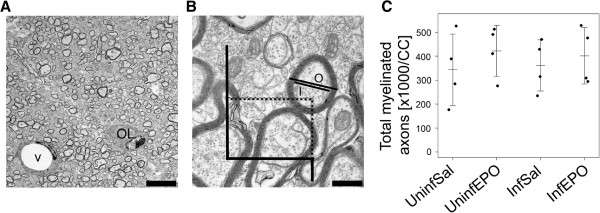
The study consisted of two groups of Plasmodium berghei-infected mice and two groups of uninfected controls that were either treated with EPO or placebo (n = 4 mice/group). In the terminal phase of murine CM the brains were removed and processed for electron microscopy. Myelin sheaths in the corpus callosum were analysed with transmission electron microscopy and stereology.
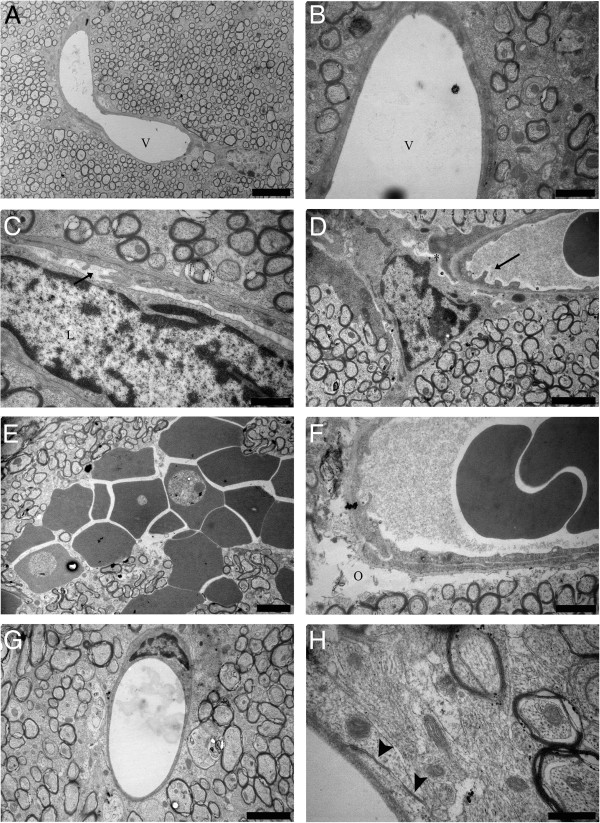
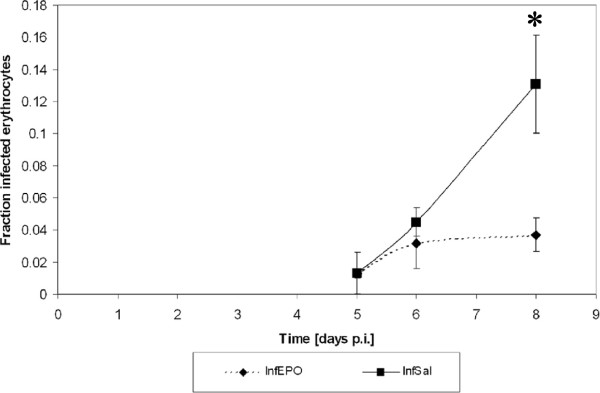
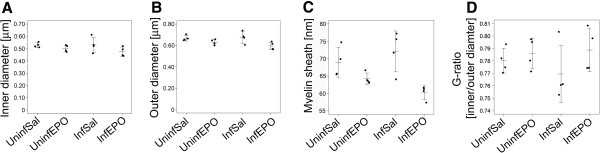
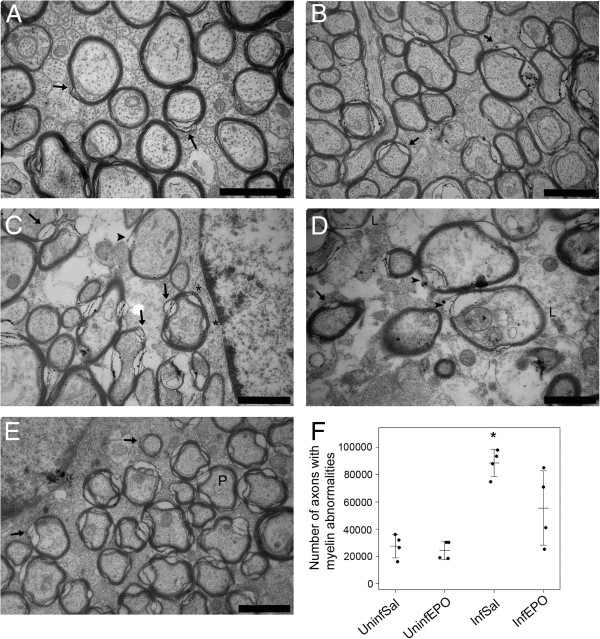
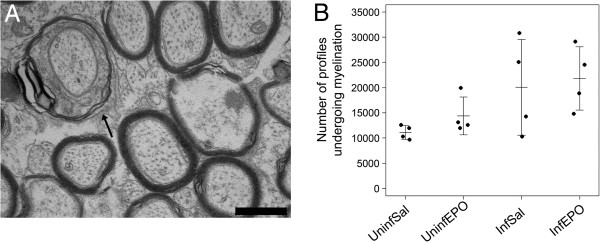
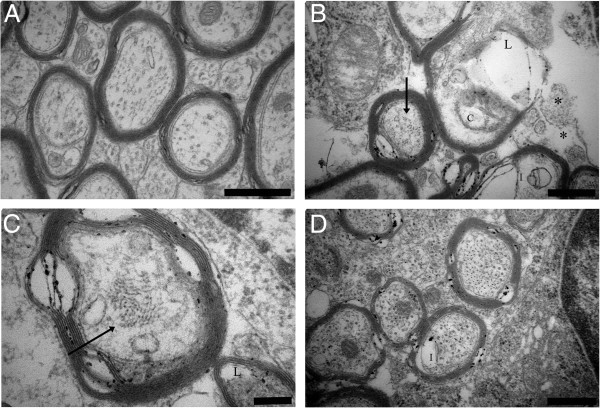
The infection caused clinical CM, which was counteracted by EPO. The total number of myelinated axons was identical in the four groups and mice with CM did not have reduced mean thickness of the myelin sheaths. Instead, CM mice had significantly increased numbers of abnormal myelin sheaths, whereas EPO-treated mice were indistinguishable from uninfected mice. Furthermore, mice with CM had frequent and severe axonal injury, pseudopodic endothelial cells, perivascular oedemas and intracerebral haemorrhages.
EPO treatment reduced clinical signs of CM and reduced cerebral pathology. Murine CM does not reduce the general thickness of myelin sheaths in the corpus callosum.
脑型疟疾(CM)是疟疾的一种严重并发症,死亡率较高。除了急性脑病外,幸存者还经常遭受神经后遗症的困扰。发病机制尚未完全了解,这阻碍了有效的辅助治疗方法的发展,目前尚无此类方法。先前有报道称红细胞生成素(EPO)可显著改善鼠 CM 模型的存活率和结果。本研究的目的是评估鼠 CM 中胼胝体的髓鞘厚度和超微结构形态,并探讨 EPO 治疗在此方面的效果。
该研究包括两组感染伯氏疟原虫的小鼠和两组未感染的对照小鼠,它们分别接受 EPO 或安慰剂治疗(每组 4 只小鼠)。在鼠 CM 的终末期,取出大脑并进行电子显微镜处理。用透射电子显微镜和体视学分析胼胝体中的髓鞘。
感染导致临床 CM,EPO 可拮抗这种感染。四组的有髓神经纤维总数相同,CM 小鼠的髓鞘平均厚度并没有减少。相反,CM 小鼠的异常髓鞘数量明显增加,而 EPO 治疗的小鼠与未感染的小鼠没有区别。此外,CM 小鼠有频繁且严重的轴突损伤、伪足内皮细胞、血管周围水肿和脑内出血。
EPO 治疗可减轻 CM 的临床症状和脑病理学变化。鼠 CM 不会减少胼胝体髓鞘的总厚度。