Key Laboratory of Urban Environment & Health, Institute of Urban Environment, Chinese Academy of Sciences, Xiamen, China.
Environ Sci Pollut Res Int. 2012 Jun;19(5):1375-84. doi: 10.1007/s11356-011-0718-7. Epub 2012 Jun 20.
BACKGROUND, AIMS AND SCOPE: Current studies have paid little attention to the dynamism in urban spatial expansion and its possible environmental and health effects or to the health effects of rapid urban environmental change at different points along the urbanisation gradient. This study adopts a public health ecology approach to systematically understand the relationship between urbanisation, urban environmental change and human health in China.
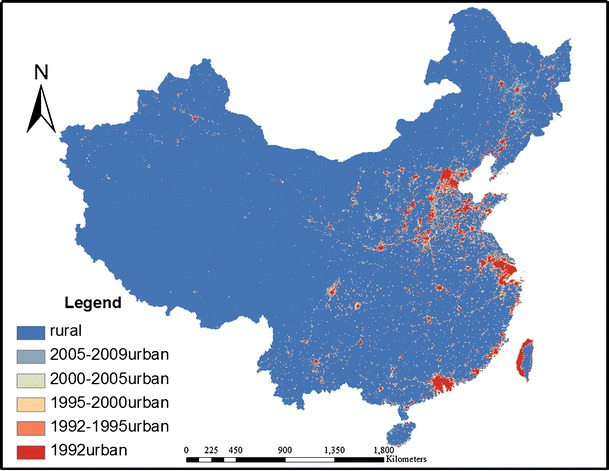
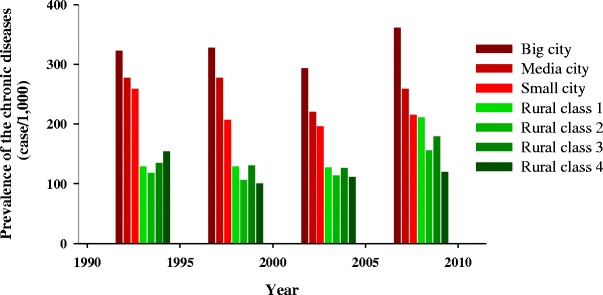
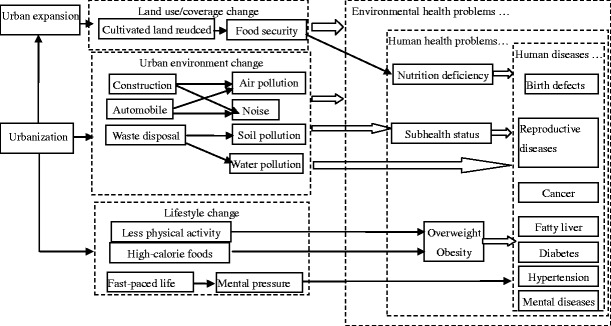
Remote sensing image analysis, based on night light data at five different time periods in recent decades, was used to determine changes to the overall urban area. Through a review of the evidence on the relationships between environmental health, urbanisation and health, we advance a pathway framework for explaining urban human health ecology. The Spearman rank correlation coefficient was used to measure the correlation between disease prevalence and urbanisation level, adding a further dimension to a systemic understanding of urban health.
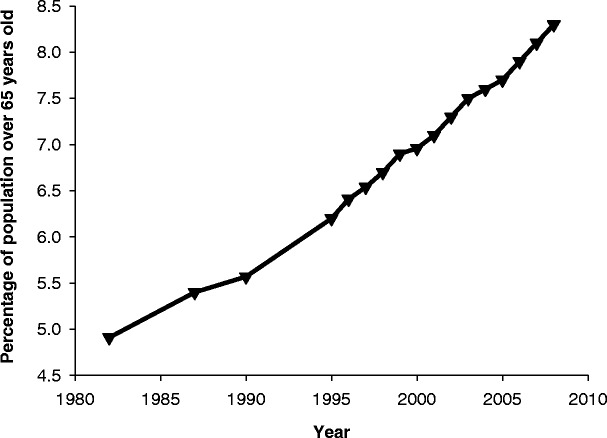
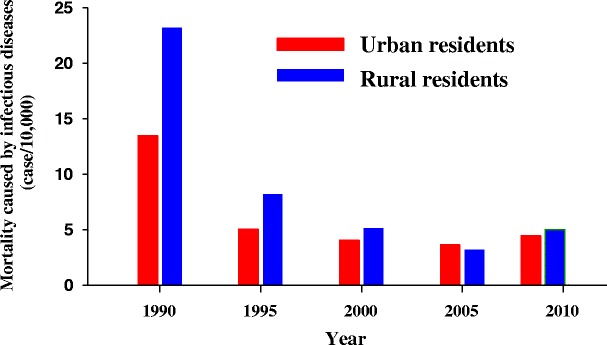
Urban areas have been increasing spatially, but unevenly, in recent decades, with medium and small cities also expanding rapidly in the past decade. Urbanisation and urban expansion result in changes to land use/coverage change, the urban environment and the residents' lifestyle, which result in human health problems. Regions with the highest urbanisation level were more inclined to have a high prevalence of chronic disease in recent decades. An ecological public health approach provides insights into the multiple types of data which need to be routinely collected if human disease is not to become a barrier to social and economic development.
背景、目的和范围:目前的研究很少关注城市空间扩张的动态及其对环境和健康的潜在影响,也很少关注城市化梯度上不同点的快速城市环境变化对健康的影响。本研究采用公共卫生生态学方法,系统地了解城市化、城市环境变化与中国人类健康之间的关系。
基于近几十年来五个不同时期的夜光数据进行遥感图像分析,以确定整体城市面积的变化。通过对环境健康、城市化与健康之间关系的证据进行综述,我们提出了一个解释城市人类健康生态的途径框架。采用斯皮尔曼等级相关系数来衡量疾病流行率与城市化水平之间的相关性,从而更全面地了解城市健康。
近几十年来,城市空间不断扩张,但分布不均,中小城市在过去十年也迅速扩张。城市化和城市扩张导致土地利用/覆盖变化、城市环境和居民生活方式发生变化,从而导致人类健康问题。在过去几十年中,城市化水平最高的地区慢性病的发病率更高。生态公共卫生方法提供了一些见解,即如果人类疾病不成为社会和经济发展的障碍,就需要定期收集多种类型的数据。