Department of Dermatology, University of Alabama at Birmingham, Birmingham, AL 35294, USA.
Toxicol Appl Pharmacol. 2012 Aug 15;263(1):122-30. doi: 10.1016/j.taap.2012.06.013. Epub 2012 Jun 27.
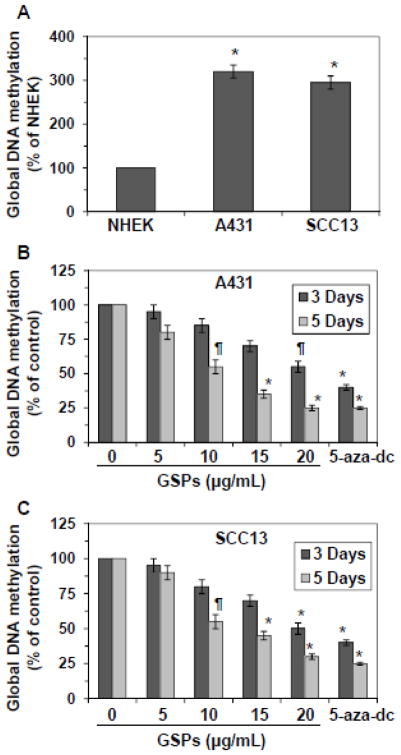
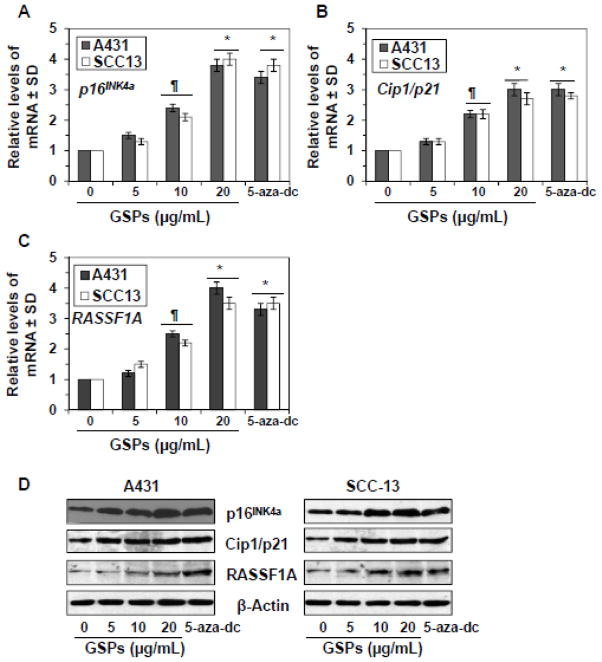
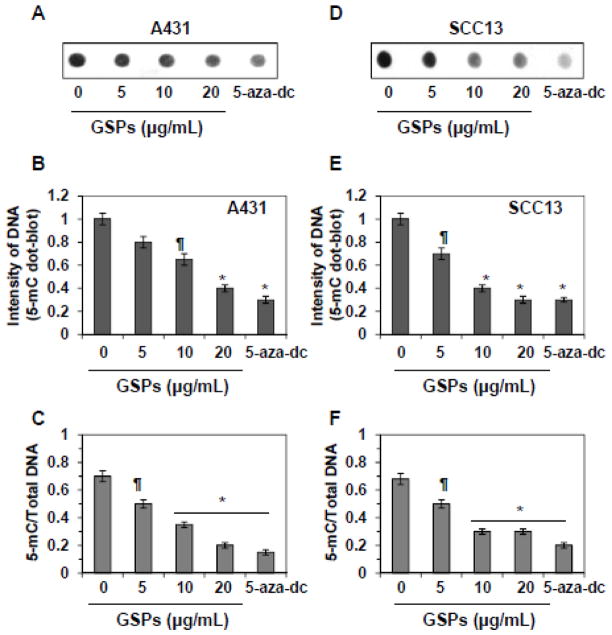
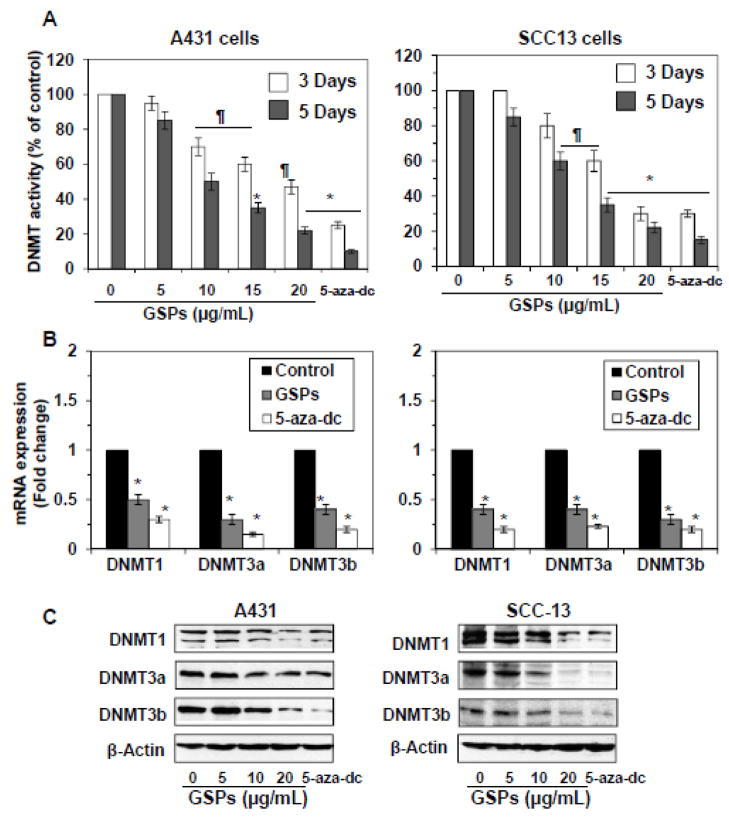
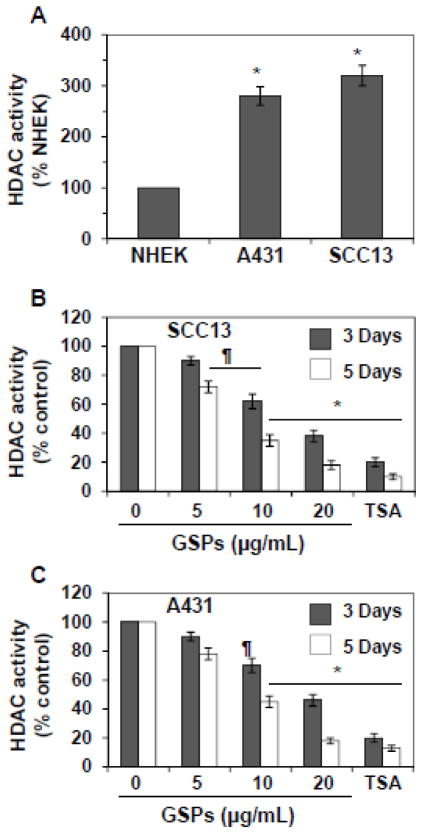
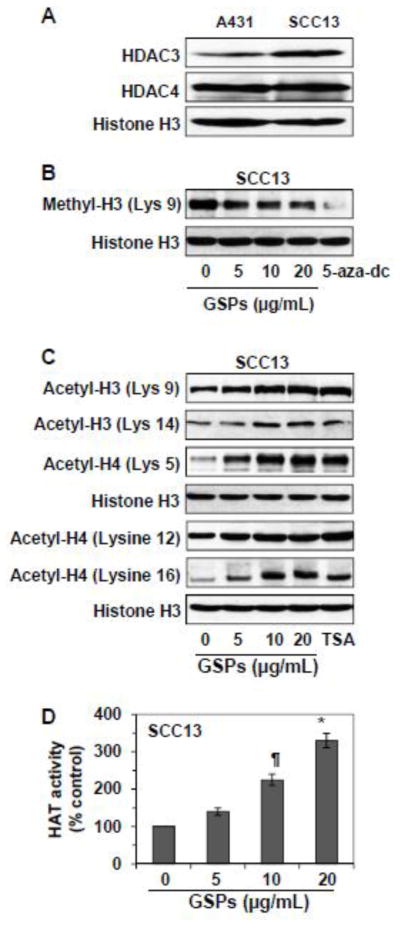
Grape seed proanthocyanidins (GSPs) have been shown to have anti-skin carcinogenic effects in in vitro and in vivo models. However, the precise epigenetic molecular mechanisms remain unexplored. This study was designed to investigate whether GSPs reactivate silenced tumor suppressor genes following epigenetic modifications in skin cancer cells. For this purpose, A431 and SCC13 human squamous cell carcinoma cell lines were used as in vitro models. The effects of GSPs on DNA methylation, histone modifications and tumor suppressor gene expressions were studied in these cell lines using enzyme activity assays, western blotting, dot-blot analysis and real-time polymerase chain reaction (RT-PCR). We found that treatment of A431 and SCC13 cells with GSPs decreased the levels of: (i) global DNA methylation, (ii) 5-methylcytosine, (iii) DNA methyltransferase (DNMT) activity and (iv) messenger RNA (mRNA) and protein levels of DNMT1, DNMT3a and DNMT3b in these cells. Similar effects were noted when these cancer cells were treated identically with 5-aza-2'-deoxycytidine, an inhibitor of DNA methylation. GSPs decreased histone deacetylase activity, increased levels of acetylated lysines 9 and 14 on histone H3 (H3-Lys 9 and 14) and acetylated lysines 5, 12 and 16 on histone H4, and reduced the levels of methylated H3-Lys 9. Further, GSP treatment resulted in re-expression of the mRNA and proteins of silenced tumor suppressor genes, RASSF1A, p16(INK4a) and Cip1/p21. Together, this study provides a new insight into the epigenetic mechanisms of GSPs and may have significant implications for epigenetic therapy in the treatment/prevention of skin cancers in humans.
葡萄籽原花青素(GSP)已被证明在体外和体内模型中具有抗皮肤致癌作用。然而,确切的表观遗传分子机制仍未被探索。本研究旨在研究 GSP 是否能在皮肤癌细胞的表观遗传修饰后重新激活沉默的肿瘤抑制基因。为此,使用 A431 和 SCC13 人鳞状细胞癌细胞系作为体外模型。使用酶活性测定、western blot、斑点印迹分析和实时聚合酶链反应(RT-PCR)研究 GSP 对这些细胞系中的 DNA 甲基化、组蛋白修饰和肿瘤抑制基因表达的影响。我们发现,用 GSP 处理 A431 和 SCC13 细胞后,(i)降低了细胞的整体 DNA 甲基化水平,(ii)降低了 5-甲基胞嘧啶的水平,(iii)降低了 DNA 甲基转移酶(DNMT)的活性,以及(iv)DNMT1、DNMT3a 和 DNMT3b 的信使 RNA(mRNA)和蛋白水平。当这些癌细胞用 5-氮杂-2'-脱氧胞苷(一种 DNA 甲基化抑制剂)进行相同处理时,也观察到类似的效果。GSP 降低了组蛋白去乙酰化酶的活性,增加了组蛋白 H3 上赖氨酸 9 和 14 的乙酰化水平(H3-Lys 9 和 14)和组蛋白 H4 上赖氨酸 5、12 和 16 的乙酰化水平,并降低了甲基化 H3-Lys 9 的水平。此外,GSP 处理导致沉默的肿瘤抑制基因,RASSF1A、p16(INK4a)和 Cip1/p21 的 mRNA 和蛋白重新表达。总的来说,这项研究为 GSP 的表观遗传机制提供了新的见解,可能对人类皮肤癌的表观遗传治疗具有重要意义。