Oyedemi Sunday Oyewole, Oyedemi Blessing Ogochukwuamaka, Arowosegbe Sunday, Afolayan Anthony Jide
School of Biological Sciences, University of Fort Hare, Alice 5700, South Africa.
School of Pharmacy, University of London, Brunswick Square, London WC1N 1AX, UK.
Int J Mol Sci. 2012;13(5):6189-6203. doi: 10.3390/ijms13056189. Epub 2012 May 21.
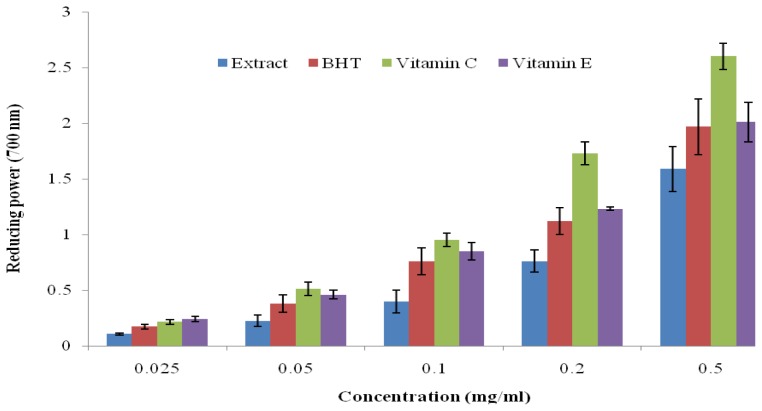
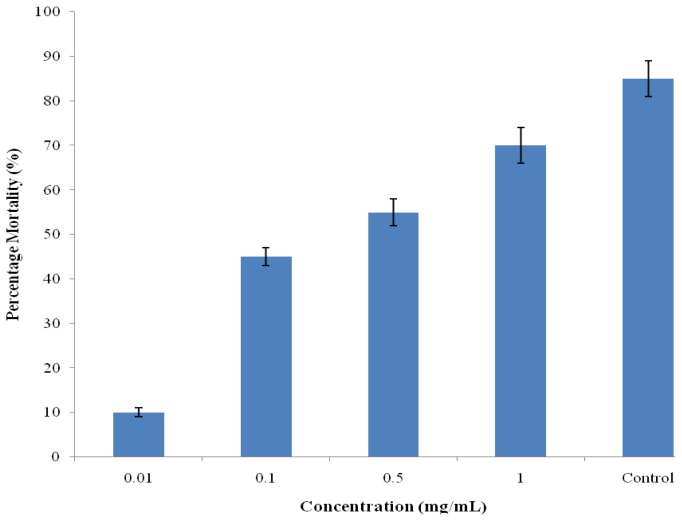
Curtisia dentata (CD) is a vulnerable medicinal plant used for the treatment of stomach ailments in South Africa. However, there is a lack of sufficient data on its phytochemical components and medicinal properties. The phytochemical analysis of the extract was estimated using standard assay methods while its antibacterial activity was determined by the agar dilution method against selected bacteria. The antioxidant activity of the extract was done using ferric reducing power, 1,1-diphenyl-2-picrylhydrazyl (DPPH), 2,2'-azino-bis-3-ethylbenzothiazoline-6-sulfonic-acid (ABTS), nitric oxide (NO), hydrogen peroxide (H(2)O(2)) and lipid peroxidation (LPO). The cytotoxicity assay of the extract was assessed using the brine shrimp lethality test with LC(50) value of 0.302 mg/mL. The antibacterial activity of the extract demonstrated an appreciable broad spectrum activity against the tested bacteria with minimum inhibitory concentration (MIC) ranges between 5000 and 0.5 mg/L. Both phenol and flavonoid concentrations were 14.86 mg tannic acid equivalent/g and 13.64 mg quercetin equivalent/g, respectively. The percentage composition of saponins (13.26) was highest, followed by steroids (1.42), while alkaloids and tannins had the same value of 0.51. Similarly, IC(50) values of the extract against DPPH, ABTS, H(2)O(2), LPO and NO were 0.017, 0.018, 0.159, 0.06 and 0.052 mg/mL, respectively. The reducing power of the extract was found to be concentration dependent. Our data suggest that the 70% ethanol extract from the CD extract has antibacterial and antioxidant properties due to the presence of bio-active compounds and thus support its folkloric use in the treatment of diseases.
齿叶柯(CD)是一种濒危药用植物,在南非用于治疗胃部疾病。然而,关于其植物化学成分和药用特性的资料不足。提取物的植物化学分析采用标准测定方法进行评估,而其抗菌活性则通过琼脂稀释法针对选定细菌进行测定。提取物的抗氧化活性通过铁还原能力、1,1-二苯基-2-苦基肼(DPPH)、2,2'-联氮-双-3-乙基苯并噻唑啉-6-磺酸(ABTS)、一氧化氮(NO)、过氧化氢(H₂O₂)和脂质过氧化(LPO)进行测定。提取物的细胞毒性测定采用卤虫致死试验进行评估,LC₅₀值为0.302mg/mL。提取物的抗菌活性显示出对受试细菌具有明显的广谱活性,最低抑菌浓度(MIC)范围在5000至0.5mg/L之间。酚类和黄酮类化合物的浓度分别为14.86mg单宁酸当量/g和13.64mg槲皮素当量/g。皂苷的百分比组成(13.26)最高,其次是类固醇(1.42),而生物碱和单宁的含量相同,均为0.51。同样,提取物对DPPH、ABTS、H₂O₂、LPO和NO的IC₅₀值分别为0.017、0.018、0.159、0.06和0.052mg/mL。提取物的还原能力呈浓度依赖性。我们的数据表明,齿叶柯提取物的70%乙醇提取物由于含有生物活性化合物而具有抗菌和抗氧化特性,从而支持其在民间用于治疗疾病。