Department of Microbial Pathogenicity Mechanisms, Leibniz Institute for Natural Product Research and Infection Biology, Hans Knöll Institute (HKI), Jena, Germany.
PLoS Pathog. 2012;8(6):e1002777. doi: 10.1371/journal.ppat.1002777. Epub 2012 Jun 28.
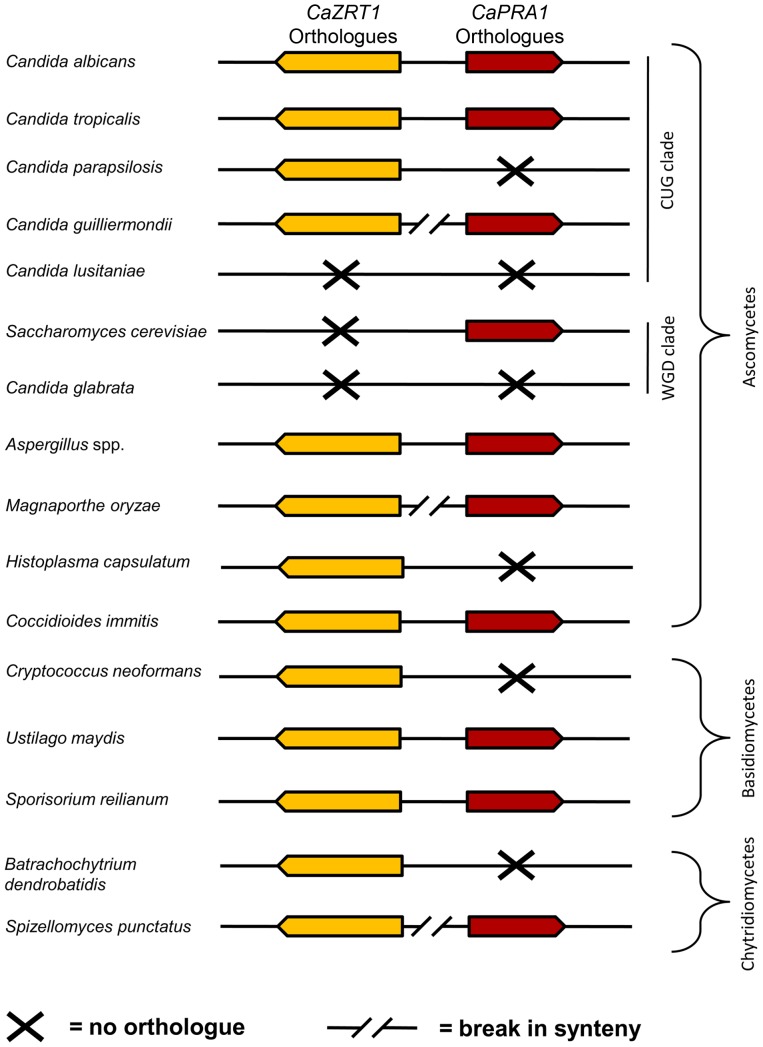
The ability of pathogenic microorganisms to assimilate essential nutrients from their hosts is critical for pathogenesis. Here we report endothelial zinc sequestration by the major human fungal pathogen, Candida albicans. We hypothesised that, analogous to siderophore-mediated iron acquisition, C. albicans utilises an extracellular zinc scavenger for acquiring this essential metal. We postulated that such a "zincophore" system would consist of a secreted factor with zinc-binding properties, which can specifically reassociate with the fungal cell surface. In silico analysis of the C. albicans secretome for proteins with zinc binding motifs identified the pH-regulated antigen 1 (Pra1). Three-dimensional modelling of Pra1 indicated the presence of at least two zinc coordination sites. Indeed, recombinantly expressed Pra1 exhibited zinc binding properties in vitro. Deletion of PRA1 in C. albicans prevented fungal sequestration and utilisation of host zinc, and specifically blocked host cell damage in the absence of exogenous zinc. Phylogenetic analysis revealed that PRA1 arose in an ancient fungal lineage and developed synteny with ZRT1 (encoding a zinc transporter) before divergence of the Ascomycota and Basidiomycota. Structural modelling indicated physical interaction between Pra1 and Zrt1 and we confirmed this experimentally by demonstrating that Zrt1 was essential for binding of soluble Pra1 to the cell surface of C. albicans. Therefore, we have identified a novel metal acquisition system consisting of a secreted zinc scavenger ("zincophore"), which reassociates with the fungal cell. Furthermore, functional similarities with phylogenetically unrelated prokaryotic systems indicate that syntenic zinc acquisition loci have been independently selected during evolution.
病原微生物从宿主中摄取必需营养物质的能力对发病机制至关重要。在这里,我们报告了主要的人类真菌病原体白色念珠菌对内皮细胞锌的螯合作用。我们假设,类似于铁载体介导的铁摄取,白色念珠菌利用细胞外锌清除剂来获取这种必需金属。我们推测,这样的“锌载体”系统将由具有锌结合特性的分泌因子组成,该因子可以特异性地重新与真菌细胞表面结合。对白念珠菌分泌组中具有锌结合基序的蛋白质进行计算机分析,鉴定出 pH 调节抗原 1(Pra1)。Pra1 的三维建模表明至少存在两个锌配位位点。事实上,重组表达的 Pra1 在体外表现出锌结合特性。在白色念珠菌中删除 PRA1 可防止真菌螯合和利用宿主锌,并在没有外源锌的情况下特异性阻断宿主细胞损伤。系统发育分析表明,PRA1 起源于古老的真菌谱系,并在子囊菌和担子菌分化之前与 ZRT1(编码锌转运蛋白)具有同线性。结构建模表明 Pra1 和 Zrt1 之间存在物理相互作用,我们通过实验证实了这一点,即 Zrt1 是可溶性 Pra1 与白色念珠菌细胞表面结合所必需的。因此,我们已经确定了一种新型的金属获取系统,该系统由分泌的锌清除剂(“锌载体”)组成,该清除剂与真菌细胞重新结合。此外,与系统发育上无关的原核系统的功能相似性表明,在进化过程中,同线性锌获取基因座已被独立选择。