Department of Pharmacology, China Medical University, Shenyang, Liaoning, China.
PLoS One. 2012;7(6):e40024. doi: 10.1371/journal.pone.0040024. Epub 2012 Jun 29.
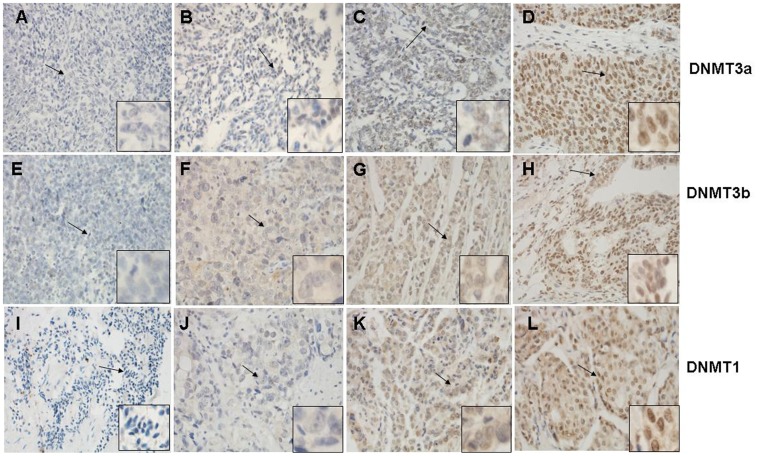
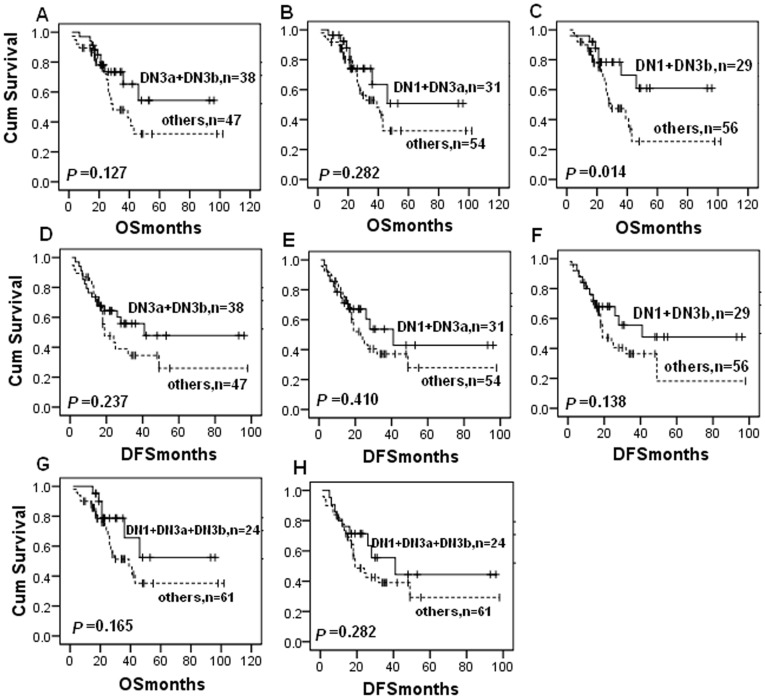
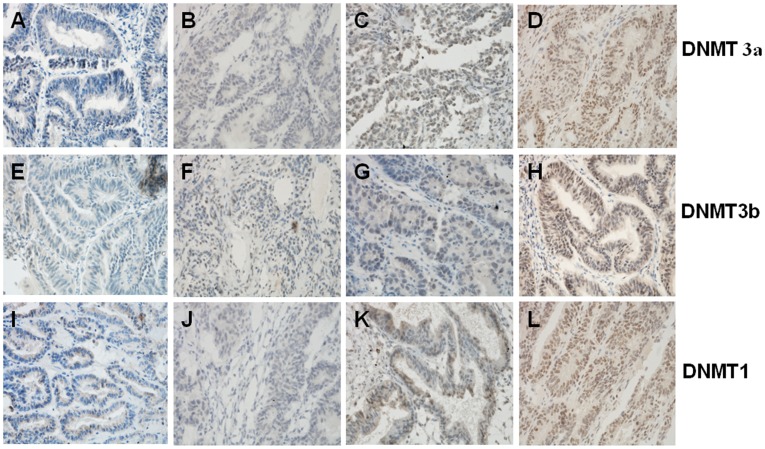
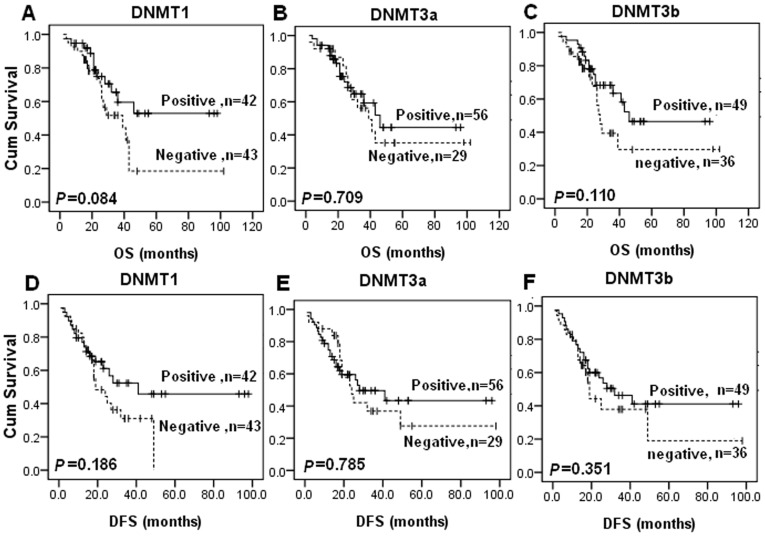
Altered DNA methylation of tumor suppressor gene promoters plays a role in human carcinogenesis and DNA methyltransferases (DNMTs) are responsible for it. This study aimed to determine aberrant expression of DNMT1, DNMT3a, and DNMT3b in benign and malignant ovarian tumor tissues for their association with clinicopathological significance and prognostic value. A total of 142 ovarian cancers and 44 benign ovarian tumors were recruited for immunohistochemical analysis of their expression. The data showed that expression of DNMT1, DNMT3a, and DNMT3b was observed in 76 (53.5%), 92 (64.8%) and 79 (55.6%) of 142 cases of ovarian cancer tissues, respectively. Of the serious tumors, DNMT3a protein expression was significantly higher than that in benign tumor samples (P = 0.001); DNMT3b was marginally significant down regulated in ovarian cancers compared to that of the benign tumors (P = 0.054); DNMT1 expression has no statistical difference between ovarian cancers and benign tumor tissues (P = 0.837). Of the mucious tumors, the expression of DNMT3a, DNMT3b, and DNMT1 was not different between malignant and benign tumors. Moreover, DNMT1 expression was associated with DNMT3b expression (P = 0.020, r = 0.195). DNMT1 expression was associated with age of the patients, menopause status, and tumor localization, while DNMT3a expression was associated with histological types and serum CA125 levels and DNMT3b expression was associated with lymph node metastasis. In addition, patients with DNMT1 or DNMT3b expression had a trend of better survival than those with negative expression. Co-expression of DNMT1 and DNMT3b was significantly associated with better overall survival (P = 0.014). The data from this study provided the first evidence for differential expression of DNMTs proteins in ovarian cancer tissues and their associations with clinicopathological and survival data in sporadic ovarian cancer patients.
肿瘤抑制基因启动子的 DNA 甲基化改变在人类肿瘤发生中起作用,而 DNA 甲基转移酶(DNMTs)对此负责。本研究旨在确定 DNMT1、DNMT3a 和 DNMT3b 在良性和恶性卵巢肿瘤组织中的异常表达,以探讨其与临床病理意义和预后价值的关系。共招募了 142 例卵巢癌和 44 例良性卵巢肿瘤患者,对其进行免疫组织化学分析。结果显示,在 142 例卵巢癌组织中,分别有 76 例(53.5%)、92 例(64.8%)和 79 例(55.6%)表达 DNMT1、DNMT3a 和 DNMT3b。在高级别肿瘤中,DNMT3a 蛋白表达明显高于良性肿瘤样本(P=0.001);DNMT3b 在卵巢癌中的表达明显低于良性肿瘤(P=0.054);DNMT1 的表达在卵巢癌和良性肿瘤组织之间无统计学差异(P=0.837)。在黏液性肿瘤中,DNMT3a、DNMT3b 和 DNMT1 的表达在恶性和良性肿瘤之间无差异。此外,DNMT1 的表达与 DNMT3b 的表达相关(P=0.020,r=0.195)。DNMT1 的表达与患者年龄、绝经状态和肿瘤定位有关,而 DNMT3a 的表达与组织学类型和血清 CA125 水平有关,DNMT3b 的表达与淋巴结转移有关。此外,DNMT1 或 DNMT3b 表达的患者有更好的生存趋势,而非表达的患者则没有。DNMT1 和 DNMT3b 的共表达与总生存时间显著相关(P=0.014)。本研究首次提供了 DNMTs 蛋白在卵巢癌组织中的差异表达及其与散发性卵巢癌患者临床病理和生存数据的关系的证据。