IBR (Instituto de Biología Molecular y Celular de Rosario), Facultad de Ciencias Bioquímicas y Farmacéuticas, UNR, Suipacha 531, 2000 Rosario, Argentina.
Nucleic Acids Res. 2012 Oct;40(18):8893-904. doi: 10.1093/nar/gks625. Epub 2012 Jul 5.
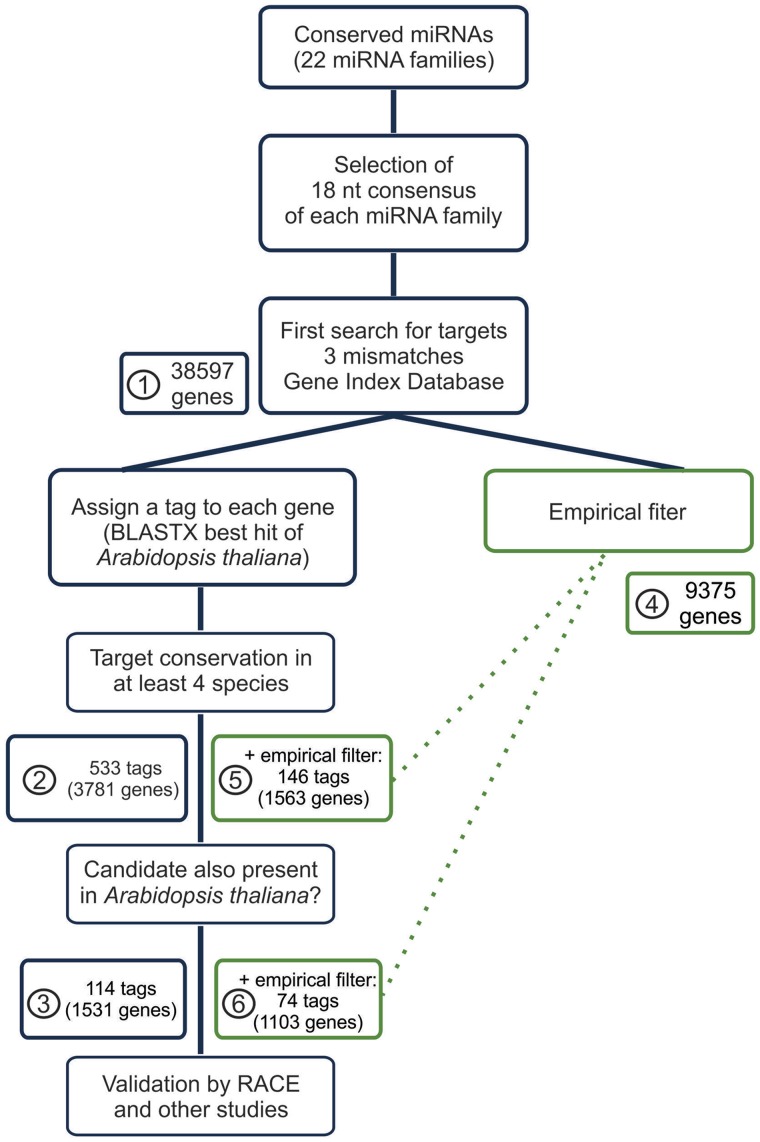
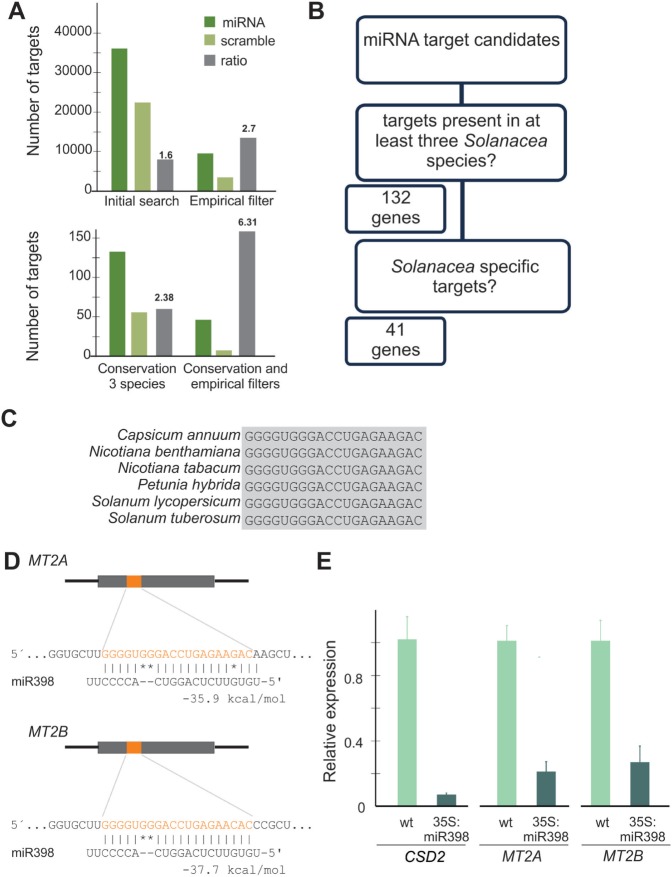
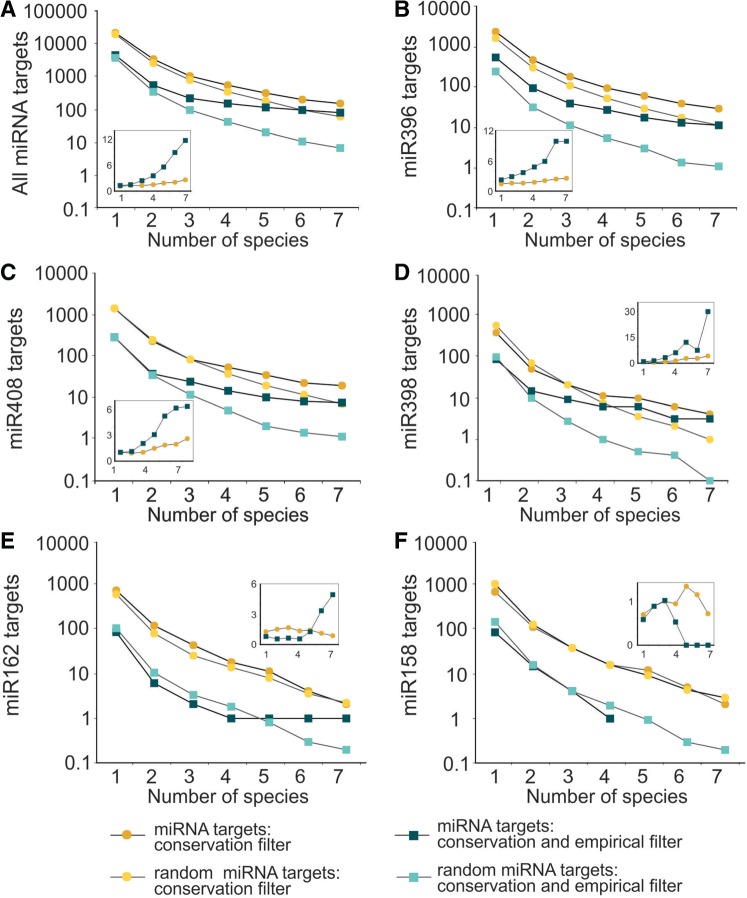
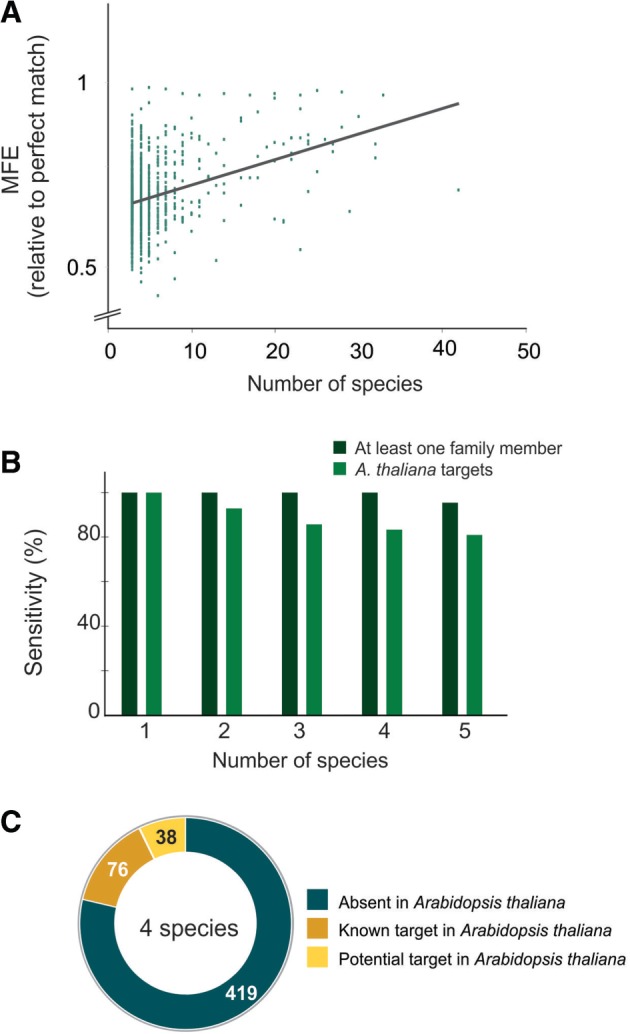
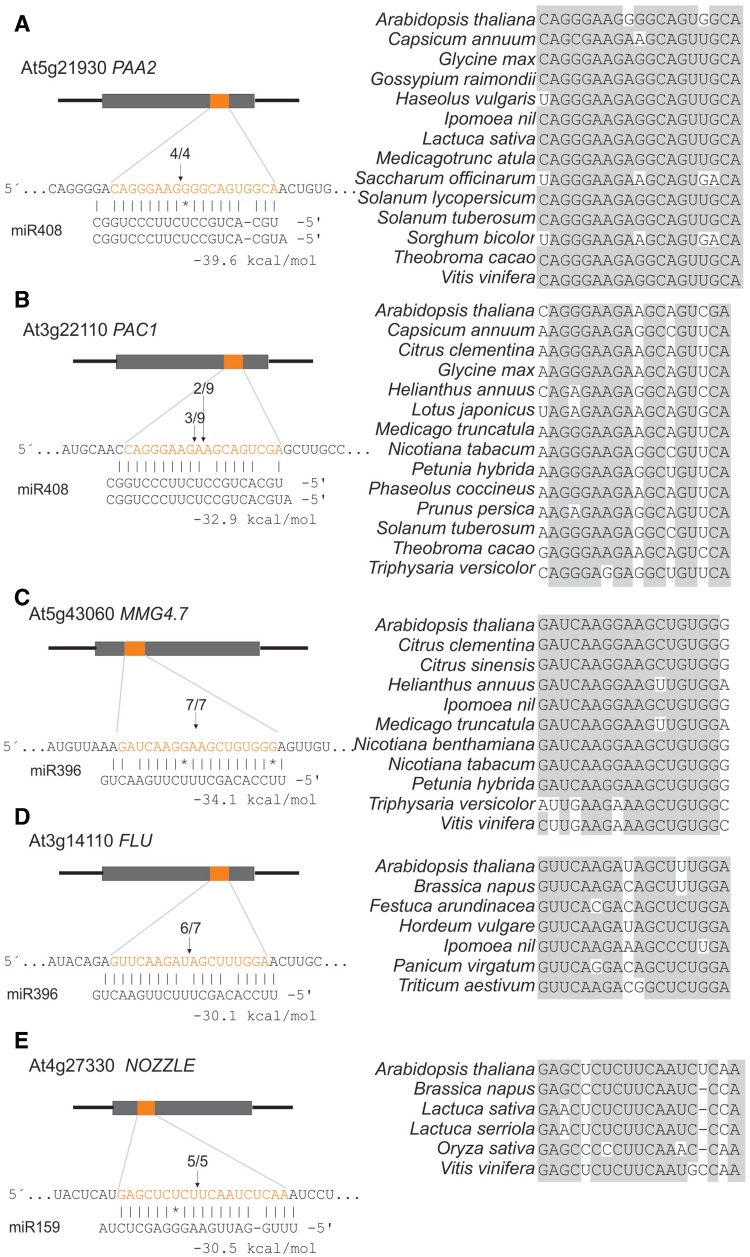
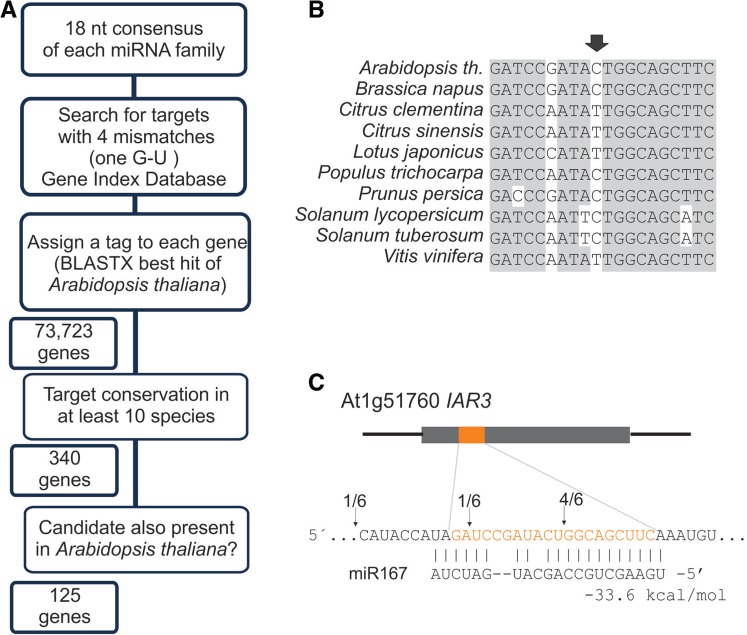
MicroRNAs (miRNAs) are major regulators of gene expression in multicellular organisms. They recognize their targets by sequence complementarity and guide them to cleavage or translational arrest. It is generally accepted that plant miRNAs have extensive complementarity to their targets and their prediction usually relies on the use of empirical parameters deduced from known miRNA-target interactions. Here, we developed a strategy to identify miRNA targets which is mainly based on the conservation of the potential regulation in different species. We applied the approach to expressed sequence tags datasets from angiosperms. Using this strategy, we predicted many new interactions and experimentally validated previously unknown miRNA targets in Arabidopsis thaliana. Newly identified targets that are broadly conserved include auxin regulators, transcription factors and transporters. Some of them might participate in the same pathways as the targets known before, suggesting that some miRNAs might control different aspects of a biological process. Furthermore, this approach can be used to identify targets present in a specific group of species, and, as a proof of principle, we analyzed Solanaceae-specific targets. The presented strategy can be used alone or in combination with other approaches to find miRNA targets in plants.
微小 RNA(miRNAs)是多细胞生物中基因表达的主要调控因子。它们通过序列互补识别靶标,并引导靶标进行切割或翻译抑制。一般认为,植物 miRNAs 与其靶标具有广泛的互补性,其预测通常依赖于从已知 miRNA-靶标相互作用中推导出的经验参数。在这里,我们开发了一种主要基于不同物种潜在调控保守性的 miRNA 靶标识别策略。我们将该方法应用于被子植物的表达序列标签数据集。使用该策略,我们预测了拟南芥中许多新的相互作用和以前未知的 miRNA 靶标,并进行了实验验证。广泛保守的新鉴定靶标包括生长素调节剂、转录因子和转运蛋白。其中一些可能与以前已知的靶标参与相同的途径,表明一些 miRNA 可能控制生物过程的不同方面。此外,该方法可用于鉴定特定物种群中存在的靶标,并且,作为原理验证,我们分析了茄科特异性靶标。所提出的策略可单独使用或与其他方法结合使用,以在植物中寻找 miRNA 靶标。