Shida Hisatoshi
Division of Molecular Virology, Institute of Immunological Science, Hokkaido University Sapporo, Japan.
Front Microbiol. 2012 May 18;3:179. doi: 10.3389/fmicb.2012.00179. eCollection 2012.
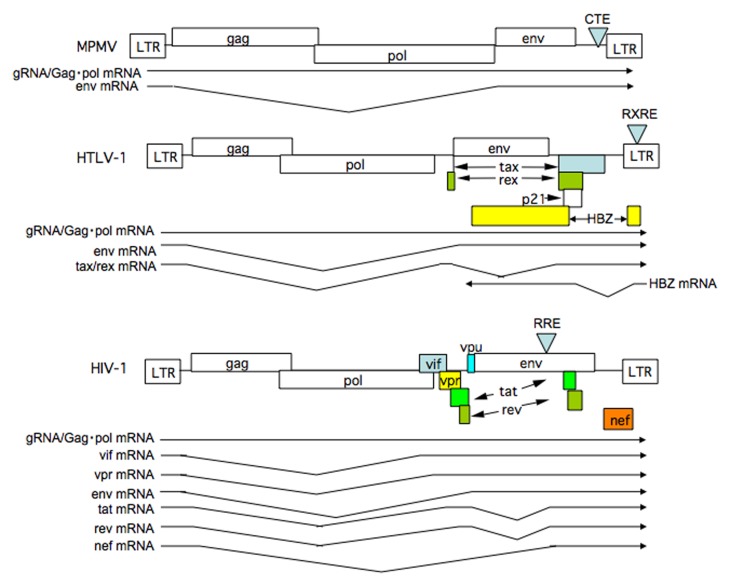
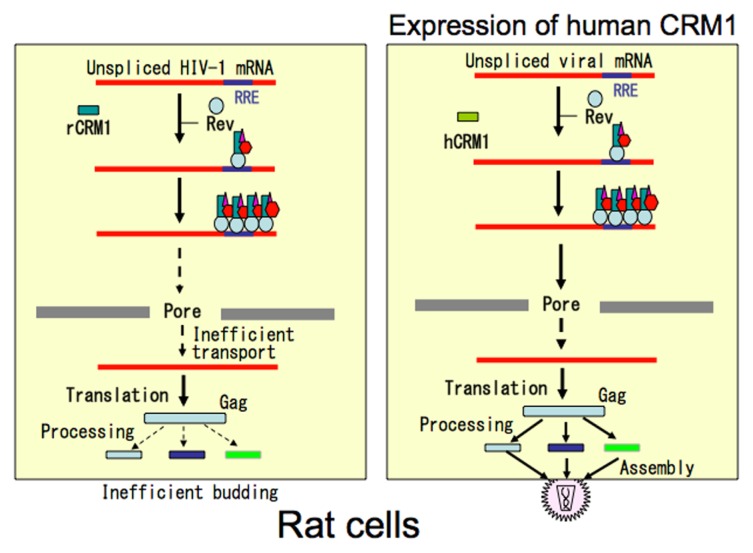
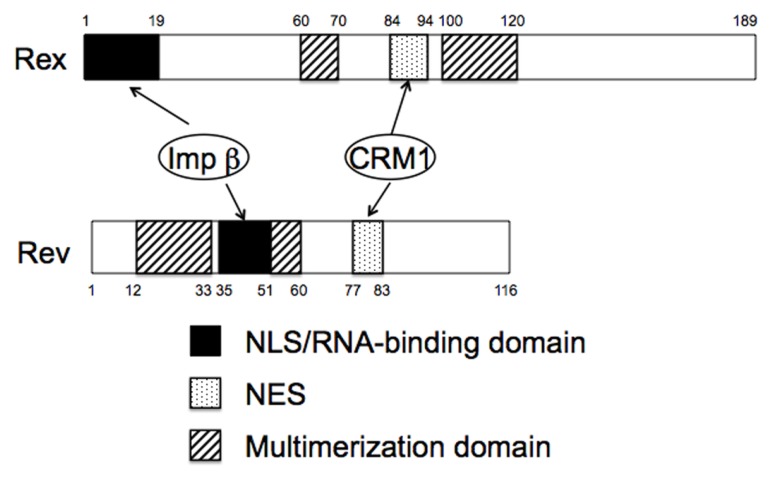
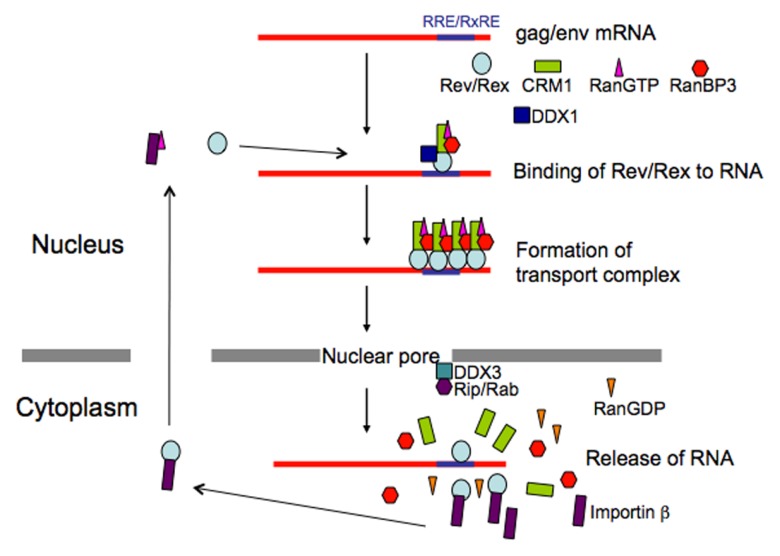
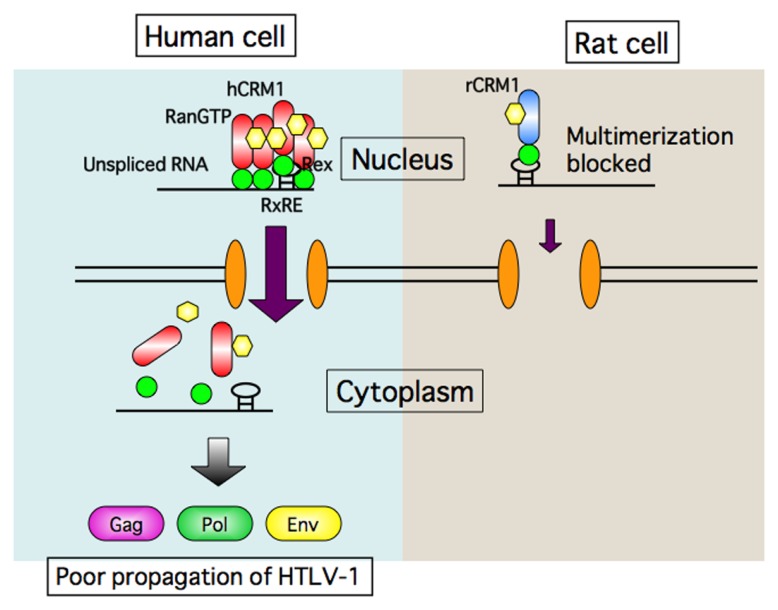
Retroviruses have evolved mechanisms for transporting their intron-containing RNAs (including genomic and messenger RNAs, which encode virion components) from the nucleus to the cytoplasm of the infected cell. Human retroviruses, such as human immunodeficiency virus (HIV) and human T cell leukemia virus type 1 (HTLV-1), encode the regulatory proteins Rev and Rex, which form a bridge between the viral RNA and the export receptor CRM1. Recent studies show that these transport systems are not only involved in RNA export, but also in the encapsidation of genomic RNA; furthermore, they influence subsequent events in the cytoplasm, including the translation of the cognate mRNA, transport of Gag proteins to the plasma membrane, and the formation of virus particles. Moreover, the mode of interaction between the viral and cellular RNA transport machinery underlies the species-specific propagation of HIV-1 and HTLV-1, forming the basis for constructing animal models of infection. This review article discusses recent progress regarding these issues.
逆转录病毒已经进化出将其含内含子的RNA(包括基因组RNA和编码病毒体成分的信使RNA)从受感染细胞的细胞核运输到细胞质的机制。人类逆转录病毒,如人类免疫缺陷病毒(HIV)和1型人类T细胞白血病病毒(HTLV-1),编码调节蛋白Rev和Rex,它们在病毒RNA和输出受体CRM1之间形成桥梁。最近的研究表明,这些运输系统不仅参与RNA输出,还参与基因组RNA的包装;此外,它们影响细胞质中的后续事件,包括同源mRNA的翻译、Gag蛋白向质膜的运输以及病毒颗粒的形成。此外,病毒与细胞RNA运输机制之间的相互作用模式是HIV-1和HTLV-1物种特异性传播的基础,为构建感染动物模型奠定了基础。这篇综述文章讨论了关于这些问题的最新进展。