Leibniz Center for Tropical Marine Ecology, Bremen, Germany.
PLoS One. 2012;7(7):e39951. doi: 10.1371/journal.pone.0039951. Epub 2012 Jul 6.
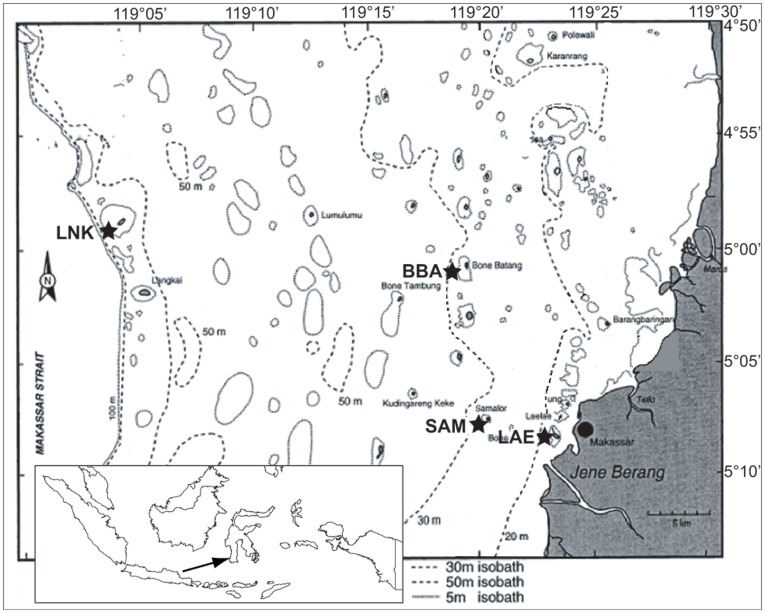
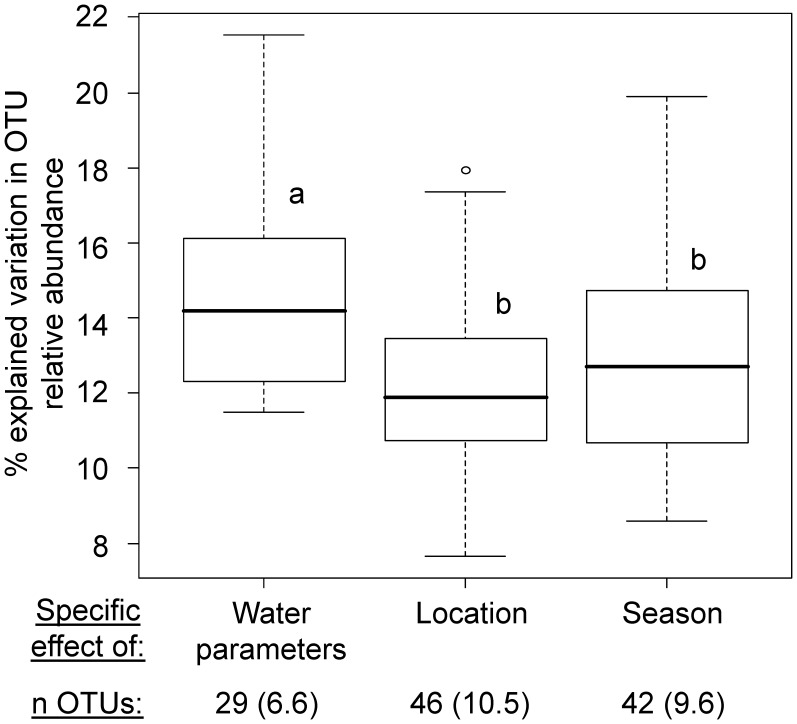
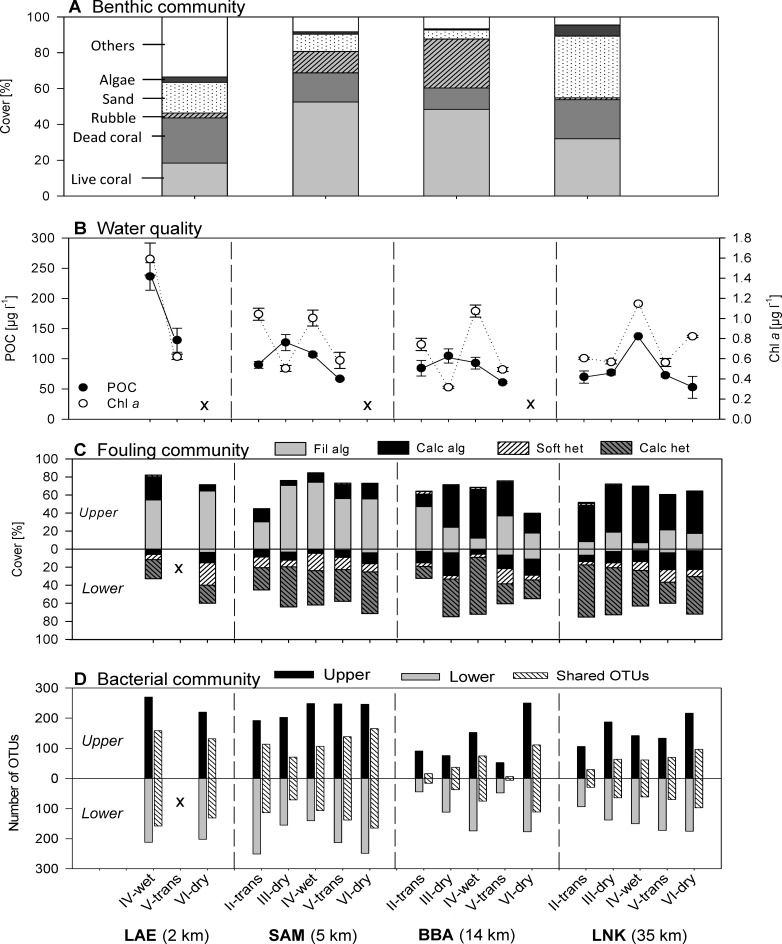
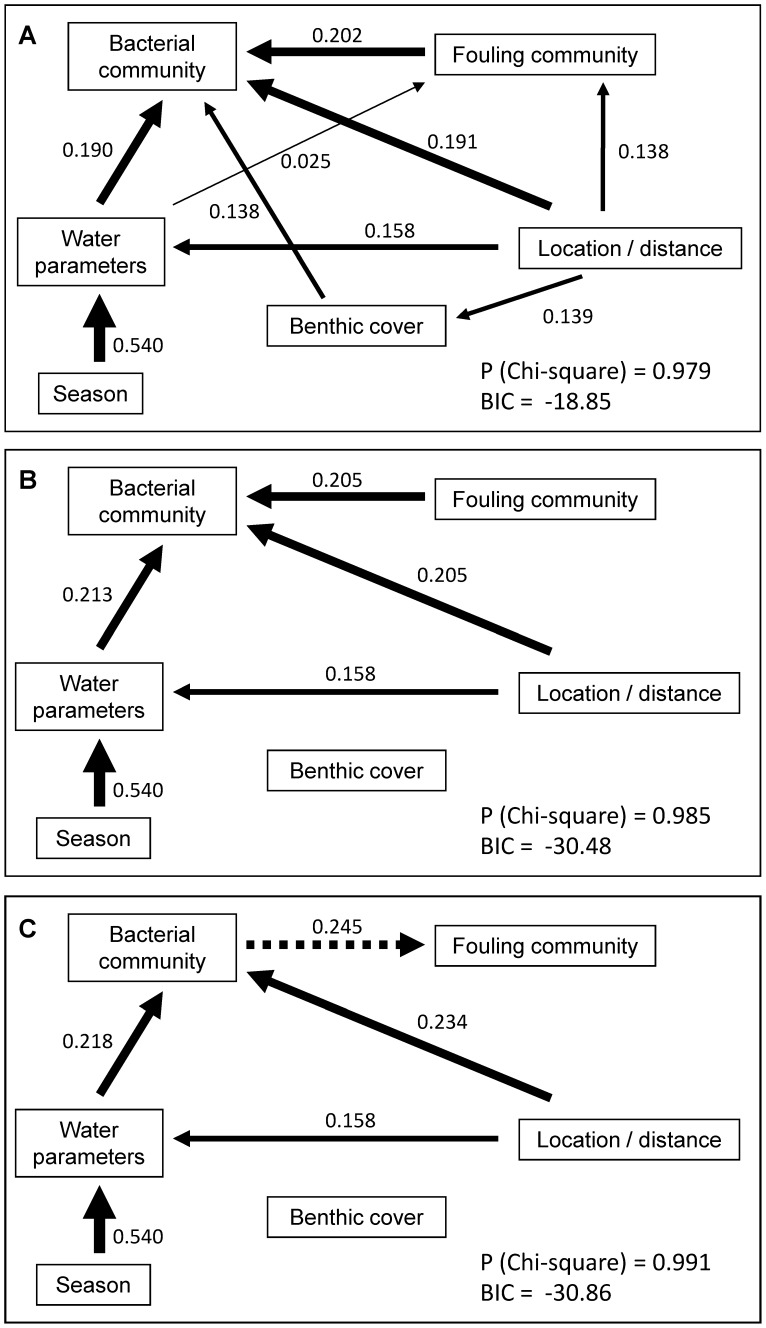
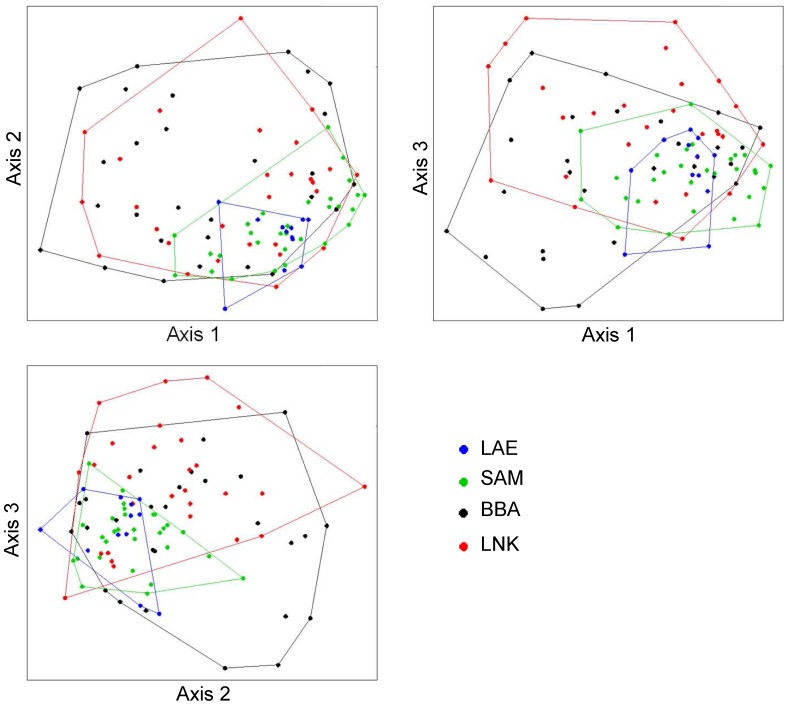
Biofilms play an important role as a settlement cue for invertebrate larvae and significantly contribute to the nutrient turnover in aquatic ecosystems. Nevertheless, little is known about how biofilm community structure generally responds to environmental changes. This study aimed to identify patterns of bacterial dynamics in coral reef biofilms in response to associated macrofouling community structure, microhabitat (exposed vs. sheltered), seasonality, and eutrophication. Settlement tiles were deployed at four reefs along a cross-shelf eutrophication gradient and were exchanged every 4 months over 20 months. The fouling community composition on the tiles was recorded and the bacterial community structure was assessed with the community fingerprinting technique Automated Ribosomal Intergenic Spacer Analysis (ARISA). Bacterial operational taxonomic unit (OTU) number was higher on exposed tiles, where the fouling community was homogenous and algae-dominated, than in sheltered habitats, which were occupied by a variety of filter feeders. Furthermore, OTU number was also highest in eutrophied near-shore reefs, while seasonal variations in community structure were most pronounced in the oligotrophic mid-shelf reef. In contrast, the macrofouling community structure did not change significantly with seasons. Changes in bacterial community patterns were mostly affected by microhabitat, seasonal and anthropogenically derived changes in nutrient availability, and to a lesser extent by changes in the macrofouling community structure. Path analysis revealed a complex interplay of various environmental and biological factors explaining the spatial and temporal variations in bacterial biofilm communities under natural conditions.
生物膜在作为无脊椎动物幼虫的定殖线索方面起着重要作用,并显著促进水生生态系统中的养分转化。然而,对于生物膜群落结构如何对环境变化做出响应,我们知之甚少。本研究旨在确定珊瑚礁生物膜中细菌动态变化的模式,以响应相关的大型污着生物群落结构、微生境(暴露与遮蔽)、季节性和富营养化。在沿着一个跨架富营养化梯度的四个珊瑚礁上部署了定殖瓦片,并在 20 个月内每 4 个月更换一次。记录瓦片上的污着生物群落组成,并使用群落指纹技术自动核糖体基因间间隔区分析(ARISA)评估细菌群落结构。在暴露的瓦片上,污着生物群落单一且以藻类为主,细菌操作分类单元(OTU)数量较高,而在遮蔽的栖息地中,OTU 数量较低,这些栖息地被各种滤食者占据。此外,富营养化近岸珊瑚礁中的 OTU 数量也最高,而在贫营养中架珊瑚礁中,群落结构的季节性变化最为明显。相比之下,大型污着生物群落结构随季节变化不大。细菌群落模式的变化主要受微生境、季节性和人为引起的养分可利用性变化的影响,其次受大型污着生物群落结构变化的影响。路径分析揭示了各种环境和生物因素的复杂相互作用,这些因素在自然条件下解释了细菌生物膜群落的空间和时间变化。