Department of Biology, National University of Ireland, Maynooth, Kildare, Ireland.
Int J Mol Med. 2012 Oct;30(4):723-33. doi: 10.3892/ijmm.2012.1056. Epub 2012 Jul 6.
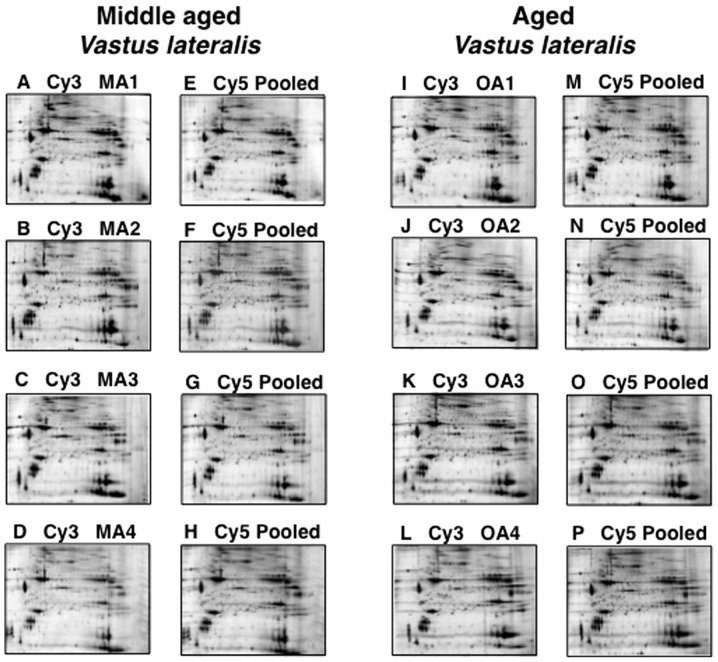
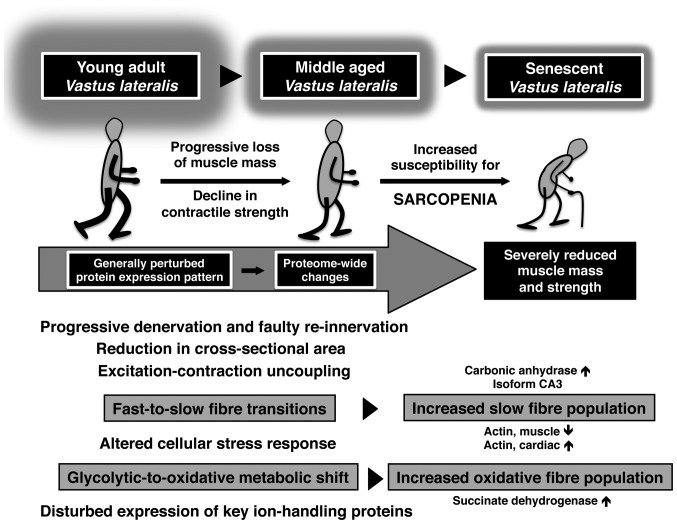
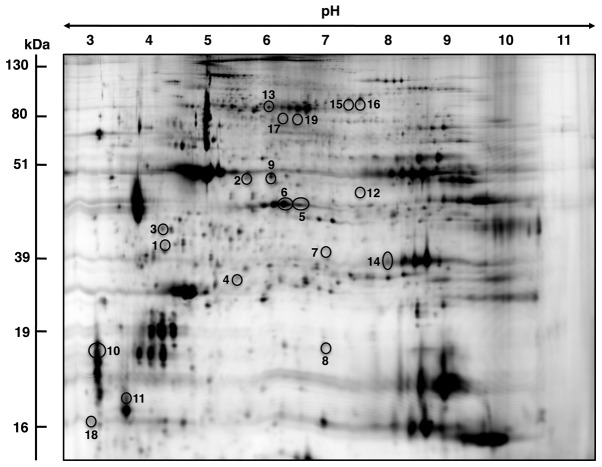
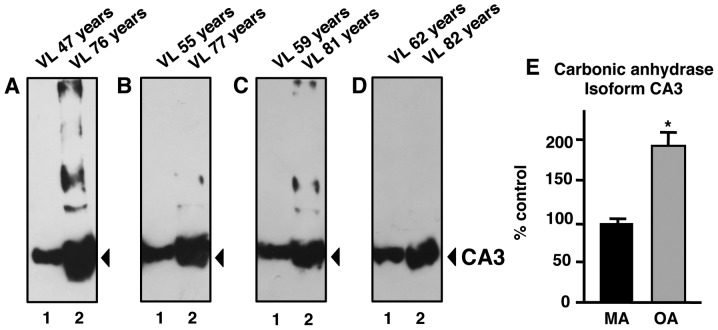
The age-related loss of skeletal muscle mass and associated progressive decline in contractile strength is a serious pathophysiological issue in the elderly. In order to investigate global changes in the skeletal muscle proteome after the fifth decade of life, this study analysed total extracts from human vastus lateralis muscle by fluorescence difference in-gel electrophoresis. Tissue specimens were derived from middle-aged (47-62 years) vs. aged (76-82 years) individuals and potential changes in the protein expression profiles were compared between these two age groups by a comprehensive gel electrophoresis-based survey. Age-dependent alterations in the concentration of 19 protein spots were revealed and mass spectrometry identified these components as being involved in the excitation-contraction-relaxation cycle, muscle metabolism, ion handling and the cellular stress response. This indicates a generally perturbed protein expression pattern in senescent human muscle. Increased levels of mitochondrial enzymes and isoform switching of the key contractile protein, actin, support the idea of glycolytic-to-oxidative and fast-to-slow transition processes during muscle aging. Importantly, the carbonic anhydrase (CA)3 isoform displayed an increased abundance during muscle aging, which was independently verified by immunoblotting of differently aged human skeletal muscle samples. Since the CA3 isoform is relatively muscle-specific and exhibits a fibre type-specific expression pattern, this enzyme may represent an interesting new biomarker of sarcopenia. Increased levels of CA are indicative of an increased demand of CO₂-removal in senescent muscle, and also suggest age-related fibre type shifting to slower-contracting muscles during human aging.
骨骼肌质量随年龄的衰减以及收缩力的相应进行性下降是老年人中一种严重的病理生理问题。为了研究 50 岁以后骨骼肌蛋白质组的整体变化,本研究通过荧光差异凝胶电泳分析了人股外侧肌的总提取物。组织标本取自中年(47-62 岁)与老年(76-82 岁)个体,通过全面的基于凝胶电泳的调查比较了这两个年龄组之间蛋白质表达谱的潜在变化。揭示了 19 个蛋白质斑点浓度的年龄依赖性改变,质谱鉴定这些成分参与兴奋-收缩-松弛循环、肌肉代谢、离子处理和细胞应激反应。这表明衰老的人类肌肉中普遍存在蛋白质表达模式紊乱。线粒体酶水平的增加和关键收缩蛋白肌动蛋白的同工型转换支持了肌肉衰老过程中从糖酵解到氧化和从快肌到慢肌的转变过程的观点。重要的是,碳酸酐酶(CA)3 同工型在肌肉衰老过程中丰度增加,这通过对不同年龄的人类骨骼肌样本进行免疫印迹得到了独立验证。由于 CA3 同工型相对肌肉特异性,并表现出纤维类型特异性表达模式,因此该酶可能是肌少症的一个有趣的新生物标志物。CA 水平的增加表明衰老肌肉中 CO₂去除的需求增加,并且还表明在人类衰老过程中,纤维类型向收缩较慢的肌肉发生与年龄相关的转变。