BIP/UMR7281, FR3479, CNRS/AMU, Marseille, France.
Genome Biol Evol. 2012;4(8):720-9. doi: 10.1093/gbe/evs056. Epub 2012 Jul 12.
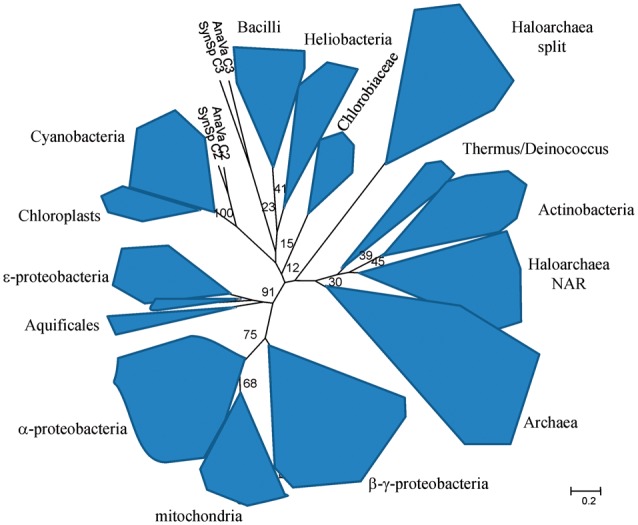
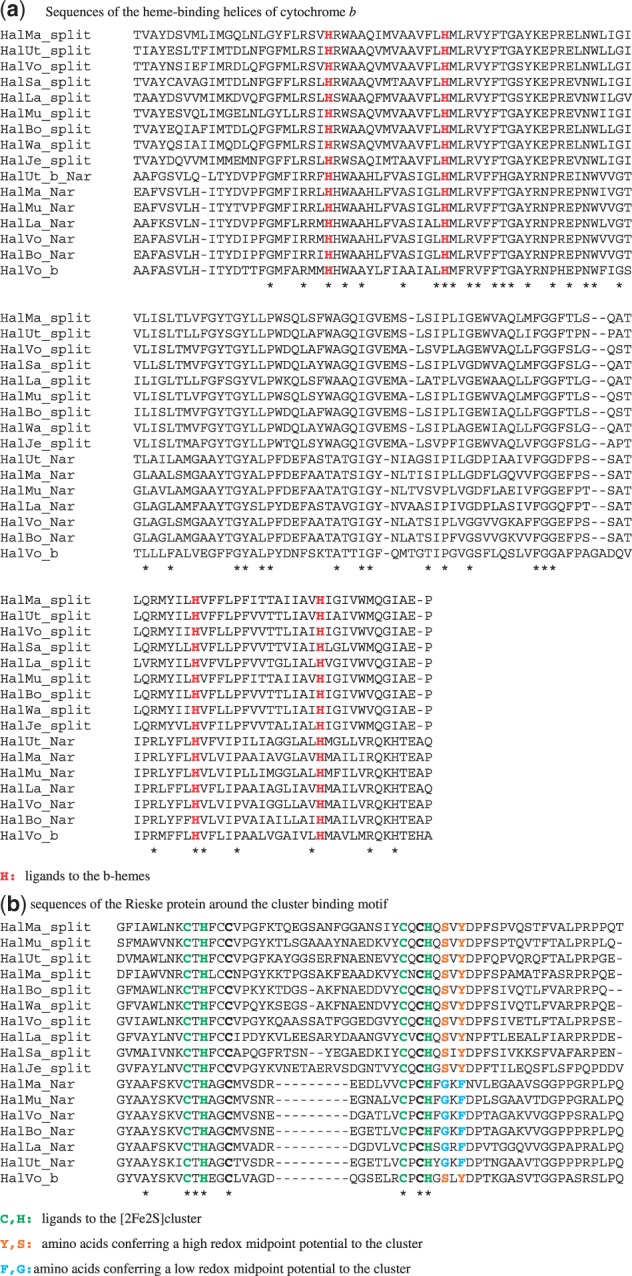
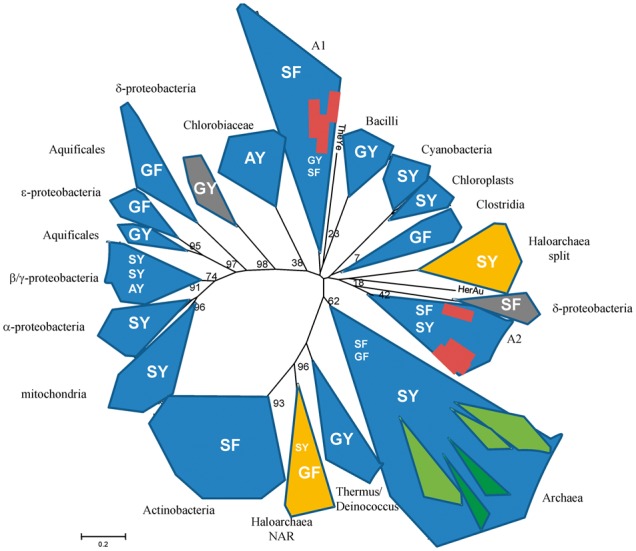
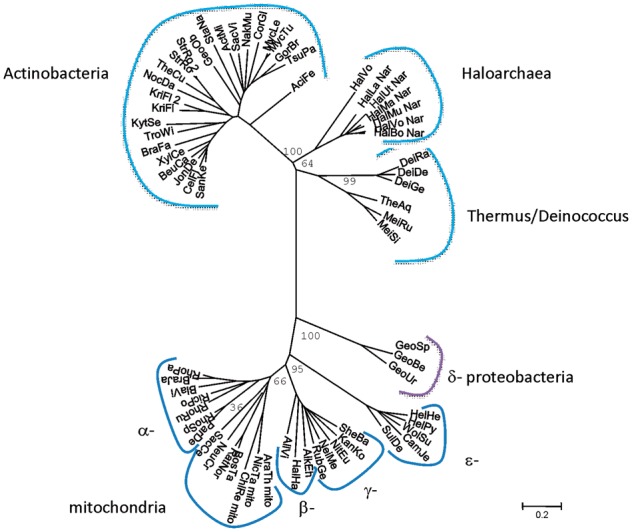
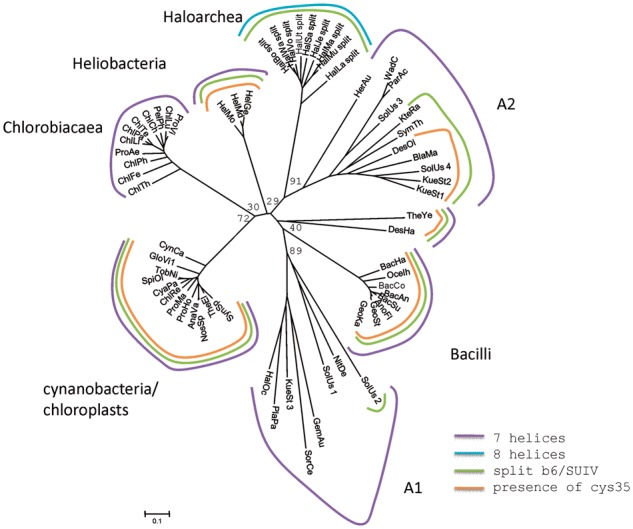
Rieske/cytochrome b (Rieske/cytb) complexes are proton pumping quinol oxidases that are present in most bacteria and Archaea. The phylogeny of their subunits follows closely the 16S-rRNA phylogeny, indicating that chemiosmotic coupling was already present in the last universal common ancestor of Archaea and bacteria. Haloarchaea are the only organisms found so far that acquired Rieske/cytb complexes via interdomain lateral gene transfer. They encode two Rieske/cytb complexes in their genomes; one of them is found in genetic context with nitrate reductase genes and has its closest relatives among Actinobacteria and the Thermus/Deinococcus group. It is likely to function in nitrate respiration. The second Rieske/cytb complex of Haloarchaea features a split cytochrome b sequence as do Cyanobacteria, chloroplasts, Heliobacteria, and Bacilli. It seems that Haloarchaea acquired this complex from an ancestor of the above-mentioned phyla. Its involvement in the bioenergetic reaction chains of Haloarchaea is unknown. We present arguments in favor of the hypothesis that the ancestor of Haloarchaea, which relied on a highly specialized bioenergetic metabolism, that is, methanogenesis, and was devoid of quinones and most enzymes of anaerobic or aerobic bioenergetic reaction chains, integrated laterally transferred genes into its genome to respond to a change in environmental conditions that made methanogenesis unfavorable.
Rieske/cytochrome b (Rieske/cytb) 复合物是质子泵醌氧化酶,存在于大多数细菌和古菌中。它们的亚基系统发育与 16S-rRNA 系统发育密切相关,表明化学渗透偶联在古菌和细菌的最后共同祖先中就已经存在。迄今为止,只有盐杆菌可以通过域间水平基因转移获得 Rieske/cytb 复合物。它们在基因组中编码两个 Rieske/cytb 复合物;其中一个与硝酸盐还原酶基因在遗传背景中发现,与放线菌和 Thermus/Deinococcus 组的亲缘关系最近。它可能在硝酸盐呼吸中起作用。盐杆菌的第二个 Rieske/cytb 复合物与蓝细菌、叶绿体、噬氢菌和芽孢杆菌一样,具有分裂的细胞色素 b 序列。似乎盐杆菌从上述门的祖先那里获得了这个复合物。它在盐杆菌的生物能量反应链中的参与尚不清楚。我们提出了以下观点:盐杆菌的祖先依赖于高度专业化的生物能量代谢,即甲烷生成,并且缺乏醌和大多数厌氧或需氧生物能量反应链的酶,后来将横向转移的基因整合到其基因组中,以应对环境条件的变化,这种变化使甲烷生成变得不利。