Department of Radiation Oncology, David Geffen School of Medicine at UCLA, Los Angeles, CA, USA.
Front Oncol. 2012 Jul 11;2:71. doi: 10.3389/fonc.2012.00071. eCollection 2012.
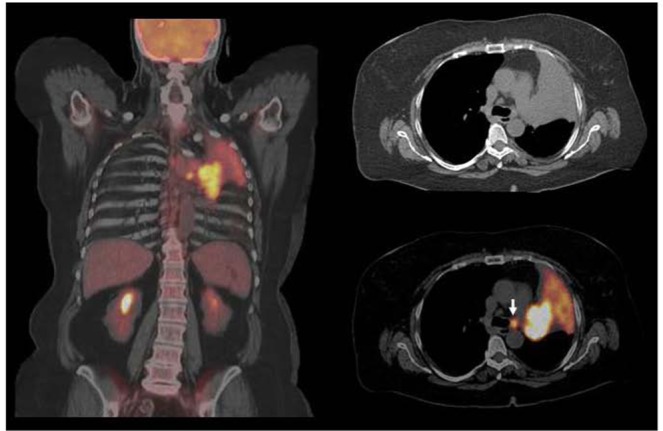
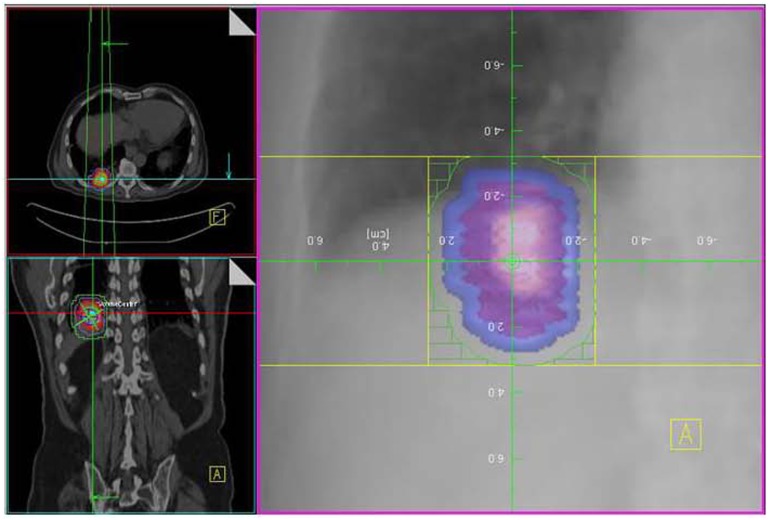
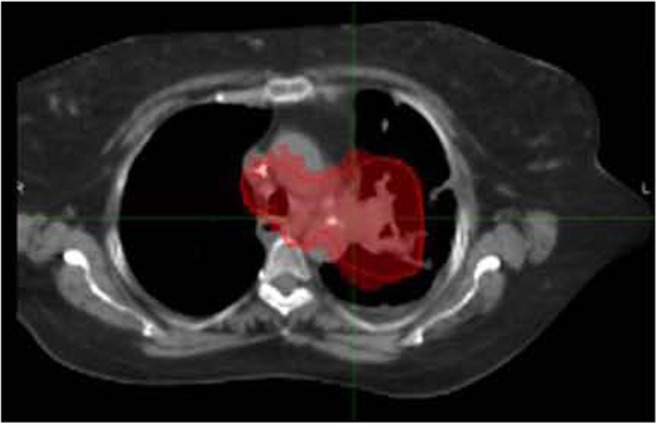
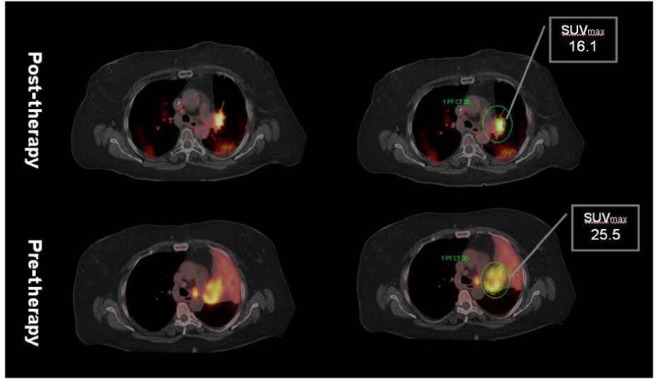
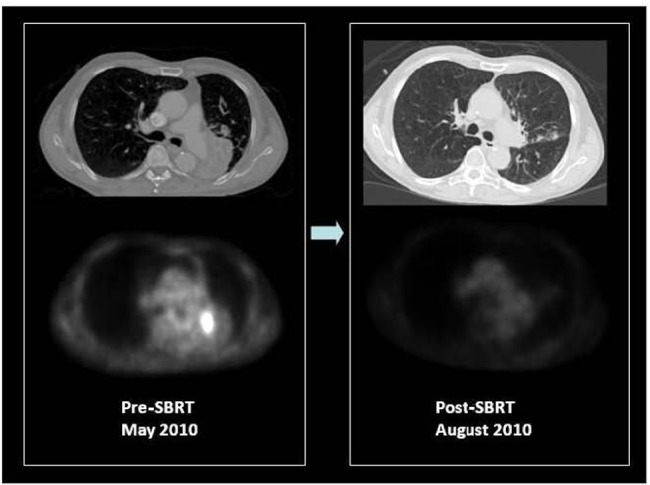
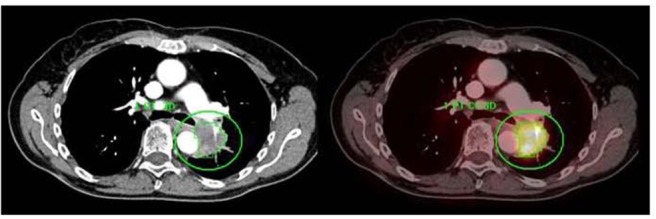
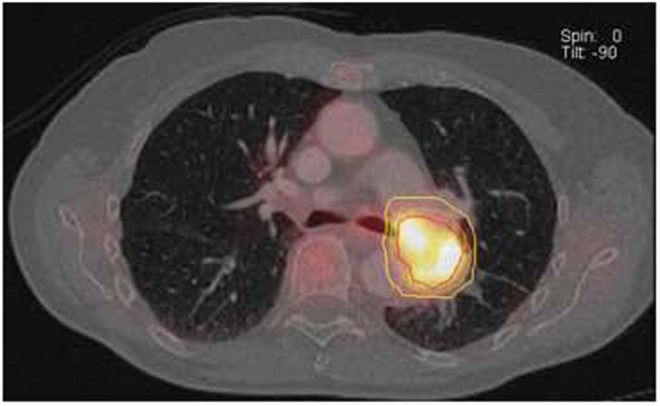
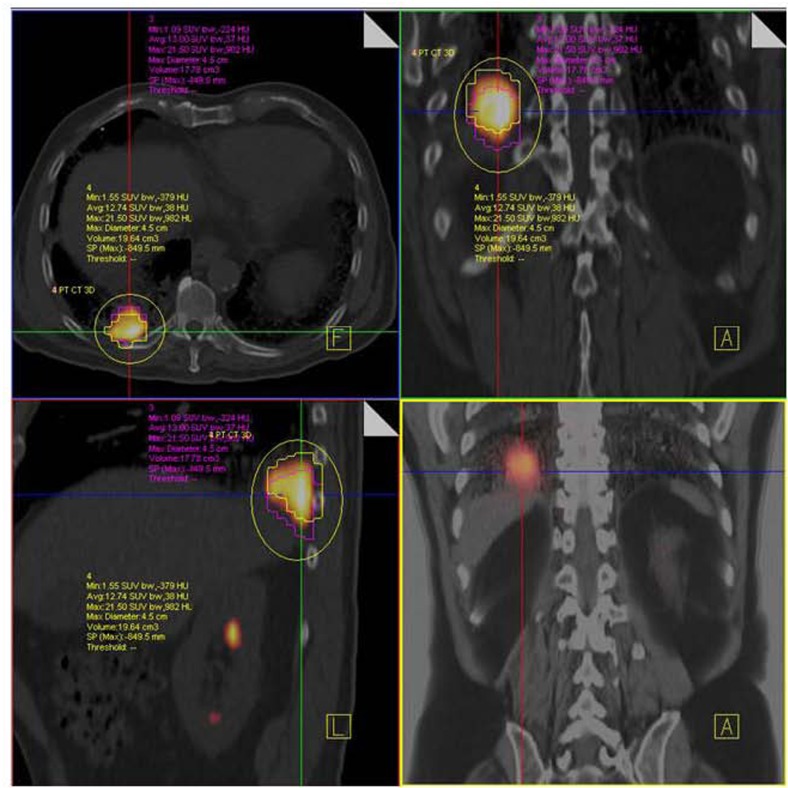
Radiation therapy is an important component of cancer therapy for early stage as well as locally advanced lung cancer. The use of F18 FDG PET/CT has come to the forefront of lung cancer staging and overall treatment decision-making. FDG PET/CT parameters such as standard uptake value and metabolic tumor volume provide important prognostic and predictive information in lung cancer. Importantly, FDG PET/CT for radiation planning has added biological information in defining the gross tumor volume as well as involved nodal disease. For example, accurate target delineation between tumor and atelectasis is facilitated by utilizing PET and CT imaging. Furthermore, there has been meaningful progress in incorporating metabolic information from FDG PET/CT imaging in radiation treatment planning strategies such as radiation dose escalation based on standard uptake value thresholds as well as using respiratory-gated PET and CT planning for improved target delineation of moving targets. In addition, PET/CT-based follow-up after radiation therapy has provided the possibility of early detection of local as well as distant recurrences after treatment. More research is needed to incorporate other biomarkers such as proliferative and hypoxia biomarkers in PET as well as integrating metabolic information in adaptive, patient-centered, tailored radiation therapy.
放射治疗是早期和局部晚期肺癌治疗的重要组成部分。18F-FDG PET/CT 的使用已成为肺癌分期和整体治疗决策的前沿。FDG PET/CT 参数,如标准摄取值和代谢肿瘤体积,为肺癌提供了重要的预后和预测信息。重要的是,FDG PET/CT 用于放射规划增加了生物学信息,以定义大体肿瘤体积和累及的淋巴结疾病。例如,通过利用 PET 和 CT 成像,可以促进在肿瘤和肺不张之间进行准确的靶区勾画。此外,在放射治疗计划策略中,已经在将 FDG PET/CT 代谢信息纳入方面取得了有意义的进展,例如基于标准摄取值阈值的放射剂量升级,以及使用呼吸门控 PET 和 CT 规划来改善移动靶区的靶区勾画。此外,放射治疗后基于 PET/CT 的随访为治疗后局部和远处复发的早期检测提供了可能性。需要更多的研究来整合其他生物标志物,如增殖和缺氧生物标志物,以及将代谢信息整合到适应性、以患者为中心、量身定制的放射治疗中。