Institute of Radiology, Kantonsspital Baden AG, 5404, Baden, Switzerland.
Insights Imaging. 2012 Oct;3(5):475-83. doi: 10.1007/s13244-012-0183-y. Epub 2012 Jul 17.
To evaluate the spectrum of diagnostic findings in hysterosalpingography (HSG) examinations performed at our institution between 2006-2010 and their prognostic significance for treatment decisions and fertility outcomes.
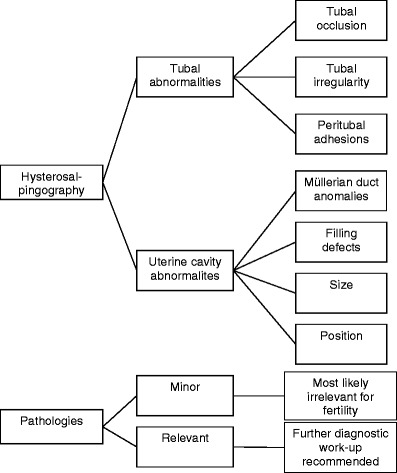
Patients were filtered from our PACS. Pathological HSG studies were re-evaluated. Indications for referral, technical success and diagnostic findings were analysed. Pathological findings were correlated with further diagnostic workups, treatments and fertility outcomes.
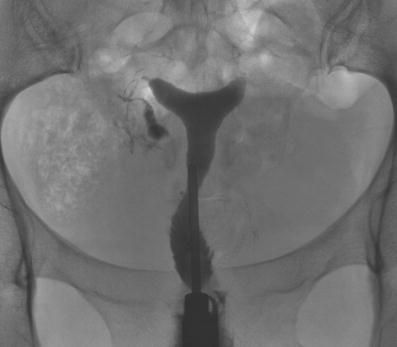
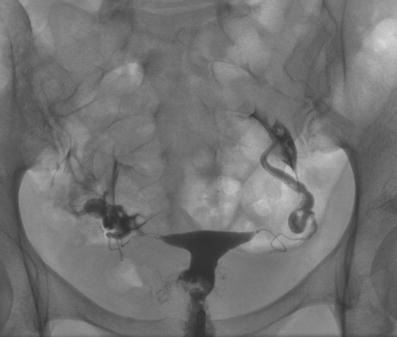
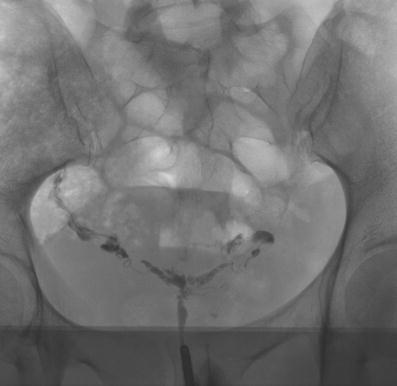
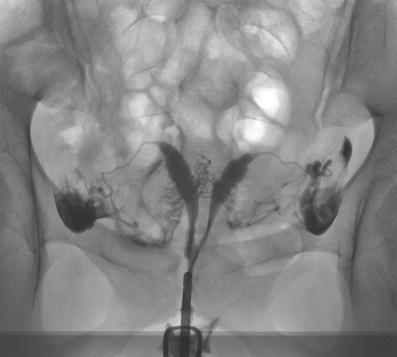
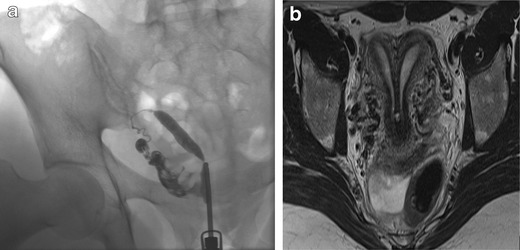
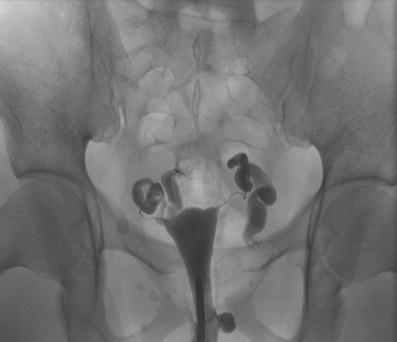
Of 411 HSG examinations, 226 (55 %) were normal, 94 (23 %) showed minor abnormalities and 5 (1.2 %) were not diagnostic. Eighty-six (21 %) examinations were pathological. Twenty-nine patients underwent subsequent laparoscopy, during which proximal tubal occlusion diagnosed at HSG was ruled out in 9/23 cases. Follow-up information was unavailable for 20 patients. Nineteen of 66 patients with follow-ups after pathological HSG had at least one subsequent successful pregnancy. Forty-one patients had no further treatment and no pregnancies.
The detection rate for pathologies at HSG was low (21 %). There was a high false-positive rate (39 %) for proximal tubal occlusion, most likely because of spasms, demonstrating the importance of delayed imaging after injection of antiperistaltic agents. HSG remains a valuable diagnostic tool. Our results, however, indicate that this technique should be more selectively indicated.
• Good acceptance of HSG by the patients. No complications with antibiotic prophylaxis. • Low detection rate (21 % pathological exams) for pathologies in our study. • High false-positive rate for proximal tubal occlusion. • This demonstrates the importance of waiting longer after injection of buscopan. • High pregnancy rate in pathological cases: Indication too broad or even a therapeutic effect of HSG?
评估我院 2006-2010 年期间行子宫输卵管造影(HSG)检查的诊断结果,并分析其对治疗决策和生育结局的预后意义。
从我们的 PACS 中筛选患者。重新评估病理性 HSG 研究。分析转诊指征、技术成功率和诊断结果。将病理性发现与进一步的诊断检查、治疗和生育结局相关联。
在 411 例 HSG 检查中,226 例(55%)正常,94 例(23%)显示轻微异常,5 例(1.2%)无诊断价值。86 例(21%)检查为病理性。29 例患者随后行腹腔镜检查,其中 23 例 HSG 诊断的近端输卵管阻塞在 9 例中被排除。20 例患者的随访信息无法获得。66 例有 HSG 后随访的患者中,19 例至少有一次后续成功妊娠。41 例患者未进一步治疗,也未怀孕。
HSG 对病变的检出率较低(21%)。近端输卵管阻塞的假阳性率较高(39%),可能是由于痉挛所致,这表明在注射抗蠕动剂后进行延迟成像的重要性。HSG 仍然是一种有价值的诊断工具。然而,我们的结果表明,该技术的应用应更具选择性。
• 患者对 HSG 有良好的接受度。抗生素预防无并发症。
• 我们的研究中,HSG 对病变的检出率较低(21%)。
• 近端输卵管阻塞的假阳性率较高。
• 这表明在注射布比卡因后等待更长时间的重要性。
• 病理性病例的妊娠率高:指征太宽泛还是 HSG 甚至有治疗效果?