Kennedy Institute of Rheumatology, Nuffield Department of Orthopaedics, Rheumatology and Musculoskeletal Sciences, University of Oxford, London, United Kingdom.
PLoS One. 2012;7(7):e39871. doi: 10.1371/journal.pone.0039871. Epub 2012 Jul 3.
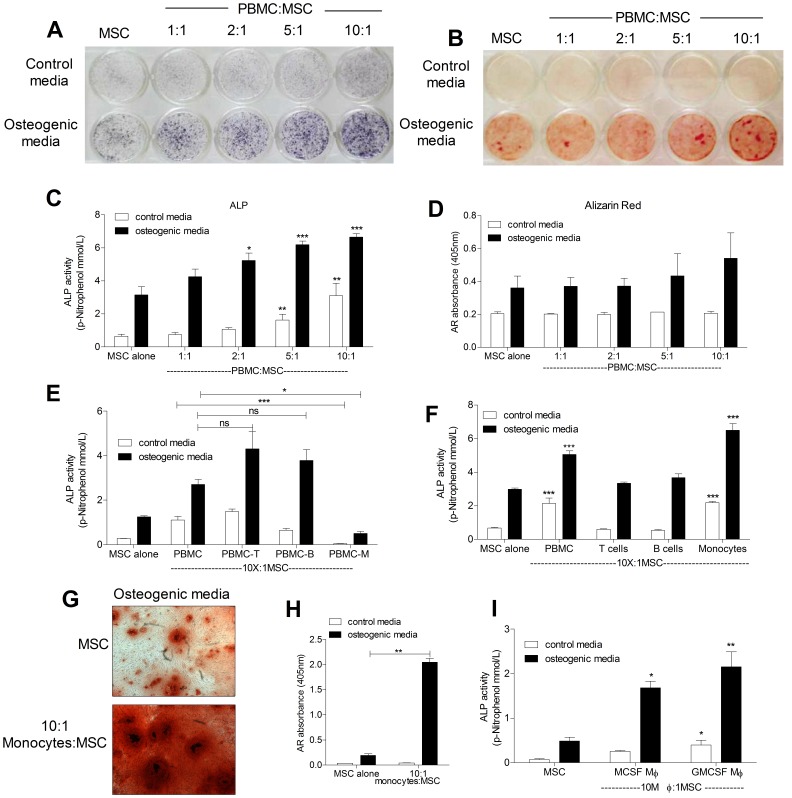
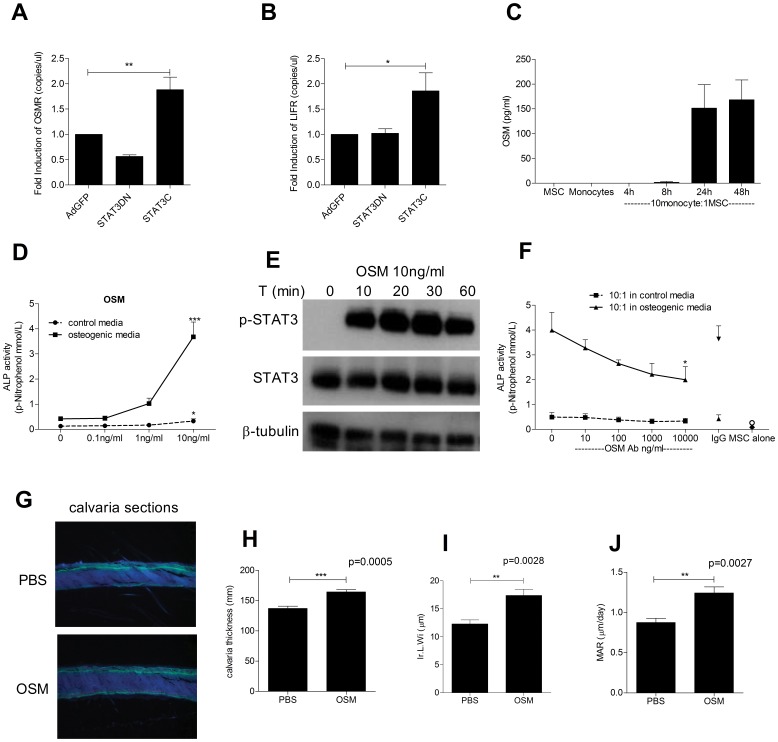
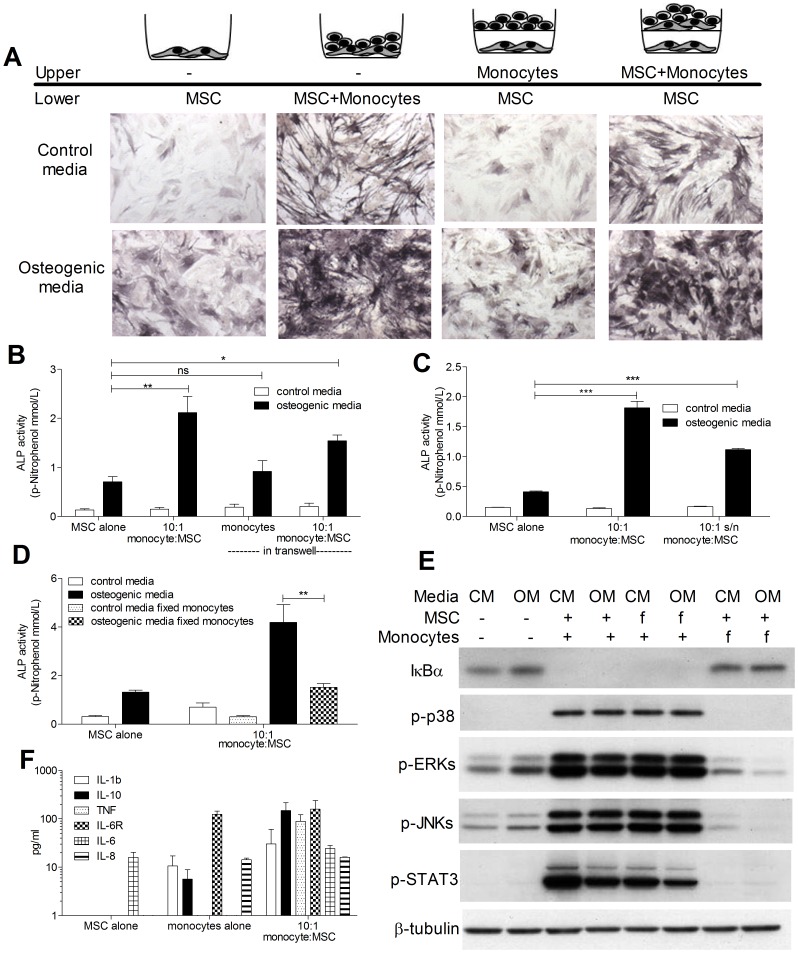
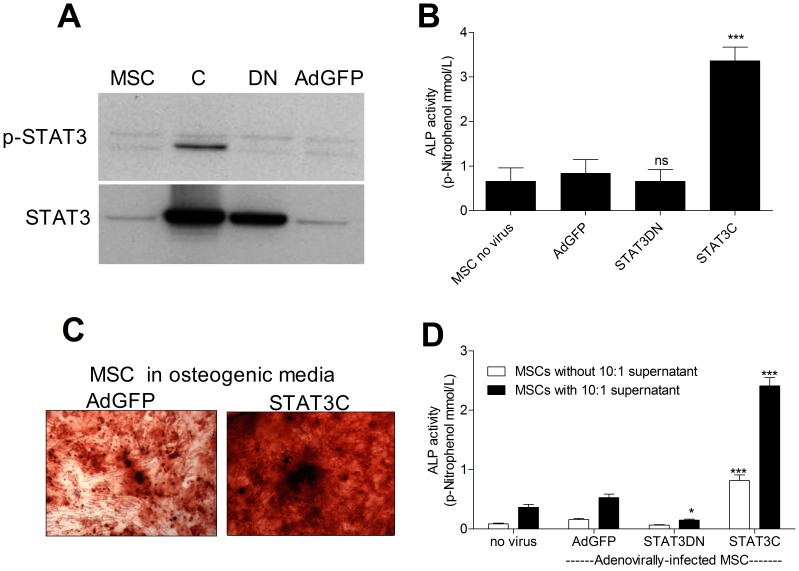
A major therapeutic challenge is how to replace bone once it is lost. Bone loss is a characteristic of chronic inflammatory and degenerative diseases such as rheumatoid arthritis and osteoporosis. Cells and cytokines of the immune system are known to regulate bone turnover by controlling the differentiation and activity of osteoclasts, the bone resorbing cells. However, less is known about the regulation of osteoblasts (OB), the bone forming cells. This study aimed to investigate whether immune cells also regulate OB differentiation. Using in vitro cell cultures of human bone marrow-derived mesenchymal stem cells (MSC), it was shown that monocytes/macrophages potently induced MSC differentiation into OBs. This was evident by increased alkaline phosphatase (ALP) after 7 days and the formation of mineralised bone nodules at 21 days. This monocyte-induced osteogenic effect was mediated by cell contact with MSCs leading to the production of soluble factor(s) by the monocytes. As a consequence of these interactions we observed a rapid activation of STAT3 in the MSCs. Gene profiling of STAT3 constitutively active (STAT3C) infected MSCs using Illumina whole human genome arrays showed that Runx2 and ALP were up-regulated whilst DKK1 was down-regulated in response to STAT3 signalling. STAT3C also led to the up-regulation of the oncostatin M (OSM) and LIF receptors. In the co-cultures, OSM that was produced by monocytes activated STAT3 in MSCs, and neutralising antibodies to OSM reduced ALP by 50%. These data indicate that OSM, in conjunction with other mediators, can drive MSC differentiation into OB. This study establishes a role for monocyte/macrophages as critical regulators of osteogenic differentiation via OSM production and the induction of STAT3 signalling in MSCs. Inducing the local activation of STAT3 in bone cells may be a valuable tool to increase bone formation in osteoporosis and arthritis, and in localised bone remodelling during fracture repair.
一个主要的治疗挑战是如何在骨丢失后进行替代。骨丢失是类风湿性关节炎和骨质疏松症等慢性炎症和退行性疾病的特征。已知免疫系统的细胞和细胞因子通过控制破骨细胞(骨吸收细胞)的分化和活性来调节骨转换。然而,对于成骨细胞(OB)的调节知之甚少。本研究旨在探讨免疫细胞是否也调节 OB 分化。通过体外培养人骨髓间充质干细胞(MSC)的细胞培养物,证明单核细胞/巨噬细胞可强力诱导 MSC 分化为 OB。这可以通过第 7 天碱性磷酸酶(ALP)增加和第 21 天矿化骨结节形成来证明。这种单核细胞诱导的成骨作用是通过单核细胞与 MSC 的细胞接触介导的,导致单核细胞产生可溶性因子(s)。由于这些相互作用,我们观察到 MSC 中 STAT3 的快速激活。使用 Illumina 全人类基因组芯片对 STAT3 组成型激活(STAT3C)感染的 MSC 进行基因谱分析表明,Runx2 和 ALP 上调,而 DKK1 下调,这是对 STAT3 信号的反应。STAT3C 还导致肿瘤坏死因子-α(OSM)和 LIF 受体的上调。在共培养物中,单核细胞产生的 OSM 激活了 MSC 中的 STAT3,中和 OSM 的抗体使 ALP 降低了 50%。这些数据表明,OSM 与其他介质一起,可以驱动 MSC 分化为 OB。本研究确立了单核细胞/巨噬细胞作为通过 OSM 产生和诱导 MSC 中 STAT3 信号传导来调节成骨分化的关键调节剂的作用。在骨细胞中诱导 STAT3 的局部激活可能是增加骨质疏松症和关节炎中骨形成以及骨折修复期间局部骨重塑的有价值的工具。