Hajdu Kata, Gergely Csilla, Martin Marta, Zimányi László, Agarwal Vivechana, Palestino Gabriela, Hernádi Klára, Németh Zoltán, Nagy László
Department of Medical Physics and Informatics, University of Szeged, Szeged, H-6720, Hungary.
Nanoscale Res Lett. 2012 Jul 17;7(1):400. doi: 10.1186/1556-276X-7-400.
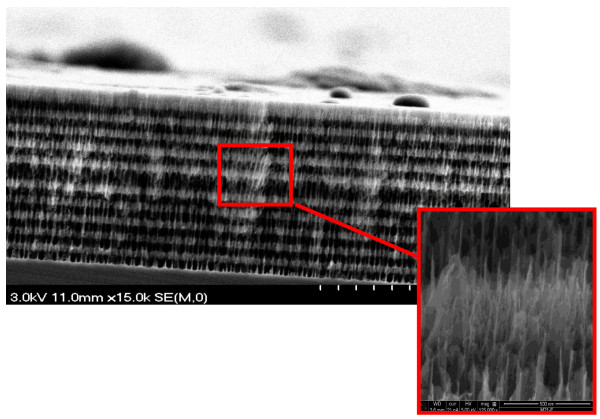
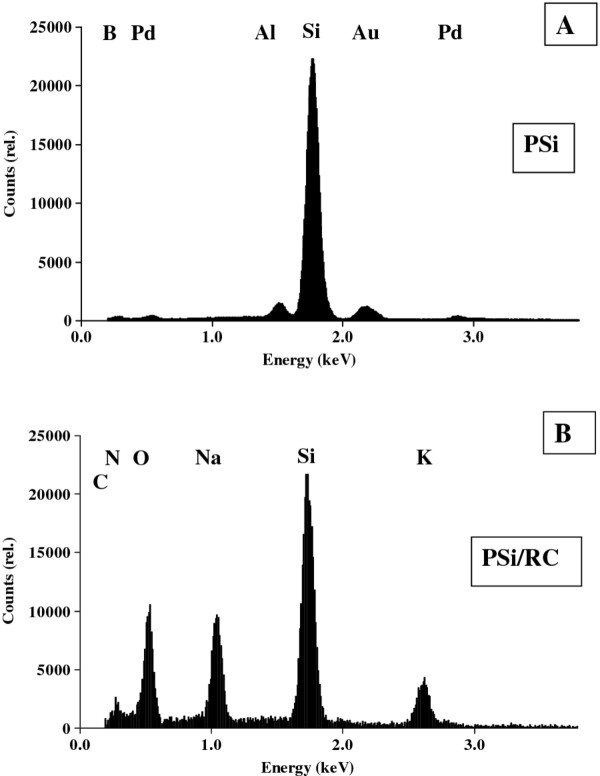
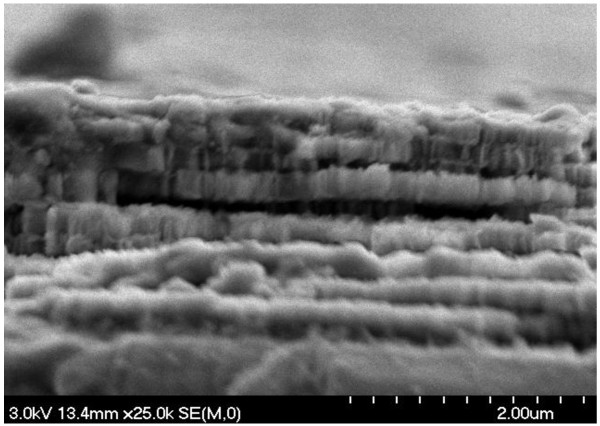
Porous silicon microcavity (PSiMc) structures were used to immobilize the photosynthetic reaction center (RC) purified from the purple bacterium Rhodobacter sphaeroides R-26. Two different binding methods were compared by specular reflectance measurements. Structural characterization of PSiMc was performed by scanning electron microscopy and atomic force microscopy. The activity of the immobilized RC was checked by measuring the visible absorption spectra of the externally added electron donor, mammalian cytochrome c. PSi/RC complex was found to oxidize the cytochrome c after every saturating Xe flash, indicating the accessibility of specific surface binding sites on the immobilized RC, for the external electron donor. This new type of bio-nanomaterial is considered as an excellent model for new generation applications of silicon-based electronics and biological redox systems.
多孔硅微腔(PSiMc)结构被用于固定从球形红杆菌R-26中纯化得到的光合反应中心(RC)。通过镜面反射测量比较了两种不同的结合方法。通过扫描电子显微镜和原子力显微镜对PSiMc进行了结构表征。通过测量外部添加的电子供体——哺乳动物细胞色素c的可见吸收光谱来检测固定化RC的活性。发现PSi/RC复合物在每次饱和Xe闪光后都会氧化细胞色素c,这表明固定化RC上特定表面结合位点对于外部电子供体是可及的。这种新型生物纳米材料被认为是基于硅的电子学和生物氧化还原系统新一代应用的优秀模型。