Department of Anatomy and Animal Production, Faculty of Veterinary Science, University of Santiago de Compostela, Lugo, Galicia E-27002, Spain.
Molecules. 2012 Jul 17;17(7):8561-77. doi: 10.3390/molecules17078561.
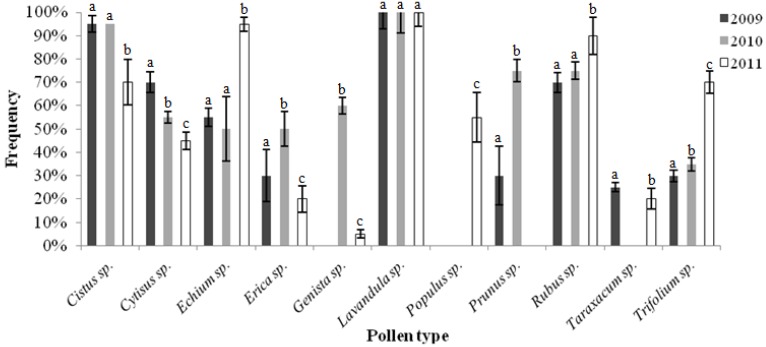
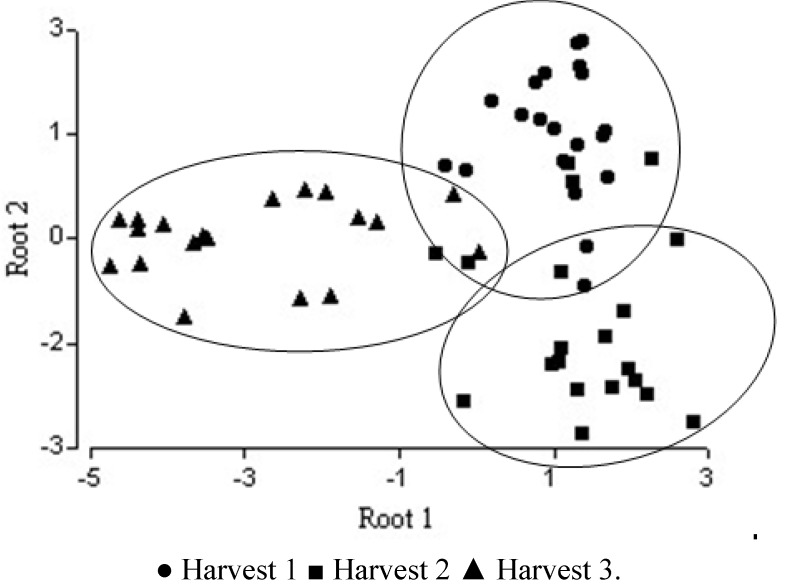
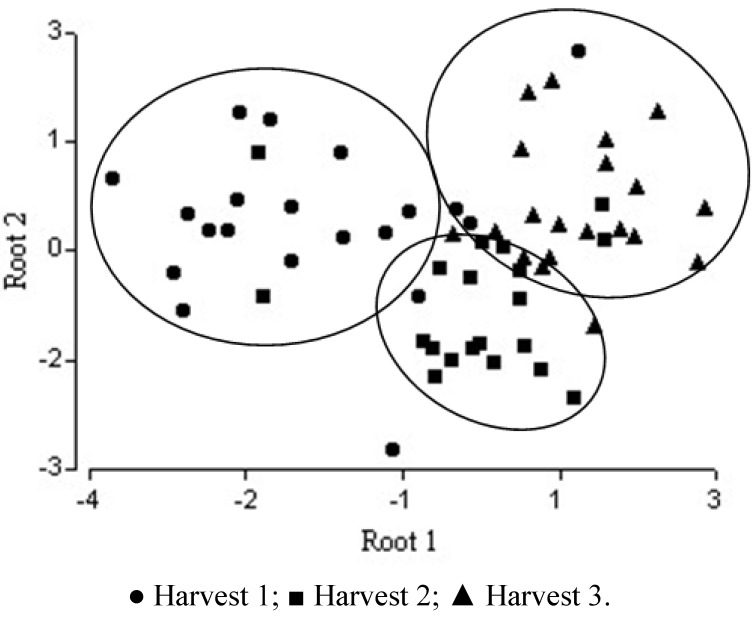
In this study the characterization of a total of 60 honey samples with Protected Denomination of Origin (PDO) collected over three harvests (2009-2011, inclusive), from the Northeast of Portugal was carried out based on the presence of pollen, physicochemical and microbiological characteristics. All samples were found to meet the European Legislation, but some didn't meet the requirements of the PDO specifications. Concerning the floral origin of honey, our results showed the prevalence of rosemary (Lavandula pedunculata) pollen. The microbiological quality of all the analyzed samples was satisfactory, since fecal coliforms, sulfite-reducing clostridia and Salmonella were absent, and molds and yeasts were detected in low counts. Significant differences between the results were studied using one-way analysis of variance (ANOVA), followed by Tukey's HSD test. The samples were submitted to discriminant function analysis, in order to determine which variables differentiate between two or more naturally occurring groups (Forward Stepwise Analysis). The variables selected were in this order: diastase activity, pH, reducing sugars, free acidity and HMF. The pollen spectrum has perfect discriminatory power. This is the first study in which a honey with PDO was tested, in order to assess its compliance with the PDO book of specifications.
本研究对来自葡萄牙东北部的 60 个具有受保护原产地名称 (PDO) 的蜂蜜样本进行了分析,这些样本是在三个收获期(2009-2011 年)内收集的,分析内容包括花粉特征、理化特性和微生物特性。所有样本均符合欧洲法规要求,但部分样本不符合 PDO 规格要求。就蜂蜜的花源而言,研究结果显示迷迭香(Lavandula pedunculata)花粉占主导地位。所有分析样本的微生物质量均令人满意,因为未检出粪大肠菌群、亚硫酸盐还原梭菌和沙门氏菌,霉菌和酵母菌的检出数量也较低。采用单因素方差分析(ANOVA)对结果进行了差异显著性检验,然后进行 Tukey 的 HSD 检验。采用判别函数分析对样本进行了分析,以确定哪些变量可以区分两个或更多自然存在的组(逐步向前分析)。所选变量的顺序为:淀粉酶活性、pH 值、还原糖、游离酸度和糠醛。花粉谱具有很好的区分能力。这是首次对具有 PDO 的蜂蜜进行测试,以评估其是否符合 PDO 规格书的要求。