Department of Pediatrics, Medical University of South Carolina, Charleston, South Carolina 29425, USA.
J Cereb Blood Flow Metab. 2012 Oct;32(10):1888-96. doi: 10.1038/jcbfm.2012.83. Epub 2012 Jul 18.
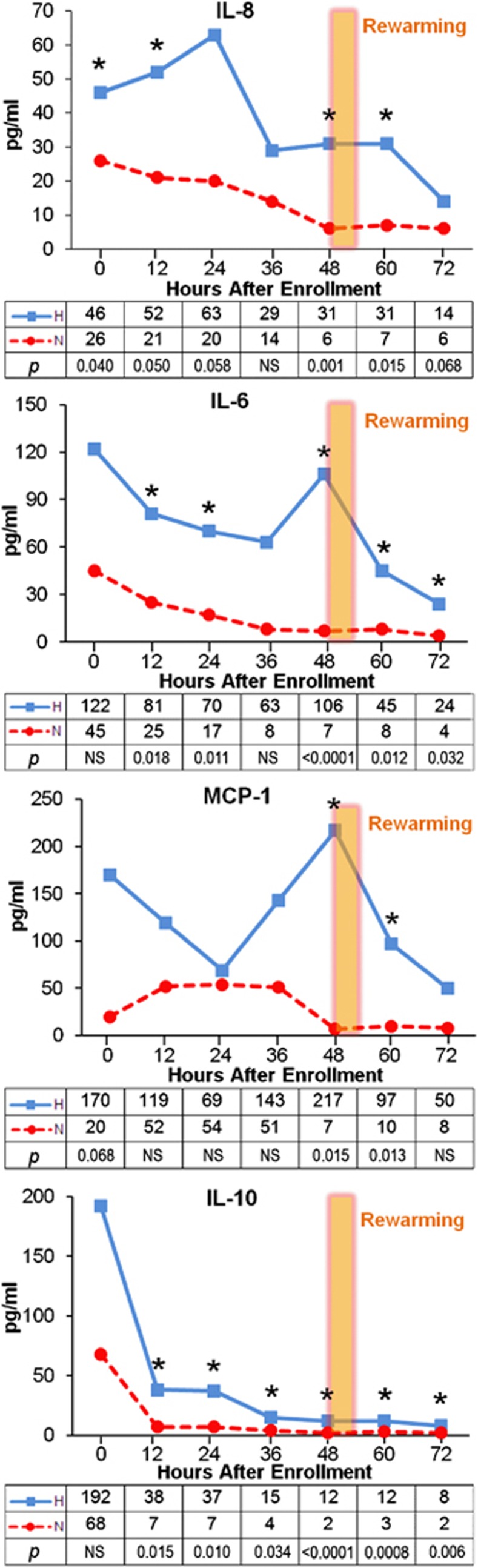
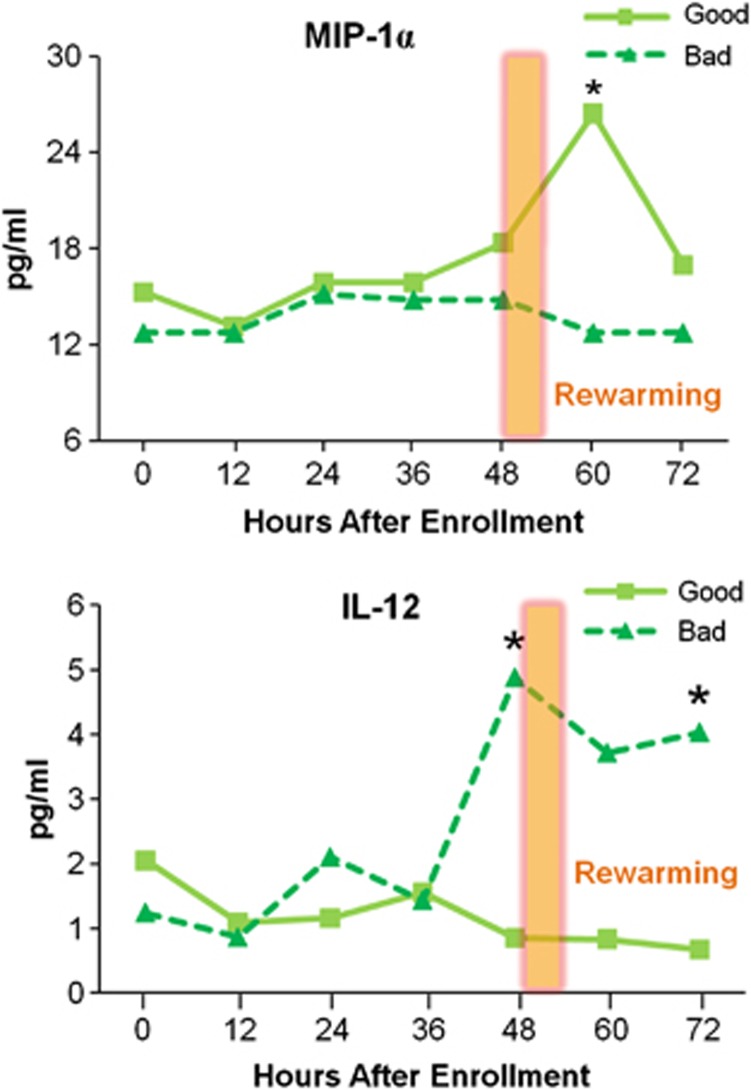
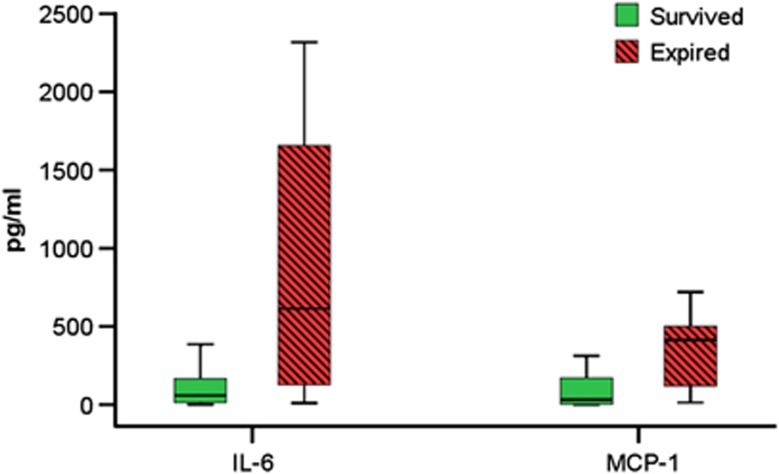
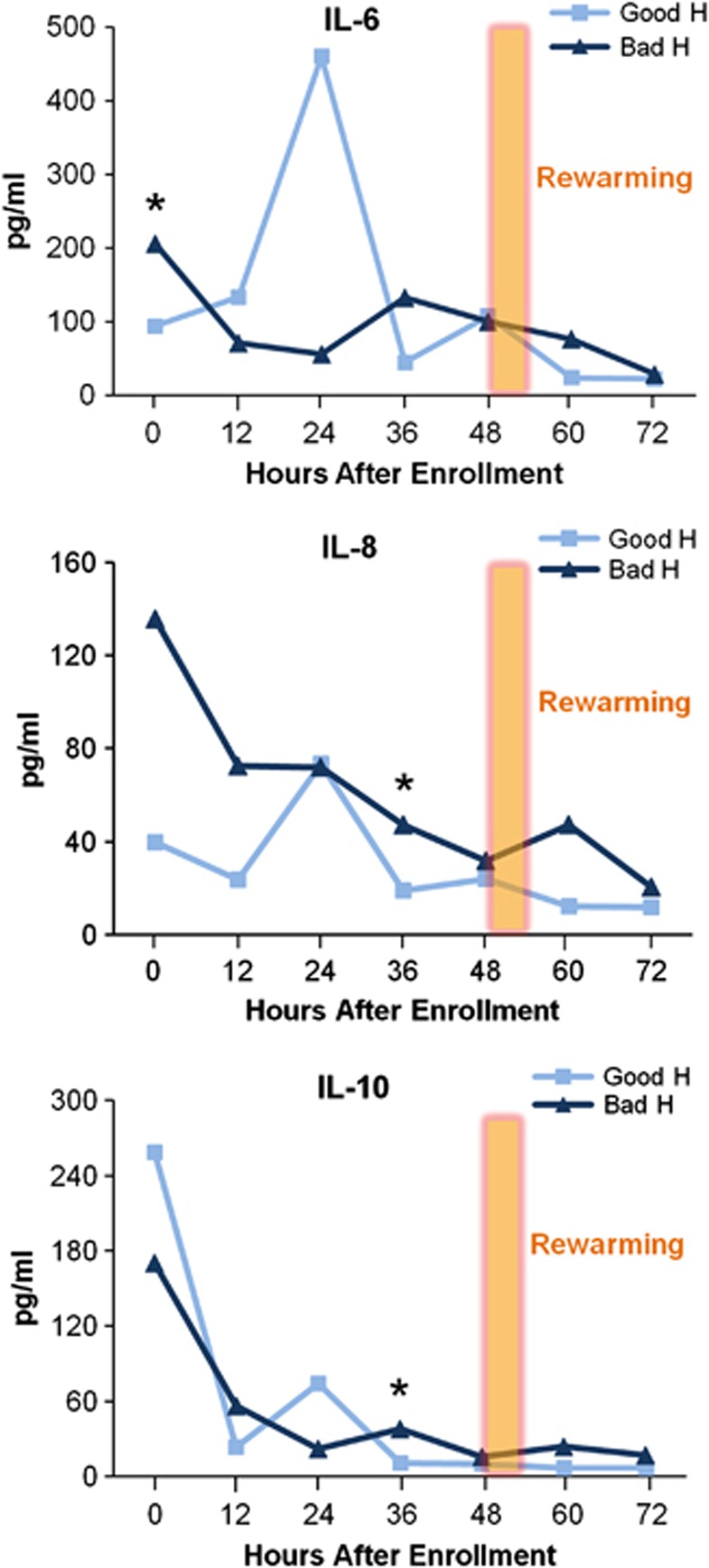
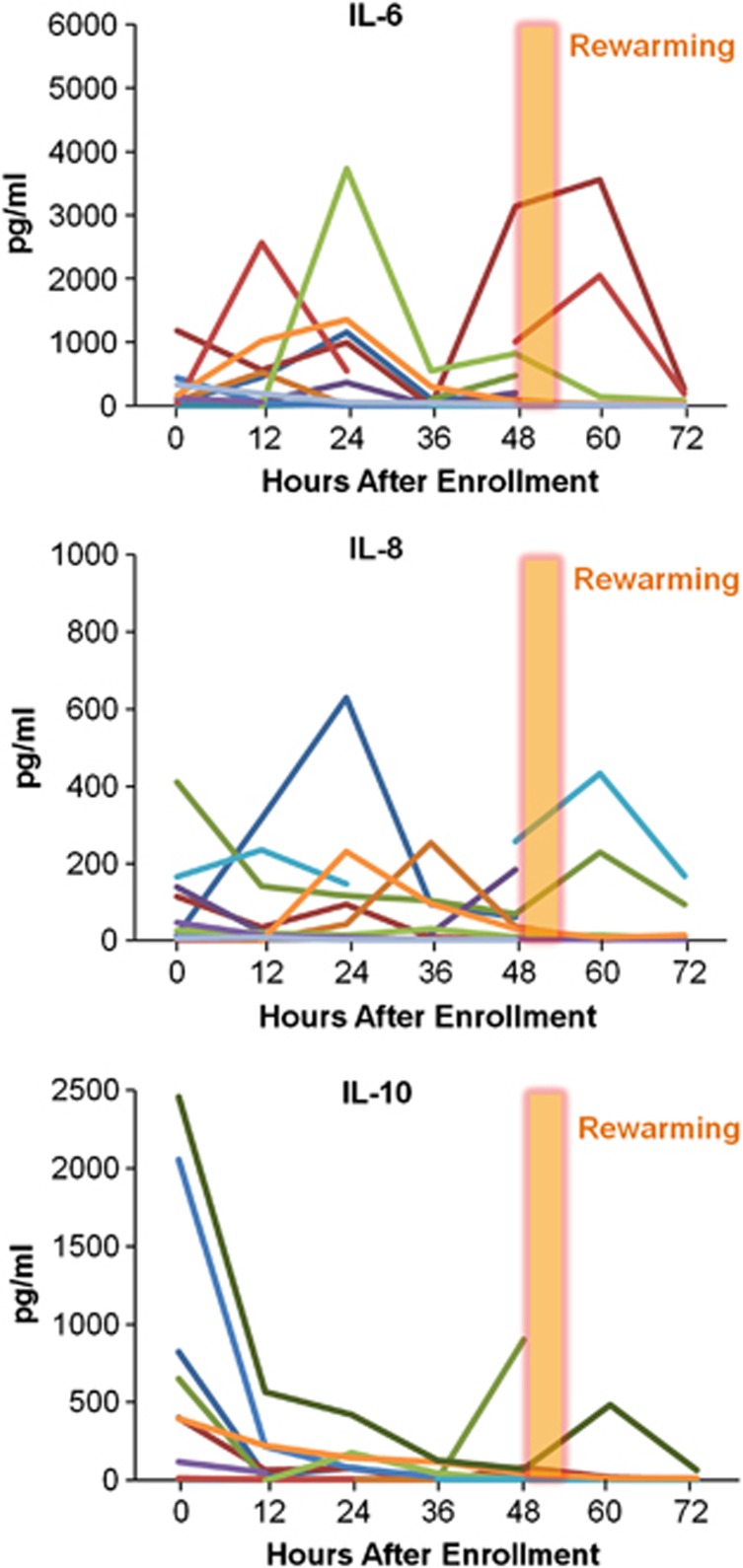
Inflammatory cytokines may mediate hypoxic-ischemic (HI) injury and offer insights into the severity of injury and the timing of recovery. In our randomized, multicenter trial of hypothermia, we analyzed the temporal relationship of serum cytokine levels in neonates with hypoxic-ischemic encephalopathy (HIE) with neurodevelopmental outcome at 12 months. Serum cytokines were measured every 12 hours for 4 days in 28 hypothermic (H) and 22 normothermic (N) neonates with HIE. Monocyte chemotactic protein-1 (MCP-1) and interleukins (IL)-6, IL-8, and IL-10 were significantly higher in the H group. Elevated IL-6 and MCP-1 within 9 hours after birth and low macrophage inflammatory protein 1a (MIP-1a) at 60 to 70 hours of age were associated with death or severely abnormal neurodevelopment at 12 months of age. However, IL-6, IL-8, and MCP-1 showed a biphasic pattern in the H group, with early and delayed peaks. In H neonates with better outcomes, uniform down modulation of IL-6, IL-8, and IL-10 from their peak levels at 24 hours to their nadir at 36 hours was observed. Modulation of serum cytokines after HI injury may be another mechanism of improved outcomes in neonates treated with induced hypothermia.
炎性细胞因子可能介导缺氧缺血(HI)损伤,并深入了解损伤的严重程度和恢复的时间。在我们对低温的随机、多中心试验中,我们分析了患有缺氧缺血性脑病(HIE)的新生儿血清细胞因子水平与 12 个月时神经发育结局的时间关系。在 28 例低温(H)和 22 例常温(N)HIE 新生儿中,每 12 小时测量血清细胞因子 4 天。H 组中单核细胞趋化蛋白-1(MCP-1)和白细胞介素(IL)-6、IL-8 和 IL-10 明显升高。出生后 9 小时内升高的 IL-6 和 MCP-1,以及 60 至 70 小时时的低巨噬细胞炎症蛋白 1a(MIP-1a)与 12 个月时死亡或严重异常神经发育有关。然而,IL-6、IL-8 和 MCP-1 在 H 组中呈现双峰模式,具有早期和延迟的峰值。在结局较好的 H 新生儿中,从 24 小时的峰值到 36 小时的最低点,IL-6、IL-8 和 IL-10 的均匀下调。HI 损伤后血清细胞因子的调节可能是接受诱导性低温治疗的新生儿改善结局的另一种机制。