Ernest Rutherford Physics Building, McGill University, Montreal, Quebec, Canada.
PLoS Comput Biol. 2012;8(7):e1002585. doi: 10.1371/journal.pcbi.1002585. Epub 2012 Jul 12.
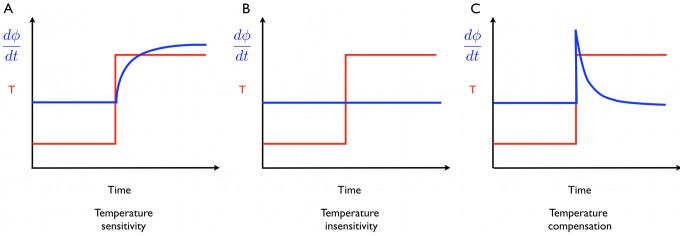
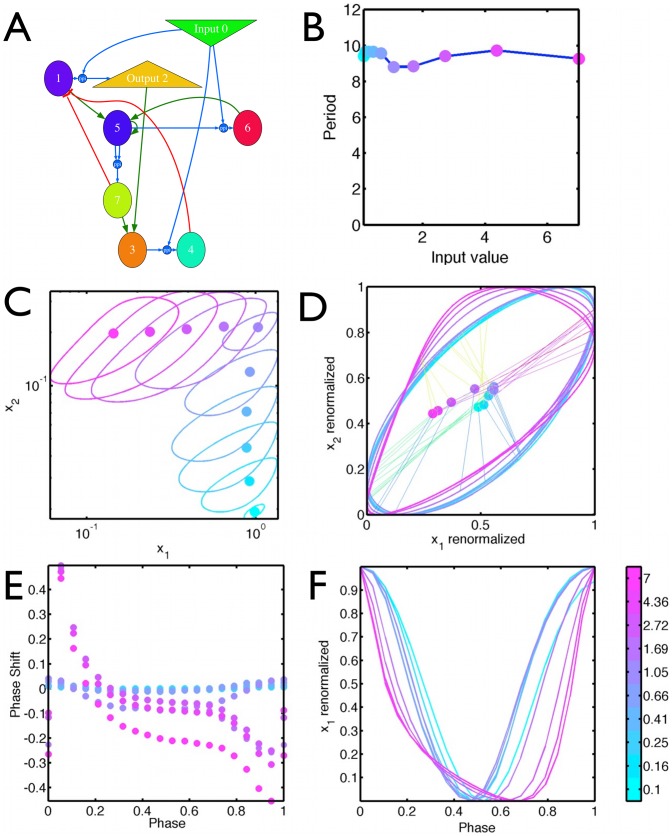
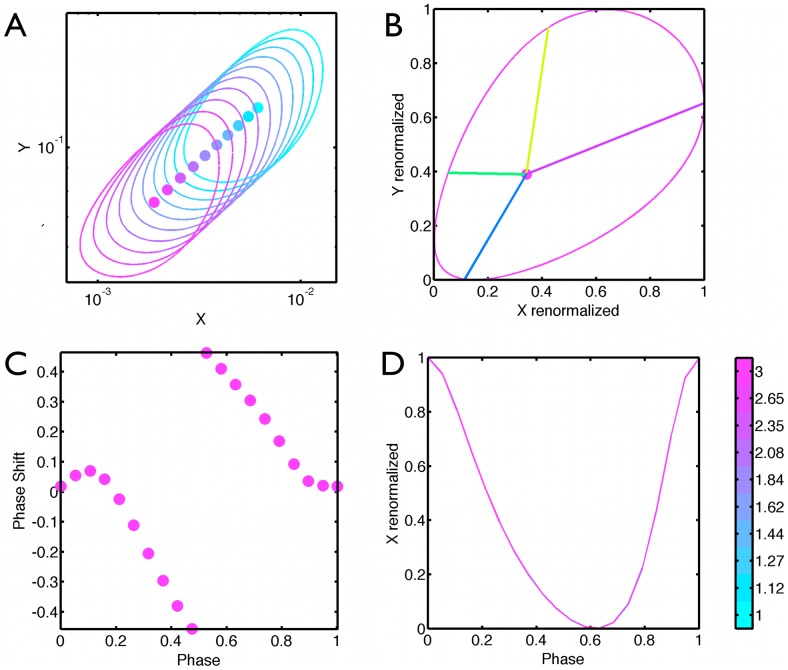
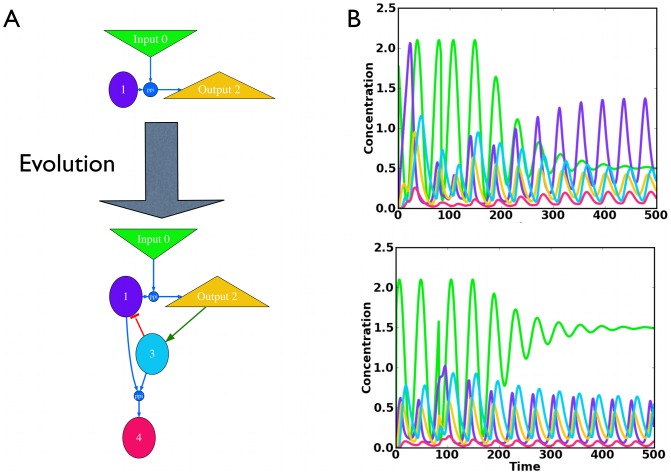
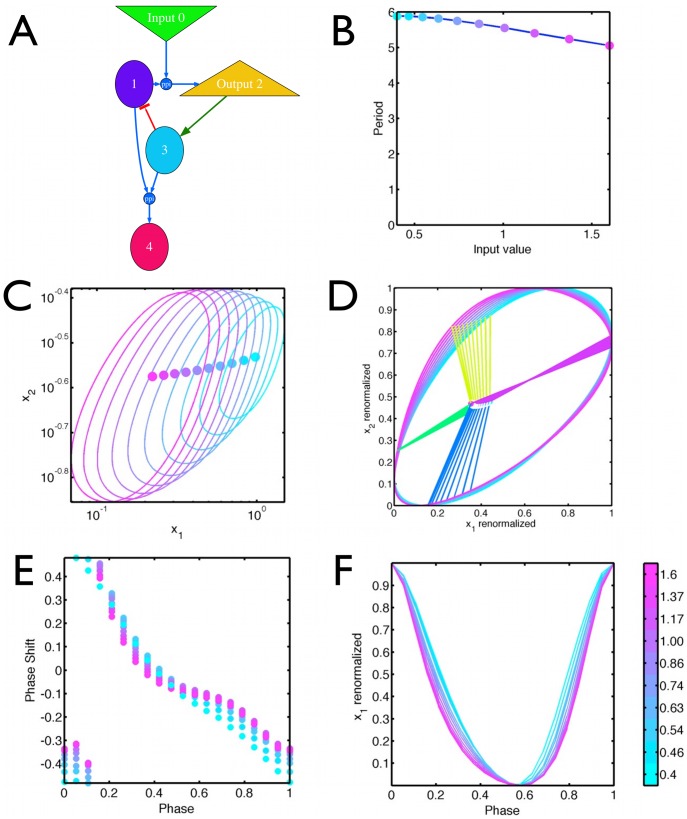
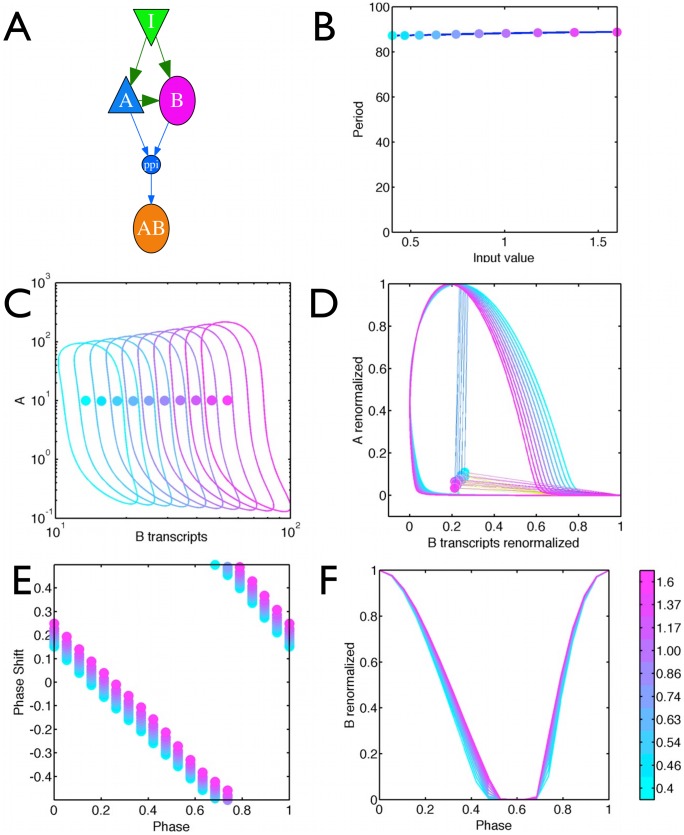
A temperature independent period and temperature entrainment are two defining features of circadian oscillators. A default model of distributed temperature compensation satisfies these basic facts yet is not easily reconciled with other properties of circadian clocks, such as many mutants with altered but temperature compensated periods. The default model also suggests that the shape of the circadian limit cycle and the associated phase response curves (PRC) will vary since the average concentrations of clock proteins change with temperature. We propose an alternative class of models where the twin properties of a fixed period and entrainment are structural and arise from an underlying adaptive system that buffers temperature changes. These models are distinguished by a PRC whose shape is temperature independent and orbits whose extrema are temperature independent. They are readily evolved by local, hill climbing, optimization of gene networks for a common quality measure of biological clocks, phase anticipation. Interestingly a standard realization of the Goodwin model for temperature compensation displays properties of adaptive rather than distributed temperature compensation.
温度无关周期和温度驯化是生物钟振荡器的两个定义特征。分布式温度补偿的默认模型满足这些基本事实,但与生物钟的其他特性(如许多具有改变但温度补偿周期的突变体)不太协调。默认模型还表明,由于生物钟蛋白的平均浓度随温度变化,因此生物钟的限幅循环和相关的相位响应曲线(PRC)的形状也会发生变化。我们提出了一类替代模型,其中固定周期和驯化的双重特性是结构上的,源自缓冲温度变化的基础自适应系统。这些模型的特点是 PRC 的形状与温度无关,轨道的极值与温度无关。它们可以通过对生物钟的常见质量度量——相位预测——进行基因网络的局部、爬山式优化来轻松进化。有趣的是,温度补偿的 Goodwin 模型的标准实现表现出适应性而不是分布式温度补偿的特性。