Faculty of Tropical Medicine, Department of Clinical Tropical Medicine, Mahidol University, Bangkok, Thailand.
PLoS One. 2012;7(7):e39645. doi: 10.1371/journal.pone.0039645. Epub 2012 Jul 13.
The Plasmodium vivax that was once prevalent in temperate climatic zones typically had an interval between primary infection and first relapse of 7-10 months, whereas in tropical areas P.vivax infections relapse frequently at intervals of 3-6 weeks. Defining the epidemiology of these two phenotypes from temporal patterns of illness in endemic areas is difficult or impossible, particularly if they overlap.
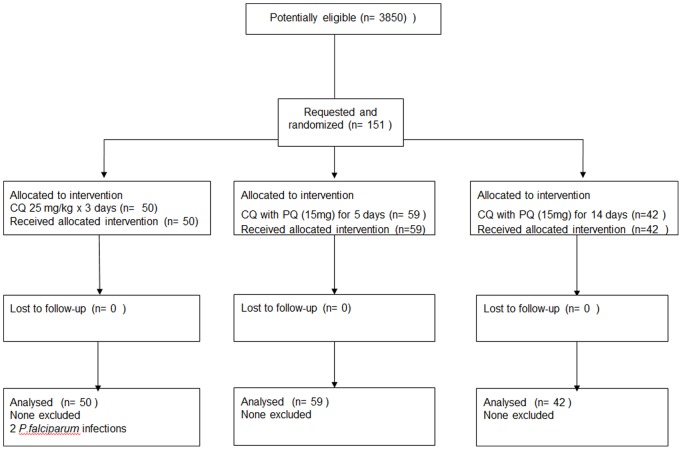
A prospective open label comparison of chloroquine (CQ) alone versus CQ plus unobserved primaquine for either 5 days or 14 days was conducted in patients presenting with acute vivax malaria in Kolkata. Patients were followed for 15 months and primary and recurrent infections were genotyped using three polymorphic antigen and up to 8 microsatellite markers.
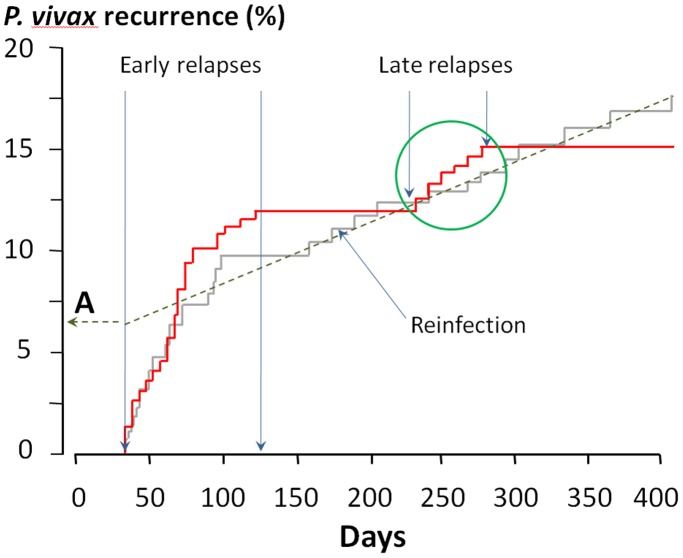
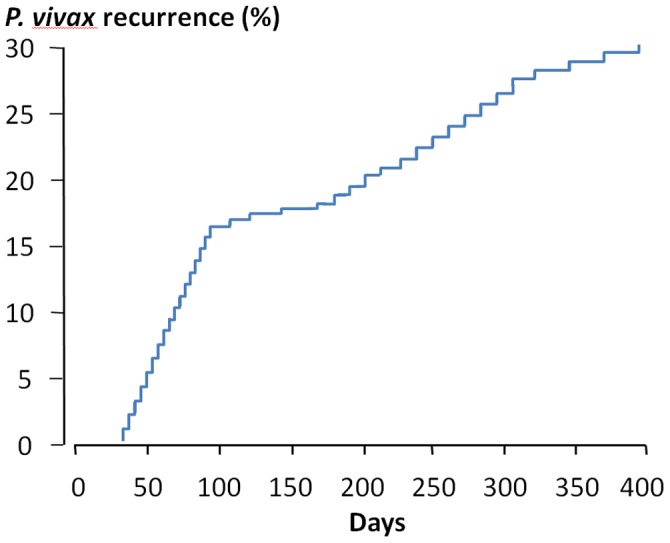
151 patients were enrolled of whom 47 (31%) had subsequent recurrent infections. Recurrence proportions were similar in the three treatment groups. Parasite genotyping revealed discrete temporal patterns of recurrence allowing differentiation of probable relapse from newly acquired infections. This suggested that 32 of the 47 recurrences were probable relapses of which 22 (69%) were genetically homologous. The majority (81%) of probable relapses occurred within three months (16 homologous, 10 heterologous) and six genetically homologous relapses (19%) were of the long latency (8-10 month interval) phenotype.
With long follow-up to assess temporal patterns of vivax malaria recurrence, genotyping of P.vivax can be used to assess relapse rates. A 14 day unobserved course of primaquine did not prevent relapse. Genotyping indicates that long latency P.vivax is prevalent in West Bengal, and that the first relapses after long latent periods are genetically homologous.
Controlled-Trials.com ISRCTN14027467.
曾经在温带气候带流行的间日疟原虫通常在初次感染和首次复发之间间隔 7-10 个月,而在热带地区,间日疟原虫感染常常每 3-6 周复发一次。在流行地区,根据疾病的时间模式来定义这两种表型的流行病学情况是困难的,甚至是不可能的,特别是如果它们重叠的话。
在加尔各答,对因急性间日疟原虫病就诊的患者,进行了一项前瞻性、开放标签的比较氯喹(CQ)单药治疗与 CQ 加未观察到的磷酸伯氨喹治疗 5 天或 14 天的疗效的研究。对患者进行了 15 个月的随访,并用三种多态性抗原和多达 8 个微卫星标记对原发性和复发性感染进行基因分型。
共纳入 151 例患者,其中 47 例(31%)随后发生了复发性感染。三组治疗患者的复发比例相似。寄生虫基因分型显示出明显的复发时间模式,可区分可能的复发与新获得的感染。这表明,47 例复发病例中有 32 例可能是复发,其中 22 例(69%)是遗传同源的。大多数(81%)可能的复发发生在 3 个月内(16 例遗传同源,10 例遗传异源),6 例遗传同源的复发(19%)是潜伏期长(8-10 个月间隔)表型。
通过长时间的随访来评估间日疟复发的时间模式,对间日疟原虫的基因分型可用于评估复发率。未观察到的磷酸伯氨喹 14 天疗程并不能预防复发。基因分型表明,长潜伏期的间日疟原虫在西孟加拉邦很普遍,且潜伏期长后的首次复发是遗传同源的。
controlled-trials.com ISRCTN14027467。