Mahidol Oxford Research Unit, Faculty of Tropical Medicine, Mahidol University, Bangkok, Thailand; Centre for Tropical Medicine and Global Health, Nuffield Department of Medicine, University of Oxford, Oxford, UK.
Trans R Soc Trop Med Hyg. 2019 Apr 1;113(4):163-168. doi: 10.1093/trstmh/trz002.
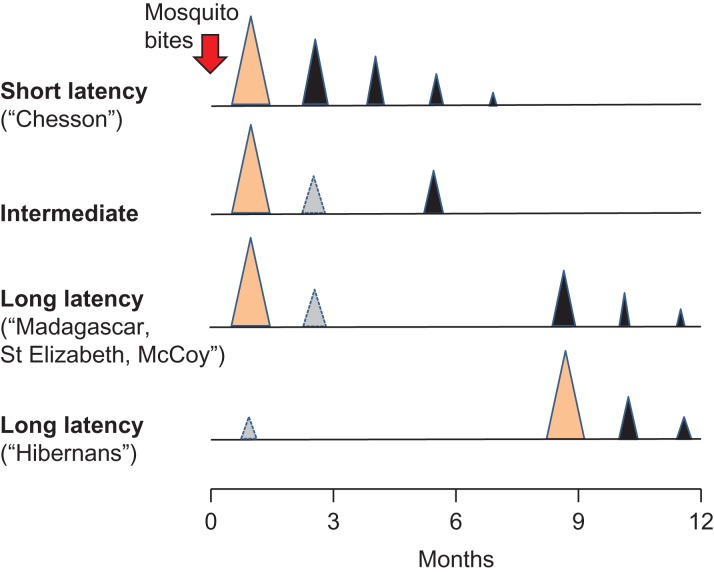
Until World War II the only clinical phenotype of Plasmodium vivax generally recognised in medicine was one associated with either a long (8-9 months) incubation period or a similarly long interval between initial illness and the first relapse. Long-latency P. vivax 'strains' were the first in which relapse, drug resistance and pre-erythrocytic development were described. They were the infections in which primaquine radical cure dosing was developed. A long-latency 'strain' was the first to be fully sequenced. Although long-latency P. vivax is still present in some parts of Asia, North Africa and the Americas, in recent years it has been largely forgotten.
直到第二次世界大战,医学界普遍认可的间日疟原虫唯一临床表型是与较长潜伏期(8-9 个月)或初始发病和首次复发之间类似的较长间隔相关的表型。长潜伏期间日疟原虫“株”是首次描述复发、耐药性和红细胞前期发育的疟原虫。它们是开发伯氨喹根治剂量的感染。长潜伏期“株”是第一个被完全测序的疟原虫。尽管长潜伏期间日疟原虫在亚洲、北非和美洲的某些地区仍然存在,但近年来已被人们淡忘。