Maternal and Fetal Health Research Centre, Manchester Academic Health Science Centre, University of Manchester, Manchester, United Kingdom.
PLoS One. 2012;7(7):e39784. doi: 10.1371/journal.pone.0039784. Epub 2012 Jul 11.
Maternal perception of reduced fetal movement (RFM) is associated with increased risk of stillbirth and fetal growth restriction (FGR). RFM is thought to represent fetal compensation to conserve energy due to insufficient oxygen and nutrient transfer resulting from placental insufficiency.
To identify predictors of poor perinatal outcome after maternal perception of reduced fetal movements (RFM).
Prospective cohort study.
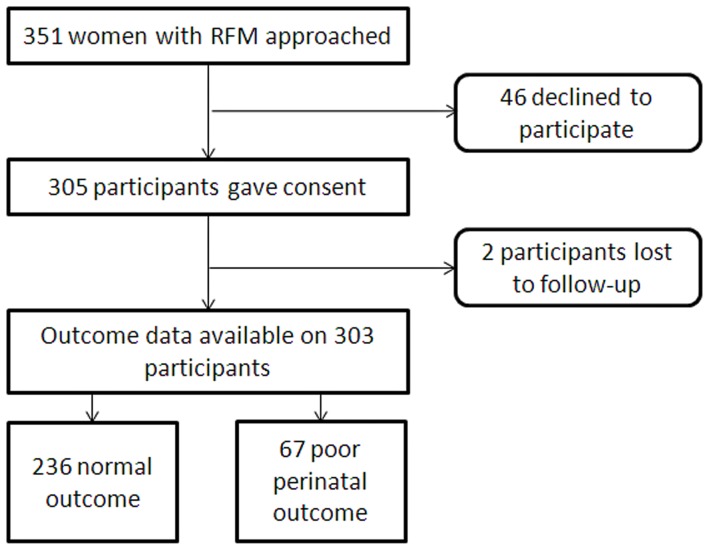
305 women presenting with RFM after 28 weeks of gestation were recruited. Demographic factors and clinical history were recorded and ultrasound performed to assess fetal biometry, liquor volume and umbilical artery Doppler. A maternal serum sample was obtained for measurement of placentally-derived or modified proteins including: alpha fetoprotein (AFP), human chorionic gonadotrophin (hCG), human placental lactogen (hPL), ischaemia-modified albumin (IMA), pregnancy associated plasma protein A (PAPP-A) and progesterone. Factors related to poor perinatal outcome were determined by logistic regression.
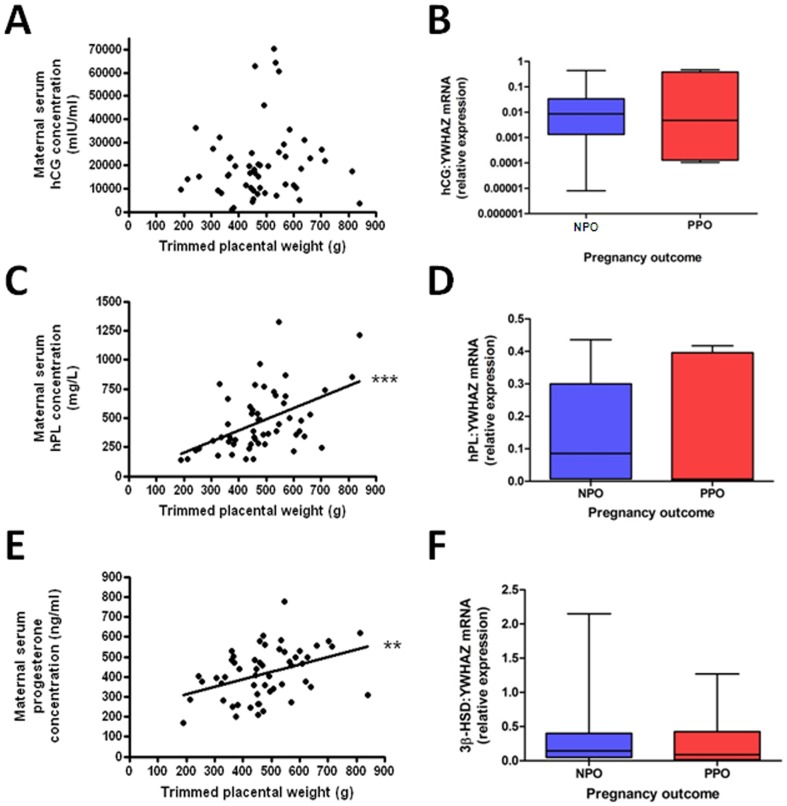
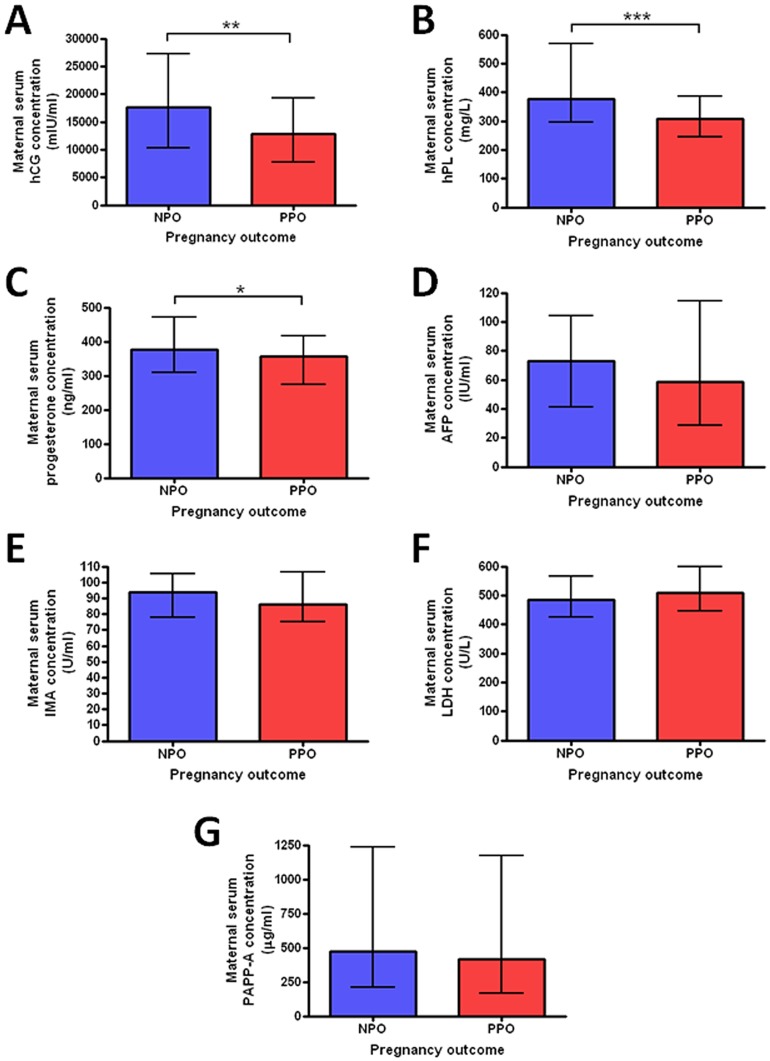
22.1% of pregnancies ended in a poor perinatal outcome after RFM. The most common complication was small-for-gestational age infants. Pregnancy outcome after maternal perception of RFM was related to amount of fetal activity while being monitored, abnormal fetal heart rate trace, diastolic blood pressure, estimated fetal weight, liquor volume, serum hCG and hPL. Following multiple logistic regression abnormal fetal heart rate trace (Odds ratio 7.08, 95% Confidence Interval 1.31-38.18), (OR) diastolic blood pressure (OR 1.04 (95% CI 1.01-1.09), estimated fetal weight centile (OR 0.95, 95% CI 0.94-0.97) and log maternal serum hPL (OR 0.13, 95% CI 0.02-0.99) were independently related to pregnancy outcome. hPL was related to placental mass.
Poor perinatal outcome after maternal perception of RFM is closely related to factors which are connected to placental dysfunction. Novel tests of placental function and associated fetal response may provide improved means to detect fetuses at greatest risk of poor perinatal outcome after RFM.
母体感知胎儿运动减少(RFM)与胎儿死亡和胎儿生长受限(FGR)的风险增加有关。RFM 被认为代表胎儿因胎盘功能不全导致氧气和营养物质转移不足而进行的能量节约补偿。
确定母体感知胎儿运动减少(RFM)后围产儿不良结局的预测因素。
前瞻性队列研究。
招募了 305 名在 28 周后出现 RFM 的孕妇。记录人口统计学因素和临床病史,并进行超声检查以评估胎儿生物测量、羊水体积和脐动脉多普勒。采集孕妇血清样本,用于测量胎盘衍生或修饰蛋白,包括:甲胎蛋白(AFP)、人绒毛膜促性腺激素(hCG)、人胎盘催乳素(hPL)、缺血修饰白蛋白(IMA)、妊娠相关血浆蛋白 A(PAPP-A)和孕酮。通过逻辑回归确定与不良围产儿结局相关的因素。
RFM 后 22.1%的妊娠结局不良。最常见的并发症是小于胎龄儿。母体感知 RFM 后妊娠结局与监测时胎儿活动量、异常胎儿心率迹线、舒张期血压、估计胎儿体重、羊水体积、血清 hCG 和 hPL 有关。经多因素逻辑回归分析,异常胎儿心率迹线(优势比 7.08,95%置信区间 1.31-38.18)、(OR)舒张期血压(OR 1.04(95%CI 1.01-1.09)、估计胎儿体重百分位数(OR 0.95,95%CI 0.94-0.97)和 log 血清 hPL(OR 0.13,95%CI 0.02-0.99)与妊娠结局独立相关。hPL 与胎盘质量有关。
母体感知 RFM 后围产儿不良结局与胎盘功能障碍相关因素密切相关。胎盘功能和相关胎儿反应的新型检测方法可能为检测 RFM 后围产儿不良结局风险最大的胎儿提供更好的手段。