Department of Biomedical Engineering, University of Wisconsin, Madison, Wisconsin, United States of America.
PLoS One. 2012;7(7):e39980. doi: 10.1371/journal.pone.0039980. Epub 2012 Jul 10.
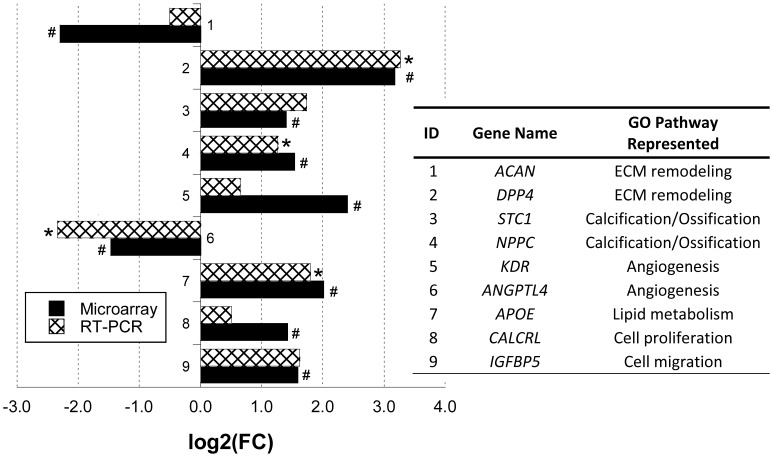
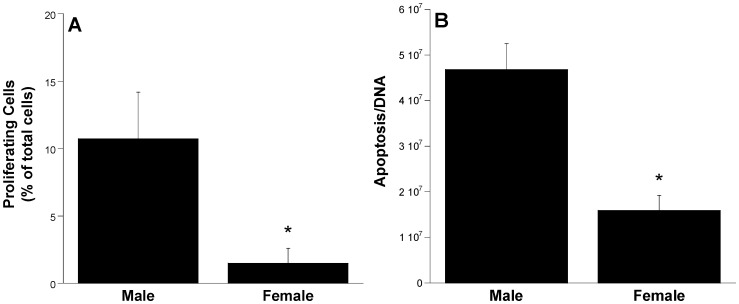
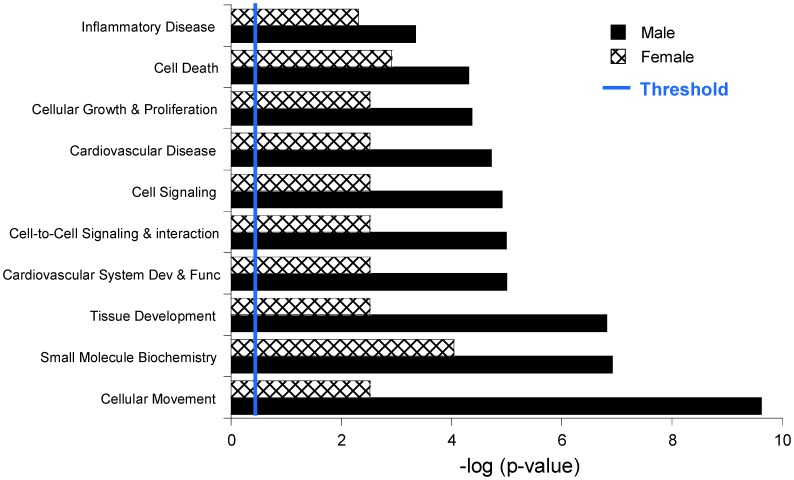
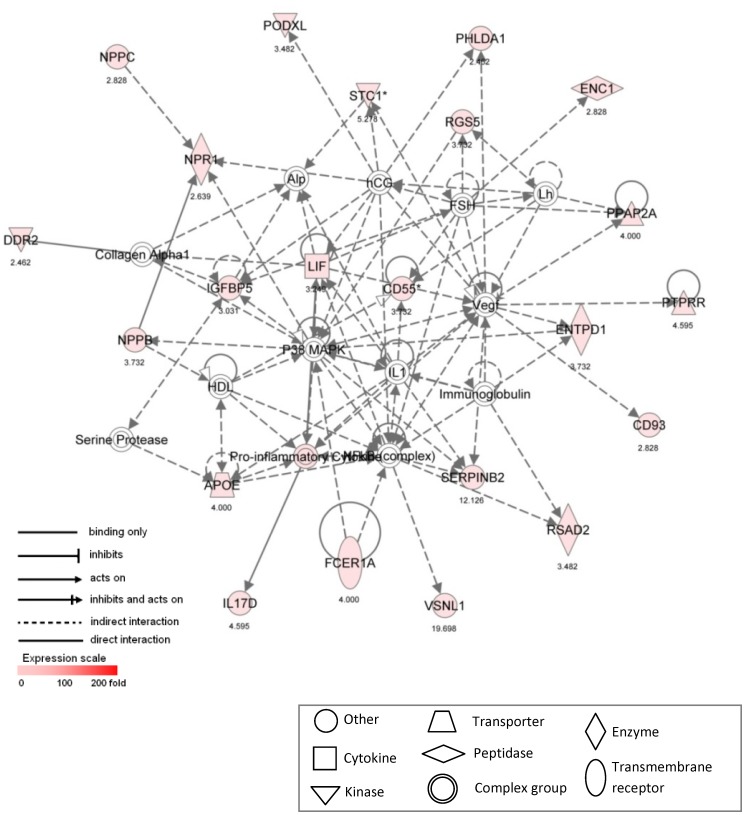
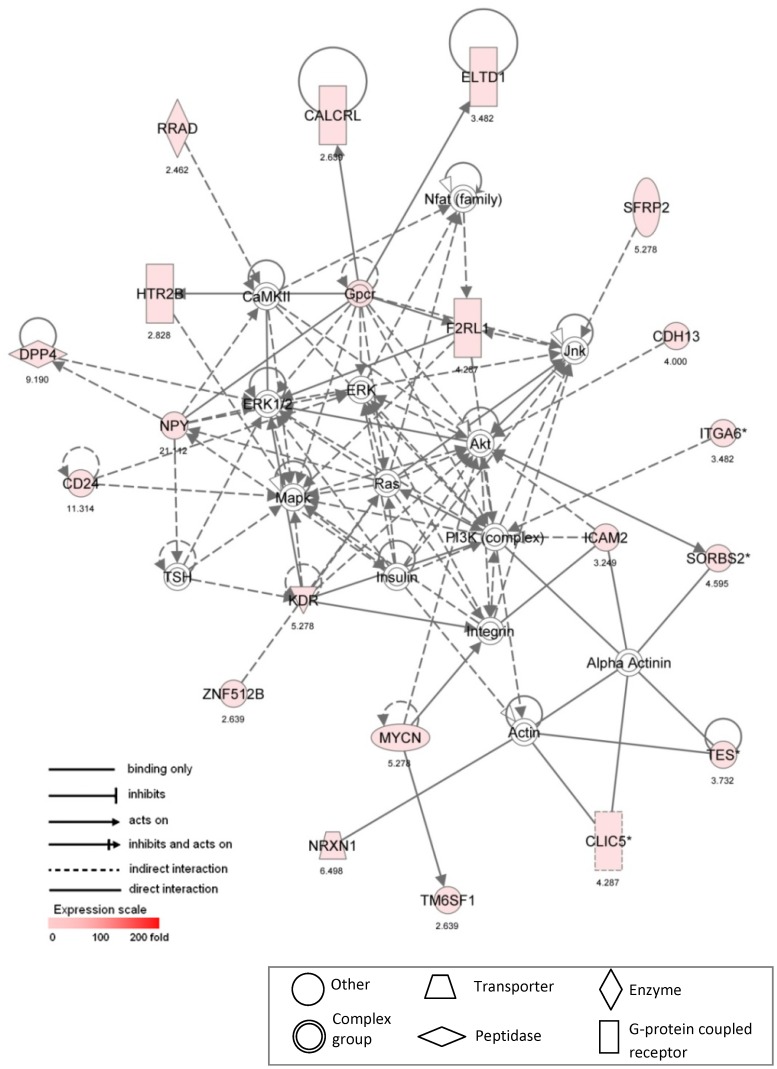
While many large-scale risk factors for calcific aortic valve disease (CAVD) have been identified, the molecular etiology and subsequent pathogenesis of CAVD have yet to be fully understood. Specifically, it is unclear what biological phenomena underlie the significantly higher occurrence of CAVD in the male population. We hypothesized the existence of intrinsic, cellular-scale differences between male and female valvular interstitial cells (VICs) that contribute to male sex being a risk factor for CAVD. Differences in gene expression profiles between healthy male and female porcine VICs were investigated via microarray analysis. Mean expression values of each probe set in the male samples were compared to the female samples, and biological processes were analyzed for overrepresentation using Gene Ontology term enrichment analysis. There were 183 genes identified as significantly (fold change>2; P<0.05) different in male versus female aortic valve leaflets. Within this significant gene list there were 298 overrepresented biological processes, several of which are relevant to pathways identified in CAVD pathogenesis. In particular, pathway analysis indicated that cellular proliferation, apoptosis, migration, ossification, angiogenesis, inflammation, and extracellular matrix reorganization were all significantly represented in the data set. These gene expression findings also translated into functional differences in VIC behavior in the in vitro environment, as sex-related differences in proliferation and apoptosis were confirmed in VIC populations cultured in vitro. These data suggest that a sex-related propensity for CAVD exists on the cellular level in healthy subjects, a phenomenon that could have significant clinical implications. These findings also strongly support discontinuing the use of mixed-sex VIC cultures, thereby changing the current standard in the field.
虽然已经确定了许多导致钙化性主动脉瓣疾病 (CAVD) 的大规模风险因素,但 CAVD 的分子病因学和随后的发病机制仍未完全了解。具体来说,尚不清楚是什么生物学现象导致 CAVD 在男性人群中的发生率明显更高。我们假设男性和女性心脏瓣膜间质细胞 (VIC) 之间存在内在的、细胞尺度的差异,这些差异导致男性成为 CAVD 的风险因素。通过微阵列分析研究了健康雄性和雌性猪 VIC 之间的基因表达谱差异。将雄性样本中每个探针集的平均表达值与雌性样本进行比较,并使用基因本体论术语富集分析对过度表达的生物学过程进行分析。在雄性与雌性主动脉瓣叶之间,有 183 个基因的表达差异显著(倍数变化>2;P<0.05)。在这个显著基因列表中,有 298 个过度表达的生物学过程,其中一些与 CAVD 发病机制中确定的途径相关。特别是,通路分析表明,细胞增殖、凋亡、迁移、骨化、血管生成、炎症和细胞外基质重构在数据集均有显著代表性。这些基因表达发现也转化为 VIC 在体外环境中的行为功能差异,因为在体外培养的 VIC 群体中证实了与性别相关的增殖和凋亡差异。这些数据表明,在健康个体中,CAVD 存在与性别相关的细胞水平倾向性,这一现象可能具有重要的临床意义。这些发现还强烈支持停止使用混合性别 VIC 培养,从而改变该领域目前的标准。