Department of Microbiology and Hygiene, Charité - University Medicine Berlin, Berlin, Germany.
PLoS One. 2012;7(7):e40758. doi: 10.1371/journal.pone.0040758. Epub 2012 Jul 12.
Postmortem microbiological examinations are performed in forensic and medical pathology for defining uncertain causes of deaths and for screening of deceased tissue donors. Interpretation of bacteriological data, however, is hampered by false-positive results due to agonal spread of microorganisms, postmortem bacterial translocation, and environmental contamination.
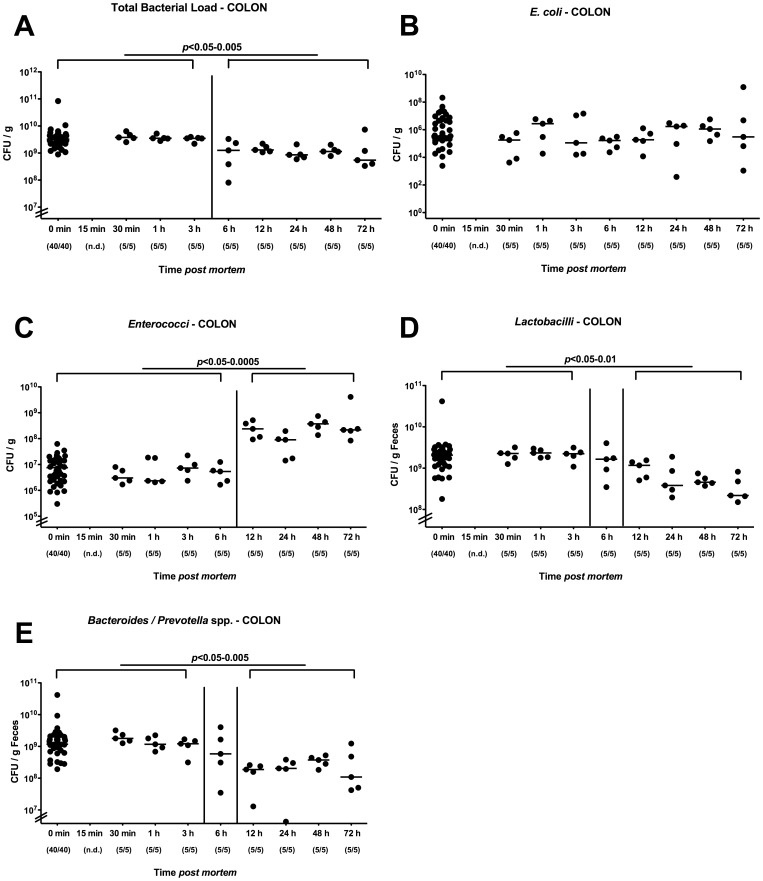
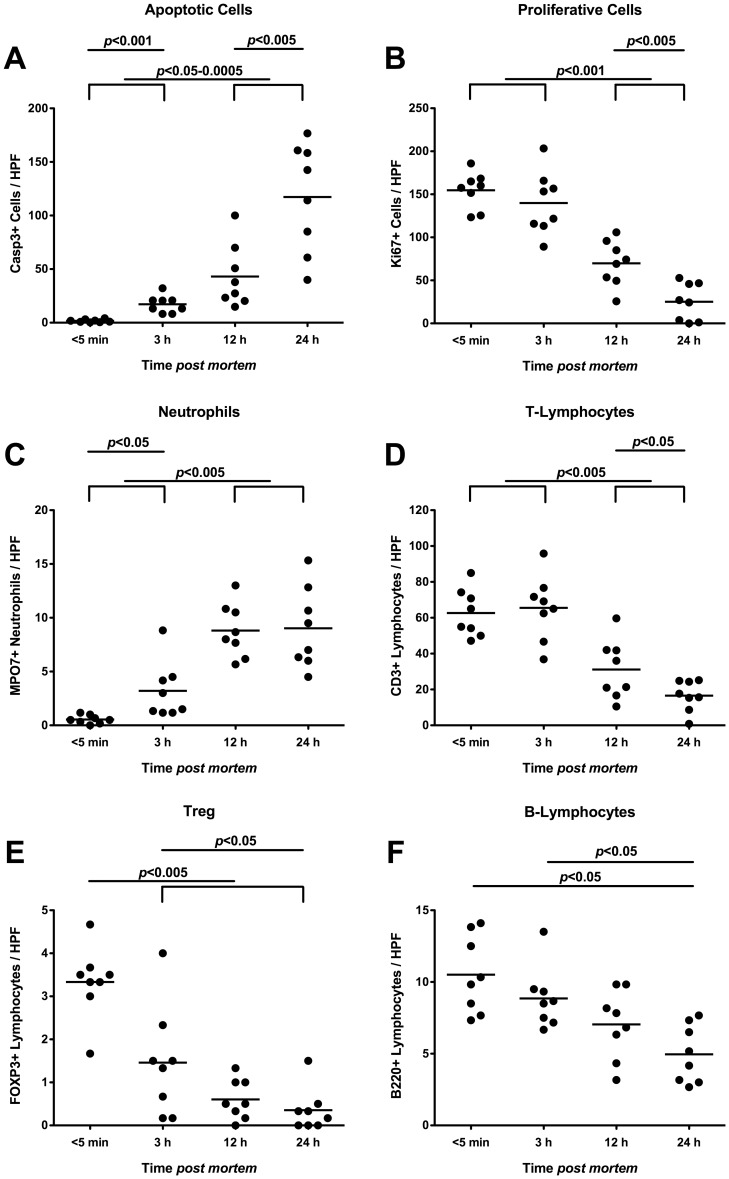
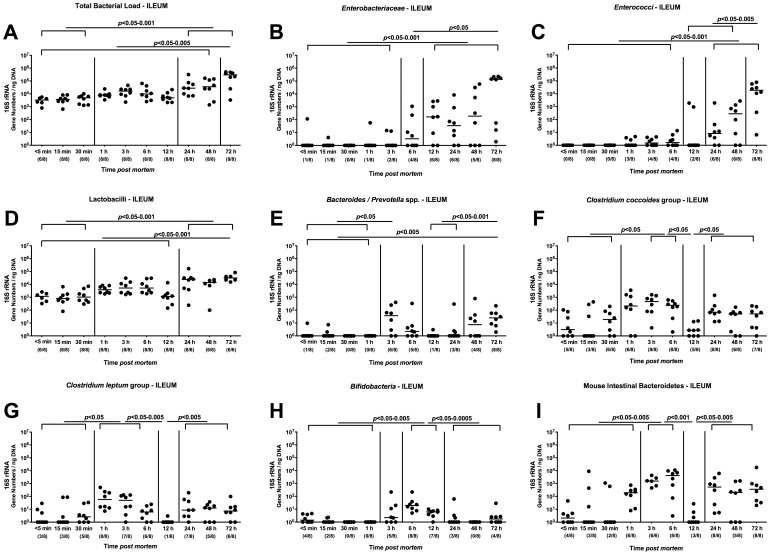
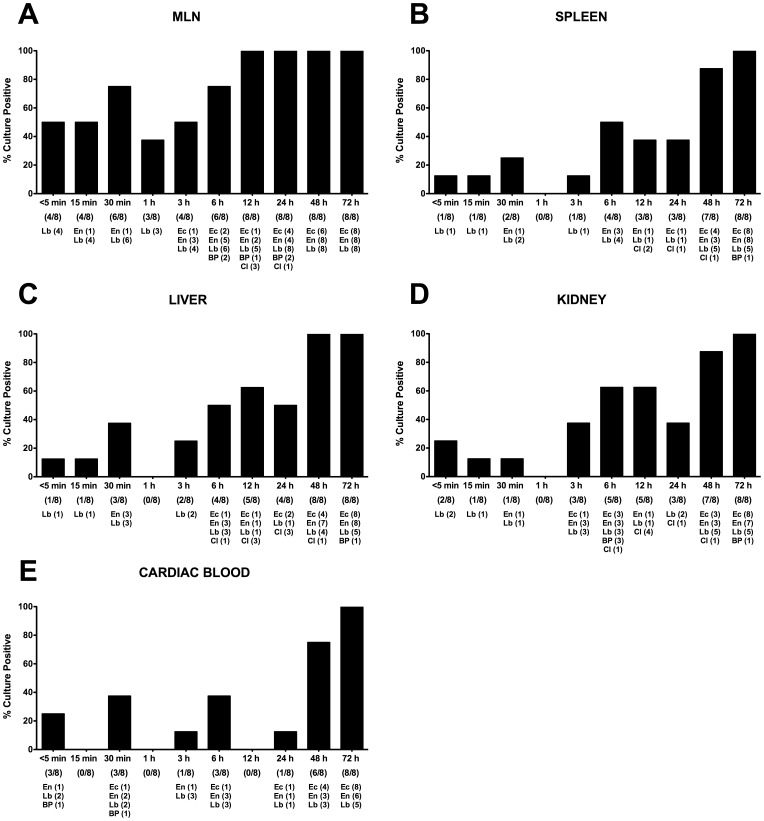
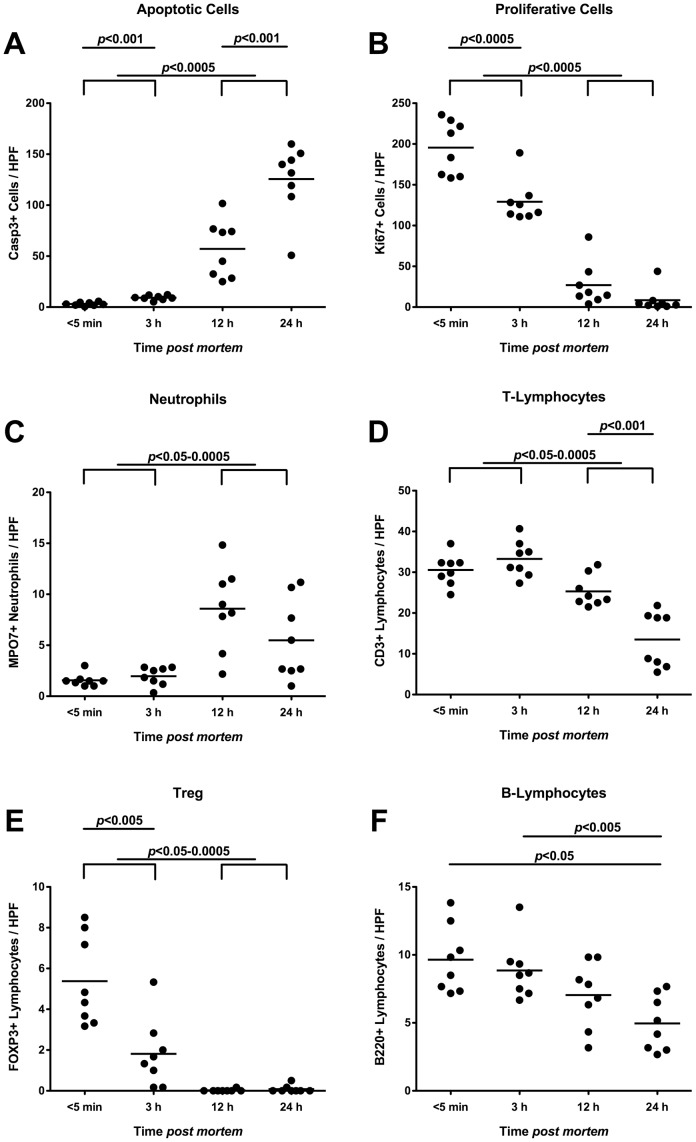
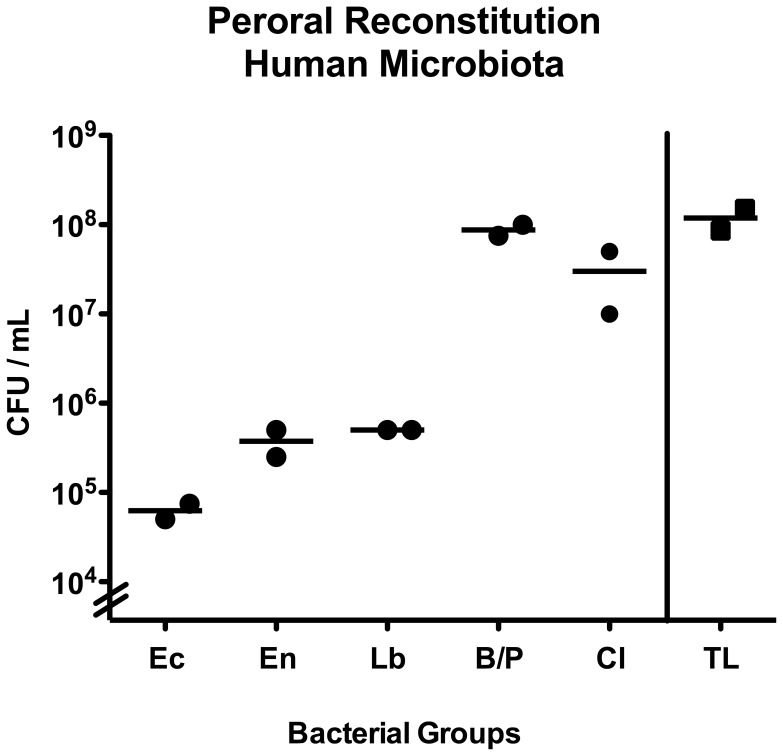
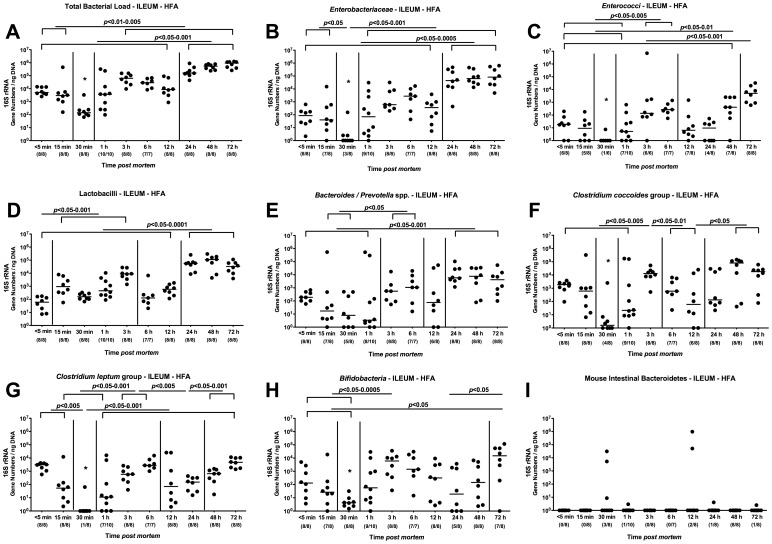
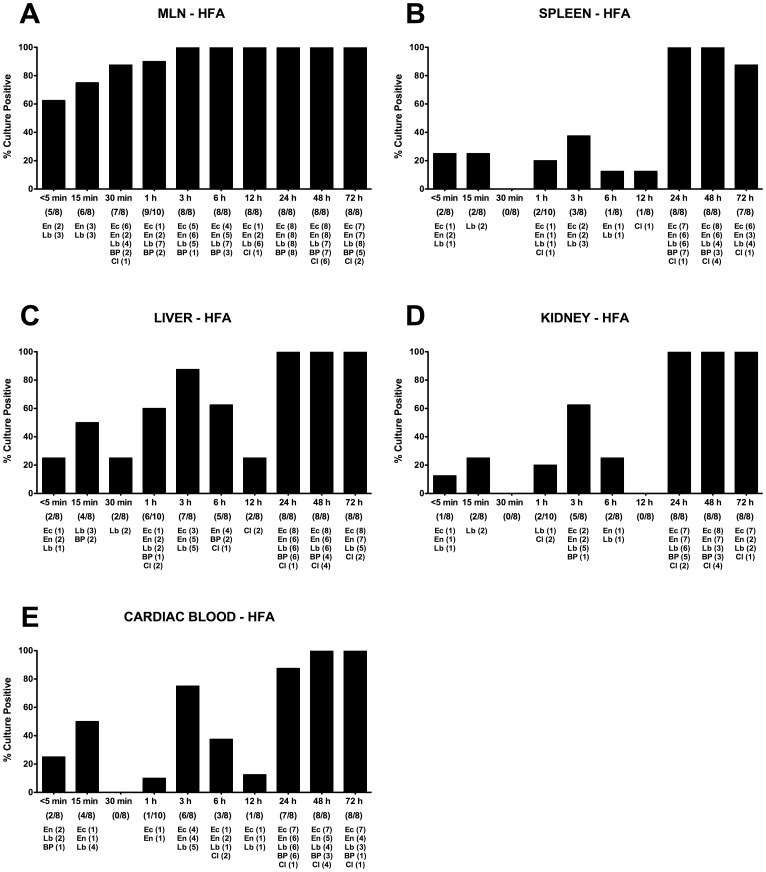
METHODOLOGY/PRINCIPAL FINDINGS: We performed a kinetic survey of naturally occurring postmortem gut flora changes in the small and large intestines of conventional and gnotobiotic mice associated with a human microbiota (hfa) applying cultural and molecular methods. Sacrificed mice were kept under ambient conditions for up to 72 hours postmortem. Intestinal microbiota changes were most pronounced in the ileal lumen where enterobacteria and enterococci increased by 3-5 orders of magnitude in conventional and hfa mice. Interestingly, comparable intestinal overgrowth was shown in acute and chronic intestinal inflammation in mice and men. In hfa mice, ileal overgrowth with enterococci and enterobacteria started 3 and 24 hours postmortem, respectively. Strikingly, intestinal bacteria translocated to extra-intestinal compartments such as mesenteric lymphnodes, spleen, liver, kidney, and cardiac blood as early as 5 min after death. Furthermore, intestinal tissue destruction was characterized by increased numbers of apoptotic cells and neutrophils within 3 hours postmortem, whereas counts of proliferative cells as well as T- and B-lymphocytes and regulatory T-cells decreased between 3 and 12 hours postmortem.
CONCLUSIONS/SIGNIFICANCE: We conclude that kinetics of ileal overgrowth with enterobacteria and enterococci in hfa mice can be used as an indicator for compromized intestinal functionality and for more precisely defining the time point of death under defined ambient conditions. The rapid translocation of intestinal bacteria starting within a few minutes after death will help to distinguish between relevant bacteria and secondary contaminants thus providing important informations for routine applications and future studies in applied microbiology, forensic pathology, and criminal medicine.
死后微生物学检查在法医和医学病理学中用于确定死因不明和筛查已故组织供体。然而,由于微生物的临终扩散、死后细菌易位和环境污染,细菌数据的解释受到假阳性结果的阻碍。
方法/主要发现:我们应用培养和分子方法,对与人类微生物群(hfa)相关的常规和无菌小鼠的小肠和大肠中自然发生的死后肠道菌群变化进行了动力学研究。牺牲后的小鼠在死后最多 72 小时内保持环境条件。回肠腔中肠道微生物群的变化最为明显,其中常规和 hfa 小鼠中的肠杆菌和肠球菌增加了 3-5 个数量级。有趣的是,在小鼠和人类的急性和慢性肠道炎症中也显示出类似的肠道过度生长。在 hfa 小鼠中,肠球菌和肠杆菌的回肠过度生长分别在死后 3 小时和 24 小时开始。引人注目的是,肠道细菌早在死后 5 分钟就转移到肠外部位,如肠系膜淋巴结、脾脏、肝脏、肾脏和心脏血液。此外,肠道组织破坏的特征是在死后 3 小时内凋亡细胞和中性粒细胞数量增加,而在 3 至 12 小时之间,增殖细胞以及 T 和 B 淋巴细胞和调节性 T 细胞的计数减少。
我们得出结论,hfa 小鼠中肠杆菌和肠球菌的回肠过度生长动力学可作为肠道功能受损的指标,并更精确地定义在特定环境条件下的死亡时间点。死后几分钟内开始的肠道细菌的快速易位将有助于区分相关细菌和继发性污染物,从而为常规应用和未来在应用微生物学、法医病理学和刑法医学中的研究提供重要信息。