Institute of Tropical Medicine, Antwerp, Belgium.
PLoS One. 2012;7(7):e40971. doi: 10.1371/journal.pone.0040971. Epub 2012 Jul 17.
Retention of patients in ART care is a major challenge in sub-Saharan programs. Retention is also one of the key indicators to evaluate the success of ART programs.
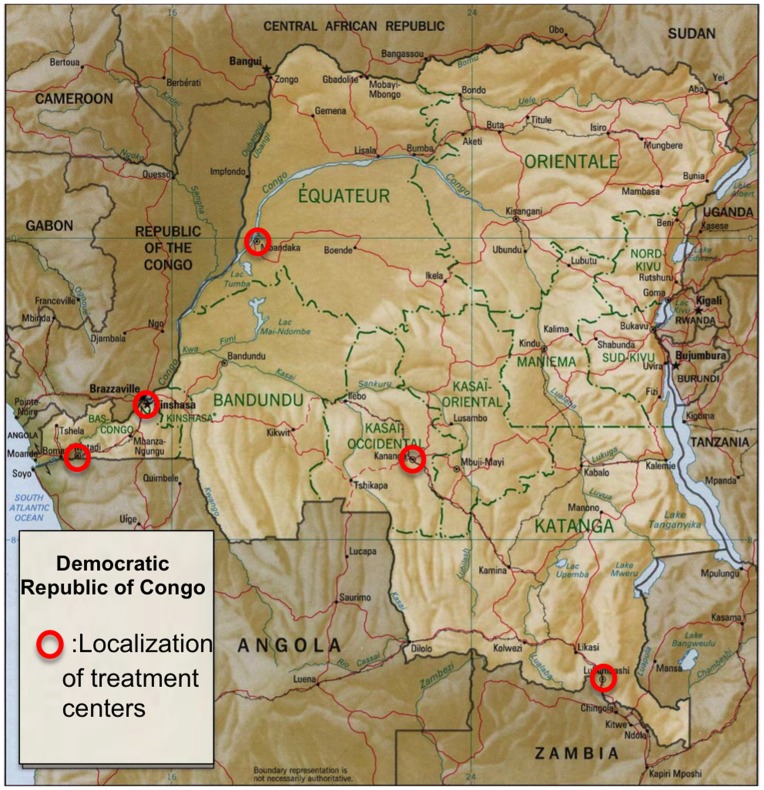
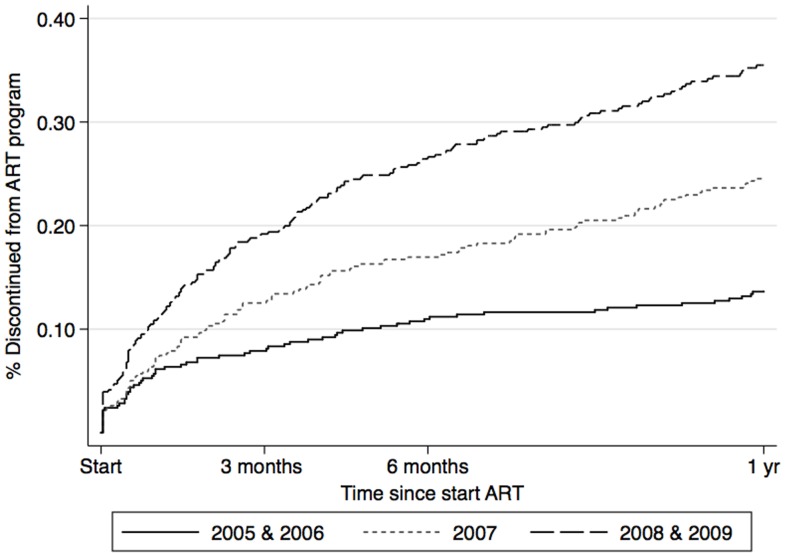
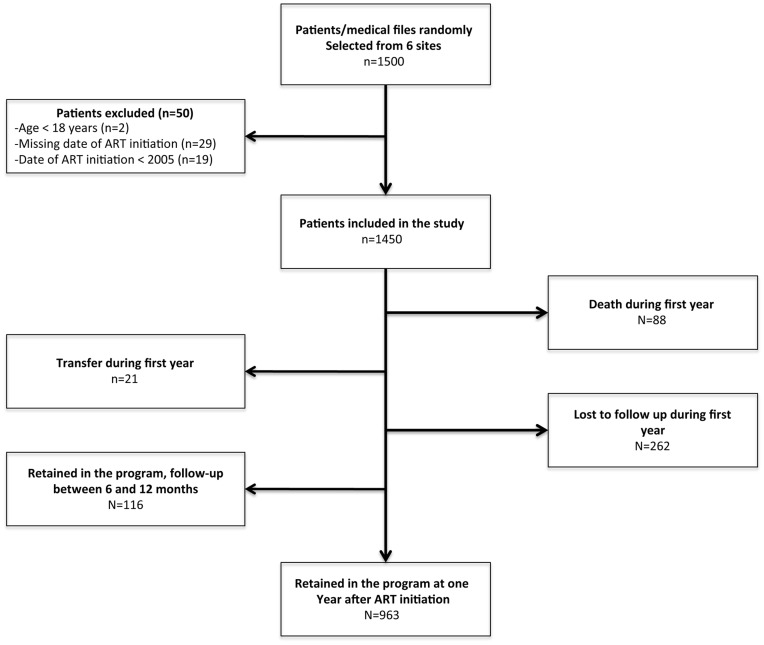
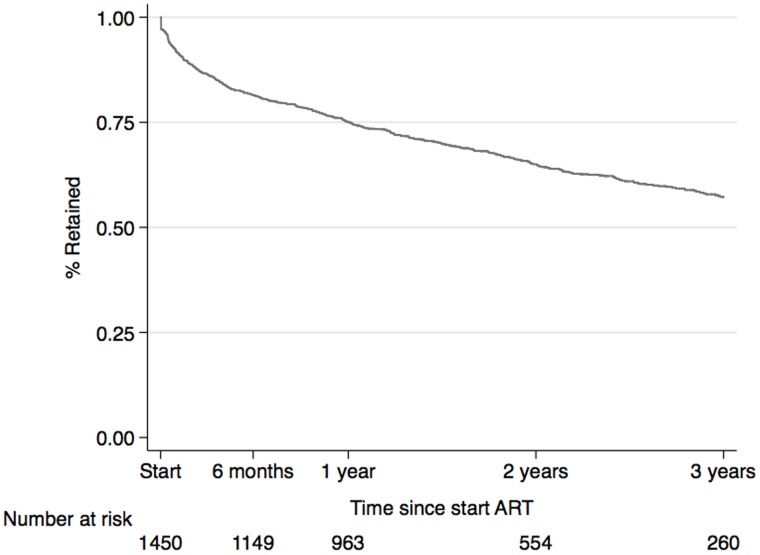
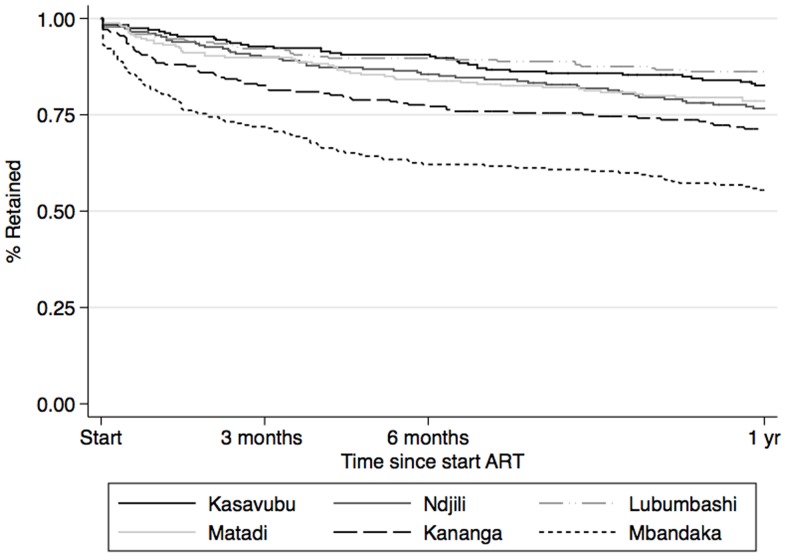
A retrospective review of 1500 randomly selected medical charts of adult ART patients from a local non-governmental (NGO) supported ART program in the Democratic Republic of Congo (DRC). Retention was defined as any visit to the clinic in the 4 months prior to the abstraction date. Retention over time and across different sites was described. The relationship between patient characteristics and retention rates at 1 year was also examined. 1450 patients were included in the analysis. The overall retention rates were 81.4% (95% CI: 79.3-83.4), 75.2% (95% CI: 72.8-77.3), 65.0% (95% CI: 62.3-67.6) and 57.2% (95% CI: 54.0-60.3) at 6 months, 1 year, 2 years and 3 years respectively. The retention rates between sites varied between 62.1% and 90.6% at 6 months and between 55.5% and 86.2% at 1 year. During multivariable analysis weight below 50 kg (aHR: 1.33, 95%CI: 1.05-1.69), higher WHO stage at initiation (aHR: 1.22, 95%CI 0.85-1.76 for stage 3 and aHR: 2.98, 95%CI: 1.93-4.59 for stage 4), and male sex (aHR: 1.32, 95%CI: 1.05-1.65) remained as significant risk factors for attrition during the first year after ART initiation. Other independent risk factors were year of initiation (aHR: 1.73, 95%CI: 1.26-2.38 for the year 2007 and aHR: 3.06, 95%CI: 2.26-4.14 for the period 2008-2009), and site.
Retention is a major problem in DRC, while coverage of patients on ART is still very low. With the flattening of funding for HIV care and treatment in sub-Saharan Africa, and with decreasing funding worldwide, maximizing retention during the much needed scaling-up will even be more important.
在撒哈拉以南的项目中,患者在抗逆转录病毒治疗(ART)中的保留率是一个主要挑战。保留率也是评估 ART 项目成功的关键指标之一。
对刚果民主共和国(DRC)一个当地非政府组织(NGO)支持的 ART 项目中 1500 名成年 ART 患者的随机抽取的医疗记录进行回顾性分析。保留被定义为在提取日期前的 4 个月内任何一次到诊所就诊。描述了随时间和不同地点的保留率。还检查了患者特征与 1 年时保留率之间的关系。1450 名患者纳入分析。总体保留率分别为 6 个月时 81.4%(95%CI:79.3-83.4)、1 年时 75.2%(95%CI:72.8-77.3)、2 年时 65.0%(95%CI:62.3-67.6)和 3 年时 57.2%(95%CI:54.0-60.3)。6 个月时各地点之间的保留率在 62.1%至 90.6%之间,1 年时在 55.5%至 86.2%之间。在多变量分析中,体重低于 50 公斤(aHR:1.33,95%CI:1.05-1.69)、起始时较高的世界卫生组织(WHO)分期(aHR:3 期 1.22,95%CI 0.85-1.76;aHR:4 期 2.98,95%CI:1.93-4.59)和男性(aHR:1.32,95%CI:1.05-1.65)在 ART 启动后第一年仍是流失的显著风险因素。其他独立的风险因素包括起始年份(aHR:2007 年 1.73,95%CI:1.26-2.38;aHR:2008-2009 年期间 3.06,95%CI:2.26-4.14)和地点。
在 DRC,保留率是一个主要问题,而接受 ART 治疗的患者覆盖率仍然很低。随着撒哈拉以南非洲地区艾滋病毒护理和治疗资金的趋平,以及全球资金的减少,在急需扩大规模的过程中最大限度地提高保留率将变得更加重要。