International Center for Materials Nanoarchitechtonics (WPI-MANA), National Institute for Materials Science, Namiki 1-1, Tsukuba 305-0044, Japan.
Sci Rep. 2012;2:519. doi: 10.1038/srep00519. Epub 2012 Jul 18.
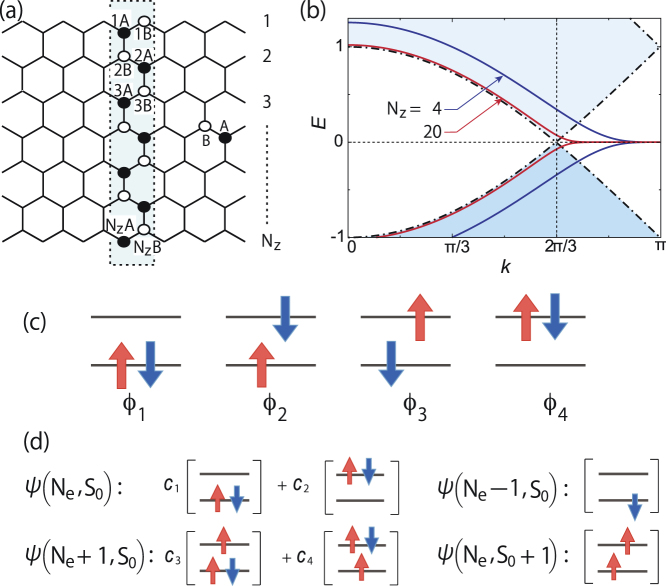
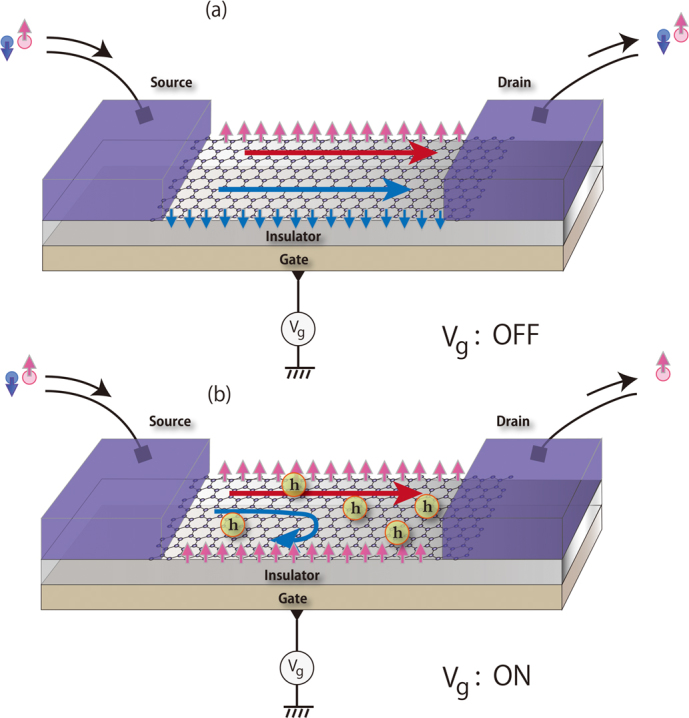
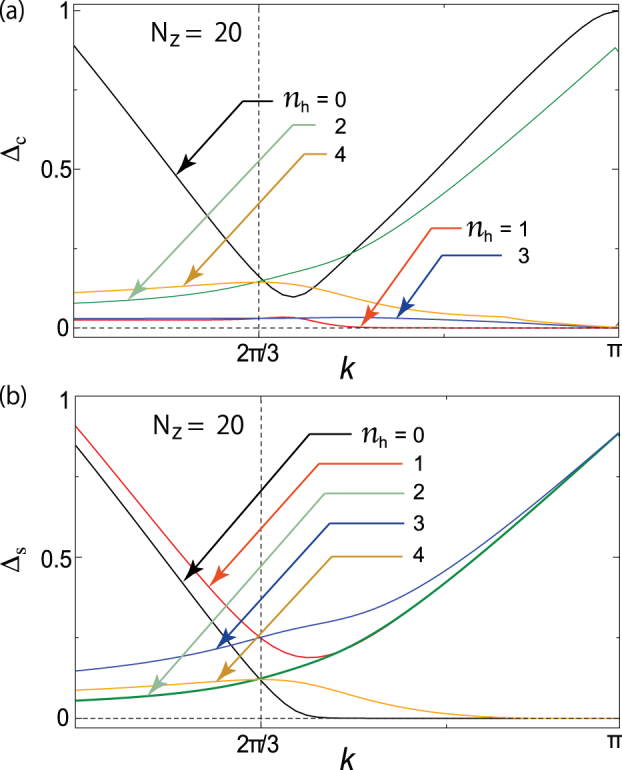
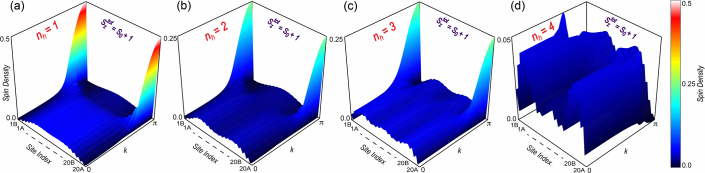
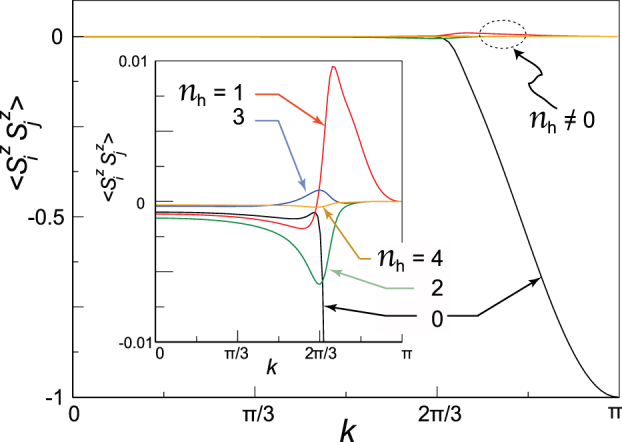
Graphene and its quasi-one-dimensional counterpart, graphene nanoribbons, present an ideal platform for tweaking their unique electronic, magnetic and mechanical properties by various means for potential next-generation device applications. However, such tweaking requires knowledge of the electron-electron interactions that play a crucial role in these confined geometries. Here, we have investigated the magnetic and conducting properties of zigzag edge graphene nanoribbons (ZGNRs) using the many-body configuration interaction (CI) method on the basis of the Hubbard Hamiltonian. For the half-filled case, the many-body ground state shows a ferromagnetic spin-spin correlation along the zigzag edge, which supports the picture obtained from one-electron theory. However, hole doping reduces the spin and charge excitation gap, making the ground state conducting and magnetic. We also provide a two-state model that explains the low-lying charge and spin excitation spectrum of ZGNRs. An experimental setup to confirm the hole-mediated conducting and magnetic states is discussed.
石墨烯及其准一维对应物——石墨烯纳米带,为通过各种手段调整其独特的电子、磁和机械性能提供了理想的平台,可应用于下一代器件。然而,这种调整需要了解在这些受限几何形状中起着关键作用的电子-电子相互作用。在这里,我们使用基于哈伯德哈密顿量的多体组态相互作用(CI)方法研究了锯齿形边缘石墨烯纳米带(ZGNRs)的磁和电导性质。对于半充满情况,多体基态在锯齿边缘表现出铁磁自旋-自旋关联,这支持了单电子理论得到的图像。然而,空穴掺杂会减小自旋和电荷激发能隙,使基态具有导电性和磁性。我们还提供了一个两态模型,解释了 ZGNRs 的低能电荷和自旋激发谱。讨论了一种用于证实空穴介导的导电和磁态的实验设置。