Evolution and Ecology Research Centre, University of New South Wales Sydney 2052, Australia.
Ecol Evol. 2012 Jun;2(6):1319-29. doi: 10.1002/ece3.241.
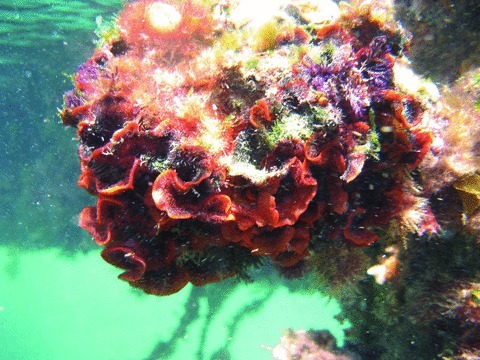
The global spread of invasive species may be facilitated by adaptation to the practices that humans use to manage those species. For example, marine invertebrates that adapt to metal-based antifouling biocides on ship hulls may be more likely to be introduced to and establish in metal-polluted environments. We tested this idea by studying clonal variation in tolerance to, and ability to recover from, exposure to copper in a widespread invasive marine bryozoan, Watersipora subtorquata. We cloned colonies of this organism to independently test multiple environments in a genotype by environment design, and then created a genetic variance-covariance matrix. Genotypes were exposed to a gradient of copper concentrations and growth measured during exposure and after a recovery period. There was a significant genotype × environment interaction in growth during exposure and recovery. We found clonal variation in tolerance and ability to recover from exposure to copper, with growth during exposure apparently trading off against growth after exposure. A weak genetic correlation between growth during and after exposure further indicated that they are separate traits. Overall, the genetic variation within this population indicates that there is considerable potential for adaptation to copper, but this comes at a cost to growth in unpolluted environments.
物种的全球扩散可能会受到人类管理这些物种的实践的促进。例如,适应船体上金属基防污杀生剂的海洋无脊椎动物可能更容易被引入并在金属污染环境中建立。我们通过研究广泛入侵的海洋苔藓动物 Watersipora subtorquata 对铜的耐受能力和从暴露中恢复的能力的克隆变异性来检验这个想法。我们通过在基因型环境设计中克隆该生物的殖民地,独立测试多个环境,然后创建一个遗传方差协方差矩阵。将基因型暴露于铜浓度梯度下,并在暴露期间和恢复期间测量生长情况。在暴露和恢复期间的生长过程中存在显著的基因型与环境相互作用。我们发现了对铜暴露的耐受能力和从暴露中恢复的能力的克隆变异性,暴露期间的生长显然与暴露后的生长成反比。暴露期间和暴露后的生长之间的遗传相关性很弱,这进一步表明它们是不同的特征。总的来说,该种群的遗传变异表明,对铜的适应具有很大的潜力,但这是以在未污染环境中的生长为代价的。