Aix-Marseille University, URMITE CNRS-UMR 7278, 13005 Marseille, France; APHM, Hôpital Nord, Réanimation des détresses respiratoires et des infections sévères, 13015, Marseille, France.
Ann Intensive Care. 2012 Jul 27;2(1):34. doi: 10.1186/2110-5820-2-34.
Work and family are the two domains from which most adults develop satisfaction in life. They also are responsible for stressful experiences. There is a perception in the community that work is increasingly the source of much of our stress and distress. Depressive symptoms may be related to repeated stressful experiences. Intensive care unit (ICU) physicians are exposed to major stressors. However, the existence of depressive symptoms in these doctors has been poorly studied. This study was designed to evaluate the prevalence and associated risk factors of depressive symptoms in junior and senior ICU physicians.
A one-day national survey was conducted in adult intensive care units (ICU) in French public hospitals. Symptoms of depression were assessed using the Centers of Epidemiologic Studies Depression Scale (CES-D).
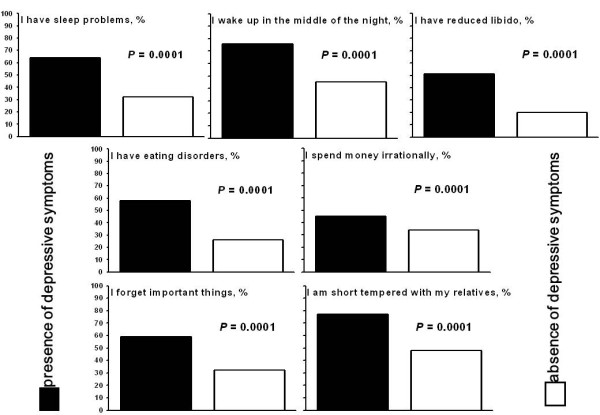
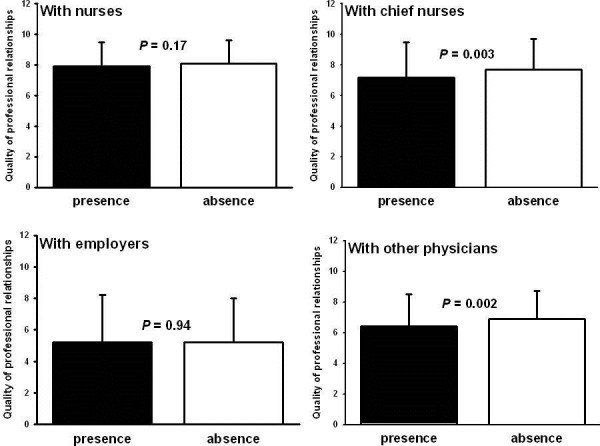
A total of 189 ICUs participated, and 901 surveys were returned (75.8% response rate). Symptoms of depression were found in 23.8% of the respondents using the CES-D scale. Fifty-eight percent of these intensivists presenting symptoms of depression wished to leave their job compared with only 33% of those who did not exhibit signs of depression as assessed by the CES-D scale (p < 0.0001). Multiple logistic regression showed that organizational factors were associated with the presence of depressive symptoms. Workload (long interval since the last nonworking weekend, absence of relief of service until the next working day after a night shift) and impaired relationships with other intensivists were independently associated with the presence of depressive symptoms. A high level of burnout also was related to the presence of depressive symptoms. In contrast, no demographic factors regarding ICU physicians and no factor related to the severity of illness of patients were retained by the model. The quality of relationships with other physicians (from other departments) was associated with the absence of depressive symptoms (protective effect).
Approximately one of four intensivists presented symptoms of depression. The next step could be to test whether organization modification is associated with less depressive symptoms and less desire to leave the job.
工作和家庭是大多数成年人获得生活满足感的两个领域。它们也是造成压力体验的原因。社会上有一种看法,即工作越来越成为我们大部分压力和痛苦的来源。抑郁症状可能与反复的压力体验有关。重症监护病房(ICU)医生会接触到主要的压力源。然而,这些医生中是否存在抑郁症状尚未得到充分研究。本研究旨在评估初级和高级 ICU 医生中抑郁症状的流行程度和相关危险因素。
在法国公立医院的成人重症监护病房(ICU)进行了为期一天的全国性调查。使用流行病学研究中心抑郁量表(CES-D)评估抑郁症状。
共有 189 个 ICU 参与,共收回 901 份调查(75.8%的应答率)。使用 CES-D 量表,23.8%的受访者出现抑郁症状。与 CES-D 量表评估未出现抑郁症状的人相比,58%的出现抑郁症状的重症监护医生希望离职,而出现抑郁症状的人仅为 33%(p<0.0001)。多因素逻辑回归显示,组织因素与抑郁症状的存在有关。工作量(上次非工作周末以来的间隔时间长,夜班后下一个工作日之前没有休息时间)和与其他重症监护医生的关系受损与抑郁症状的存在独立相关。高度倦怠也与抑郁症状的存在有关。相反,模型中没有保留与 ICU 医生的人口统计学因素或与患者病情严重程度相关的因素。与其他医生(来自其他科室)的关系质量与无抑郁症状相关(保护作用)。
大约四分之一的重症监护医生出现抑郁症状。下一步可以测试组织变更是否与较少的抑郁症状和较少的离职意愿相关。