Department of Molecular Biology and Functional Genomics, Stockholm University, Svante Arrheniusväg 20C, SE-10691, Stockholm, Sweden.
Nucleic Acids Res. 2012 Oct;40(19):9876-86. doi: 10.1093/nar/gks691. Epub 2012 Jul 30.
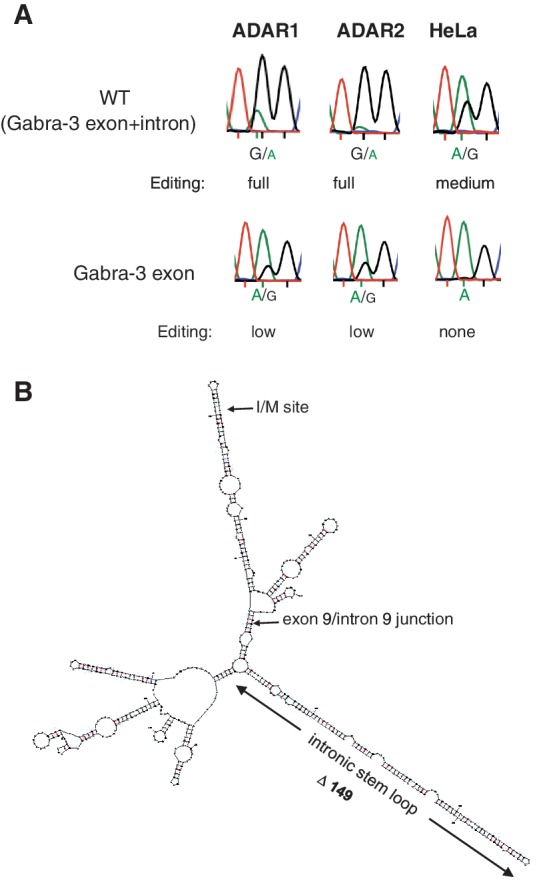
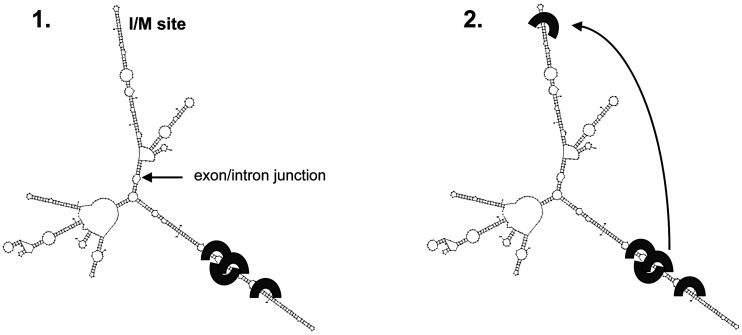
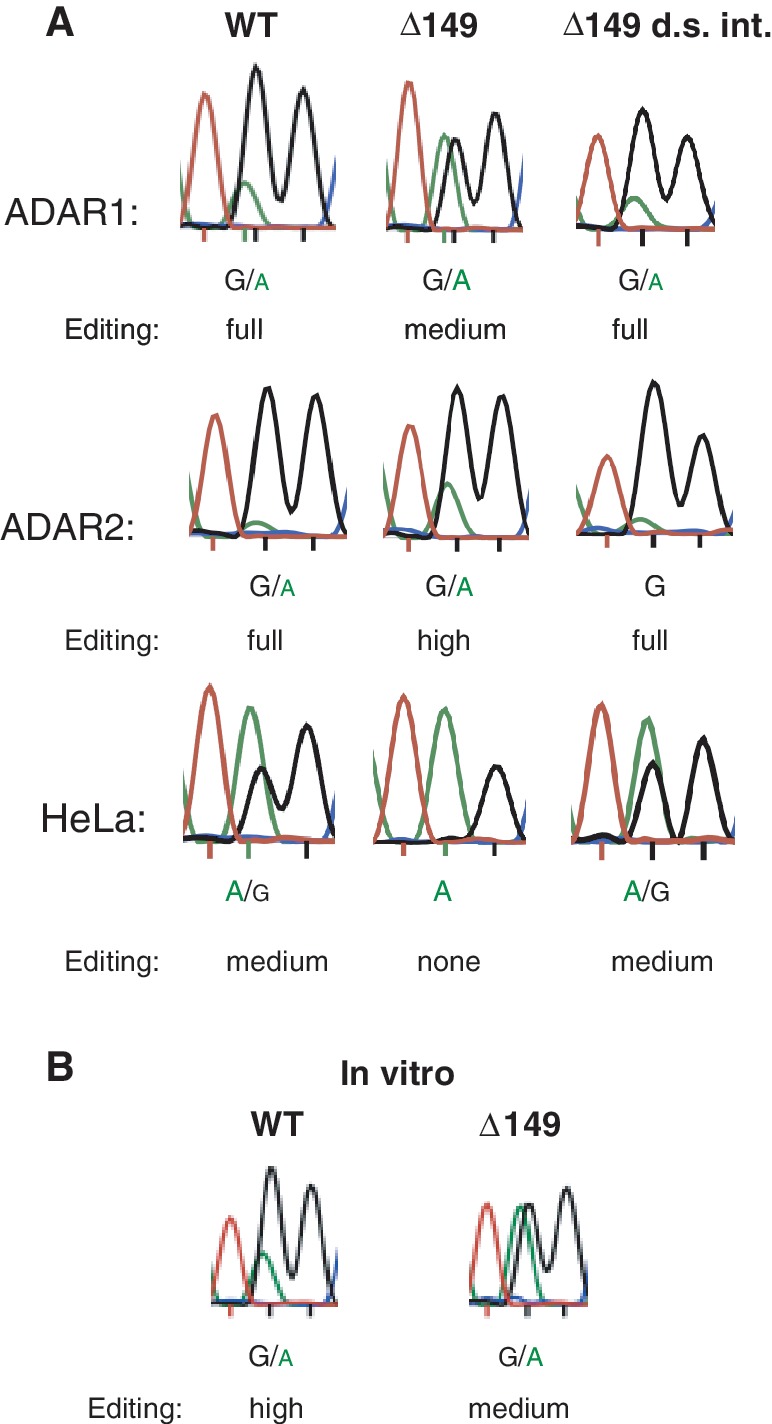
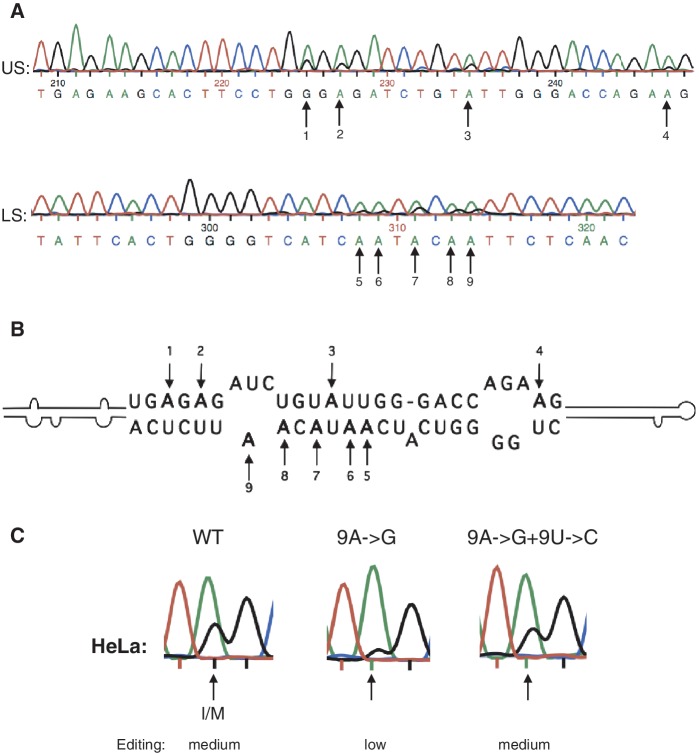
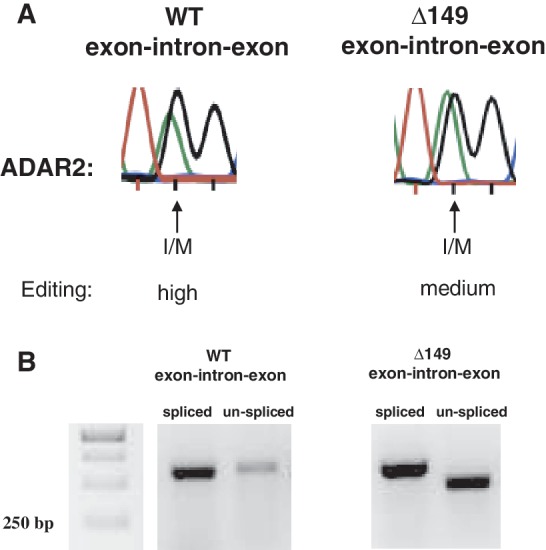
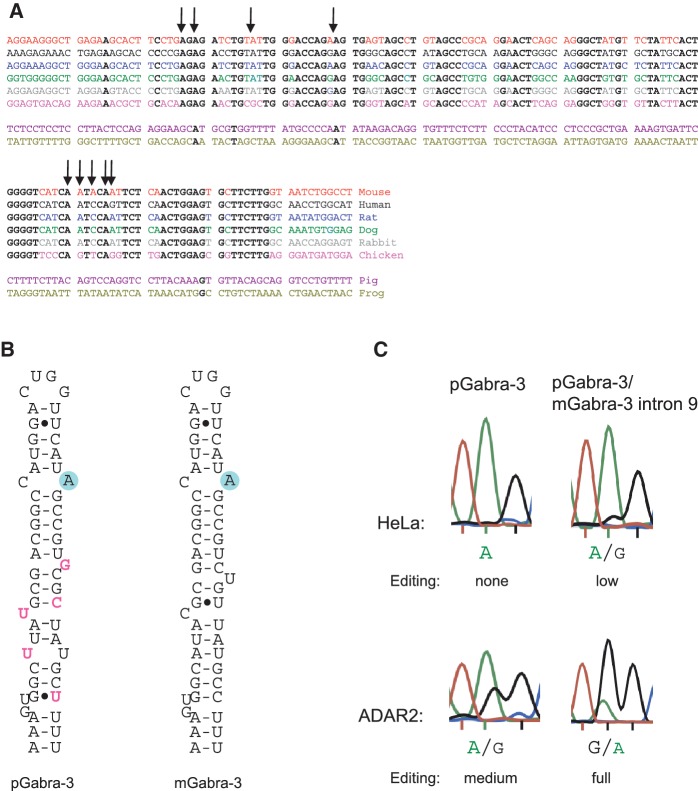
Transcripts have been found to be site selectively edited from adenosine-to-inosine (A-to-I) in the mammalian brain, mostly in genes involved in neurotransmission. While A-to-I editing occurs at double-stranded structures, other structural requirements are largely unknown. We have investigated the requirements for editing at the I/M site in the Gabra-3 transcript of the GABA(A) receptor. We identify an evolutionarily conserved intronic duplex, 150 nt downstream of the exonic hairpin where the I/M site resides, which is required for its editing. This is the first time a distant RNA structure has been shown to be important for A-to-I editing. We demonstrate that the element also can induce editing in related but normally not edited RNA sequences. In human, thousands of genes are edited in duplexes formed by inverted repeats in non-coding regions. It is likely that numerous such duplexes can induce editing of coding regions throughout the transcriptome.
已发现哺乳动物脑中转录物存在腺嘌呤到次黄嘌呤(A-to-I)的位点选择性编辑,主要发生在参与神经递质传递的基因中。虽然 A-to-I 编辑发生在双链结构中,但其他结构要求在很大程度上尚不清楚。我们研究了 GABA(A)受体的 Gabra-3 转录本中 I/M 位点编辑的要求。我们鉴定了一个进化上保守的内含子双链体,位于外显子发夹下游 150 个核苷酸处,该双链体是编辑所必需的。这是首次表明远距离 RNA 结构对 A-to-I 编辑很重要。我们证明该元件还可以诱导相关但通常不被编辑的 RNA 序列发生编辑。在人类中,数千个基因在非编码区域的反向重复形成的双链体中被编辑。很可能许多这样的双链体能诱导整个转录组中编码区域的编辑。