Division of Gastroenterology and Liver Disease, Department of Medicine, Case Western Reserve University School of Medicine, Cleveland, Ohio, United States of America.
PLoS One. 2012;7(7):e42067. doi: 10.1371/journal.pone.0042067. Epub 2012 Jul 25.
We previously showed that the probiotic mixture, VSL#3, prevents the onset of ileitis in SAMP/YitFc (SAMP) mice, and this effect was associated with stimulation of epithelial-derived TNF. The aim of this study was to determine the mechanism(s) of VSL#3-mediated protection on epithelial barrier function and to further investigate the "paradoxical" effects of TNF in preventing SAMP ileitis.
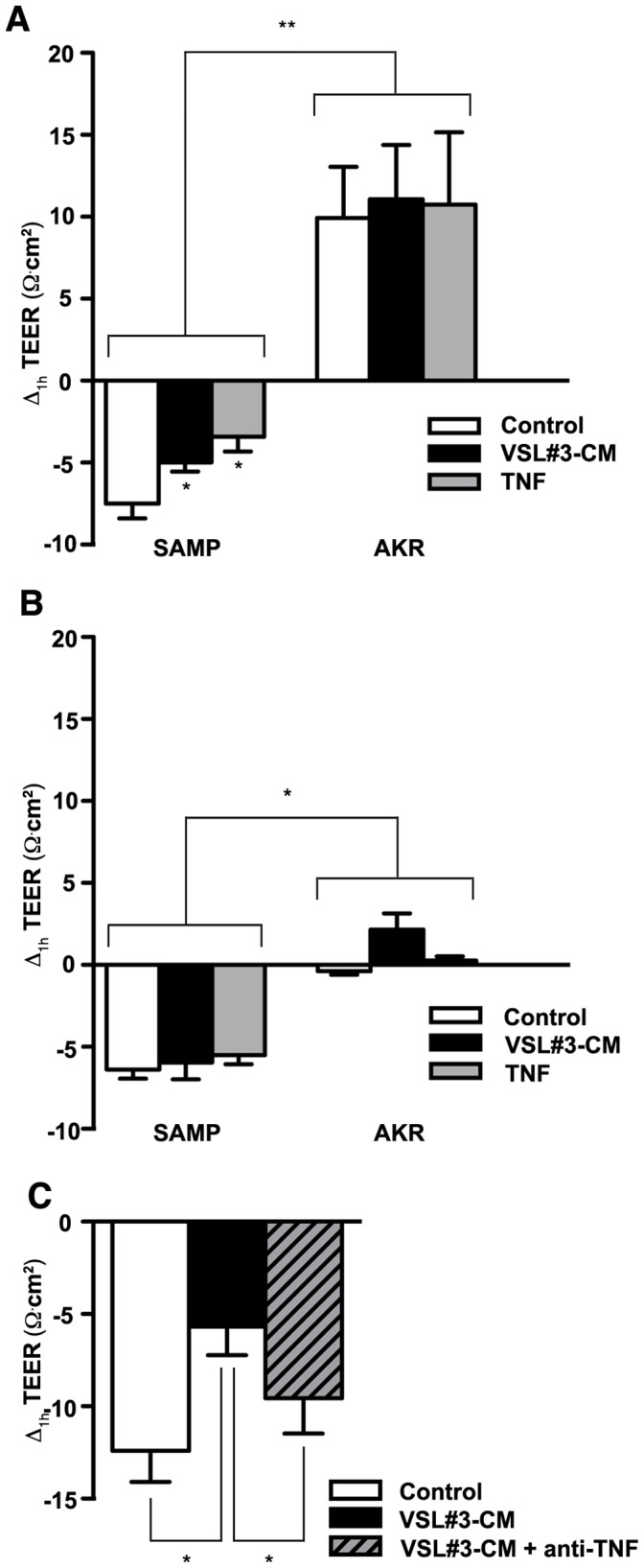
Permeability was evaluated in SAMP mice prior to the onset of inflammation and during established disease by measuring transepithelial electrical resistance (TEER) on ex vivo-cultured ilea following exposure to VSL#3 conditioned media (CM), TNF or VSL#3-CM + anti-TNF. Tight junction (TJ) proteins were assessed by qRT-PCR, Western blot, and confocal microscopy, and TNFRI/TNFRII expression measured in freshly isolated intestinal epithelial cells (IEC) from SAMP and control AKR mice.
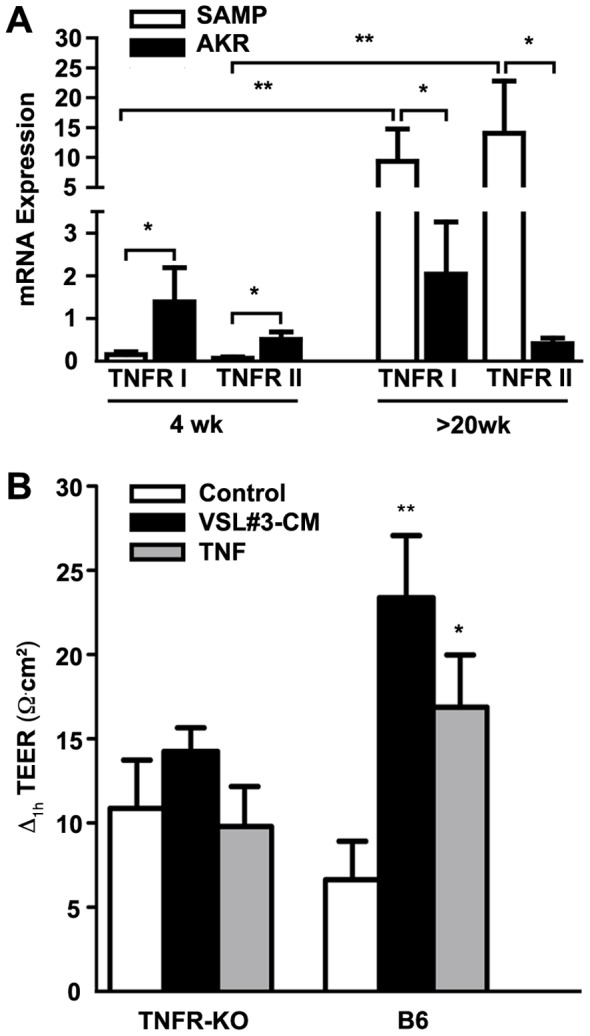
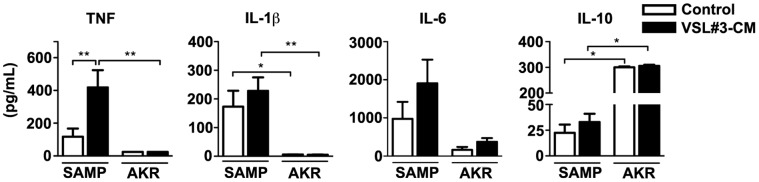
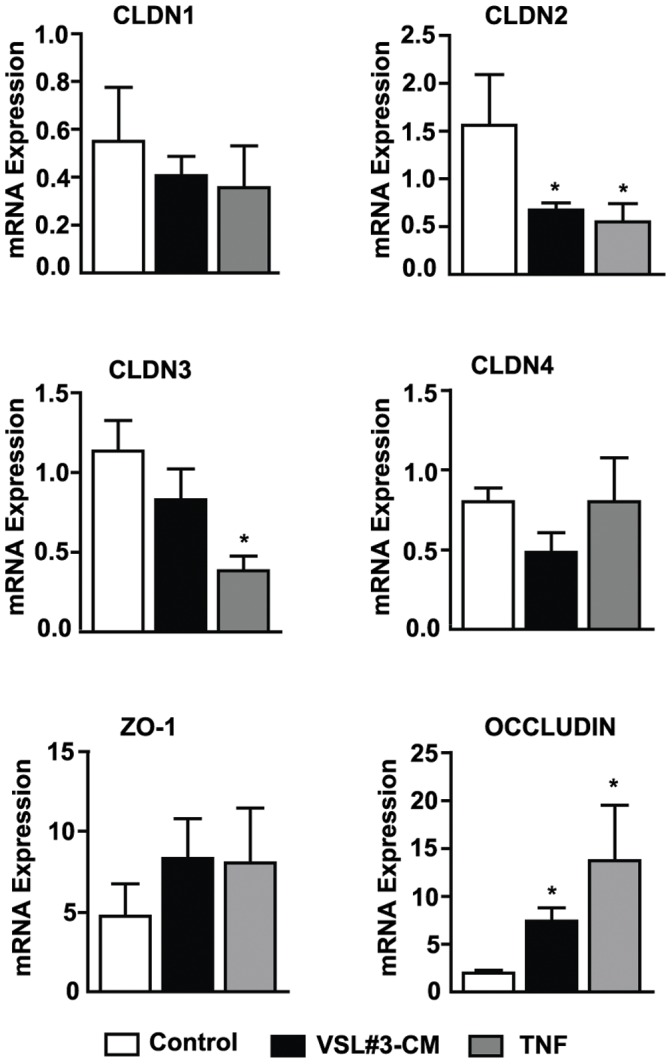
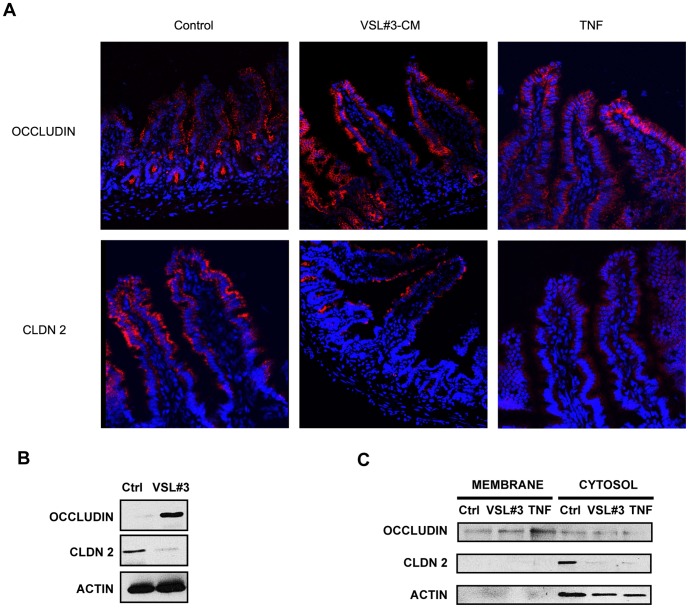
Culture with either VSL#3-CM or TNF resulted in decreased ileal paracellular permeability in pre-inflamed SAMP, but not SAMP with established disease, while addition of anti-TNF abrogated these effects. Modulation of the TJ proteins, claudin-2 and occludin, occurred with a significant decrease in claudin-2 and increase in occludin following stimulation with VSL#3-CM or TNF. TNF protein levels increased in supernatants of SAMP ilea incubated with VSL#3-CM compared to vehicle, while IEC-derived TNFR mRNA expression decreased in young, and was elevated in inflamed, SAMP versus AKR mice.
Our data demonstrate that the previously established efficacy of VSL#3 in preventing SAMP ileitis is due to direct innate and homeostatic effects of TNF on the gut epithelium, modulation of the TJ proteins, claudin-2 and occludin, and overall improvement of intestinal permeability.
我们之前的研究表明,益生菌混合物 VSL#3 可预防 SAMP/YitFc(SAMP)小鼠的回肠炎发作,并且这种作用与上皮细胞衍生的 TNF 的刺激有关。本研究的目的是确定 VSL#3 介导的上皮屏障功能保护的机制,并进一步研究 TNF 在预防 SAMP 回肠炎中的“矛盾”作用。
在炎症发作前和炎症确立后,通过测量暴露于 VSL#3 条件培养基(CM)、TNF 或 VSL#3-CM+抗 TNF 后体外培养的回肠上皮的跨上皮电阻(TEER),评估 SAMP 小鼠的通透性。通过 qRT-PCR、Western blot 和共聚焦显微镜评估紧密连接(TJ)蛋白,并测量来自 SAMP 和对照 AKR 小鼠的新鲜分离肠上皮细胞(IEC)中的 TNFRI/TNFRII 表达。
在炎症前的 SAMP 中,用 VSL#3-CM 或 TNF 培养均可降低回肠旁通透性,但在已建立疾病的 SAMP 中则不然,而添加抗 TNF 则消除了这些作用。VSL#3-CM 或 TNF 刺激后,TJ 蛋白 claudin-2 和 occludin 发生调节,claudin-2 显著减少,occludin 增加。与载体相比,用 VSL#3-CM 孵育的 SAMP 回肠上清液中的 TNF 蛋白水平增加,而年轻的 SAMP 中 IEC 衍生的 TNFR mRNA 表达降低,而在炎症的 SAMP 中则升高。
我们的数据表明,VSL#3 先前在预防 SAMP 回肠炎中的疗效归因于 TNF 对肠道上皮的直接先天和稳态作用,TJ 蛋白、claudin-2 和 occludin 的调节,以及肠道通透性的整体改善。