Kanamaru Yusuke, Sekine Shiori, Ichijo Hidenori, Takeda Kohsuke
Laboratory of Cell Signaling, Graduate School of Pharmaceutical Sciences, The University of Tokyo, 7-3-1 Hongo, Bunkyo-ku, Tokyo 113-0033, Japan.
J Signal Transduct. 2012;2012:931215. doi: 10.1155/2012/931215. Epub 2012 Jul 15.
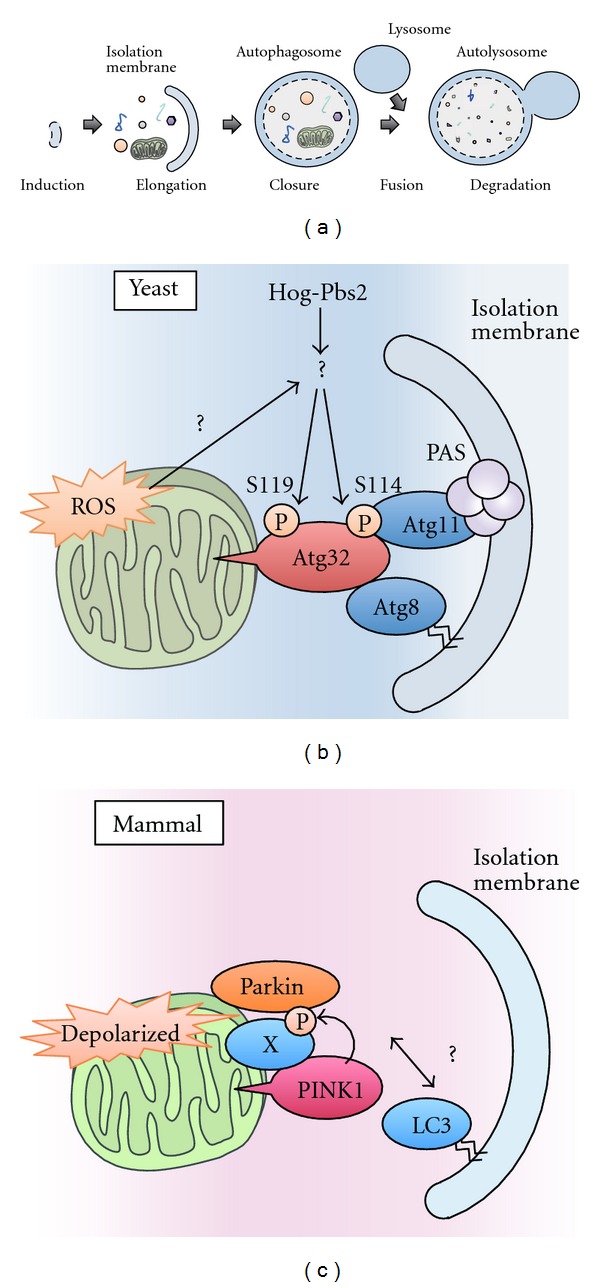
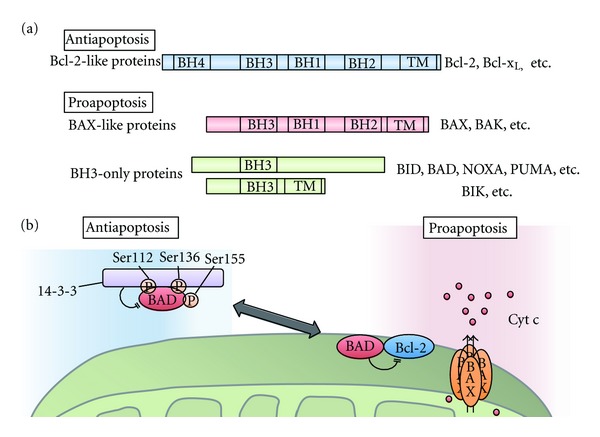
To maintain cellular homeostasis, cells are equipped with precise systems that trigger the appropriate stress responses. Mitochondria not only provide cellular energy but also integrate stress response signaling pathways, including those regulating cell death. Several lines of evidence suggest that the mitochondrial proteins that function in this process, such as Bcl-2 family proteins in apoptosis and phosphoglycerate mutase family member 5 (PGAM5) in necroptosis, are regulated by several kinases. It has also been suggested that the phosphorylation-dependent regulation of mitochondrial fission machinery, dynamin-related protein 1 (Drp1), facilitates appropriate cellular stress responses. However, mitochondria themselves are also damaged by various stresses. To avoid the deleterious effects exerted by damaged mitochondria, cells remove these mitochondria in a selective autophagic degradation process called mitophagy. Interestingly, several kinases, such as PTEN-induced putative kinase 1 (PINK1) in mammals and stress-responsive mitogen-activated protein (MAP) kinases in yeast, have recently been shown to be involved in mitophagy. In this paper, we focus on the phosphorylation-dependent regulation of mitochondrial proteins and discuss the roles of this regulation in the mitochondrial and cellular stress responses.
为维持细胞内环境稳定,细胞配备了精确的系统来触发适当的应激反应。线粒体不仅提供细胞能量,还整合应激反应信号通路,包括那些调节细胞死亡的通路。多项证据表明,在此过程中发挥作用的线粒体蛋白,如凋亡中的Bcl-2家族蛋白和坏死性凋亡中的磷酸甘油酸变位酶家族成员5(PGAM5),受多种激酶调控。也有人提出,线粒体分裂机制动力相关蛋白1(Drp1)的磷酸化依赖性调控有助于细胞产生适当的应激反应。然而,线粒体自身也会受到各种应激的损伤。为避免受损线粒体产生有害影响,细胞通过一种称为线粒体自噬的选择性自噬降解过程清除这些线粒体。有趣的是,最近有研究表明,多种激酶,如哺乳动物中的PTEN诱导的假定激酶1(PINK1)和酵母中的应激反应丝裂原活化蛋白(MAP)激酶,都参与了线粒体自噬。在本文中,我们聚焦于线粒体蛋白的磷酸化依赖性调控,并探讨这种调控在线粒体和细胞应激反应中的作用。