Theoretical Biology and Biophysics, Los Alamos National Laboratory, Los Alamos, NM 87544, USA.
J Gen Physiol. 2012 Aug;140(2):159-73. doi: 10.1085/jgp.201110753.
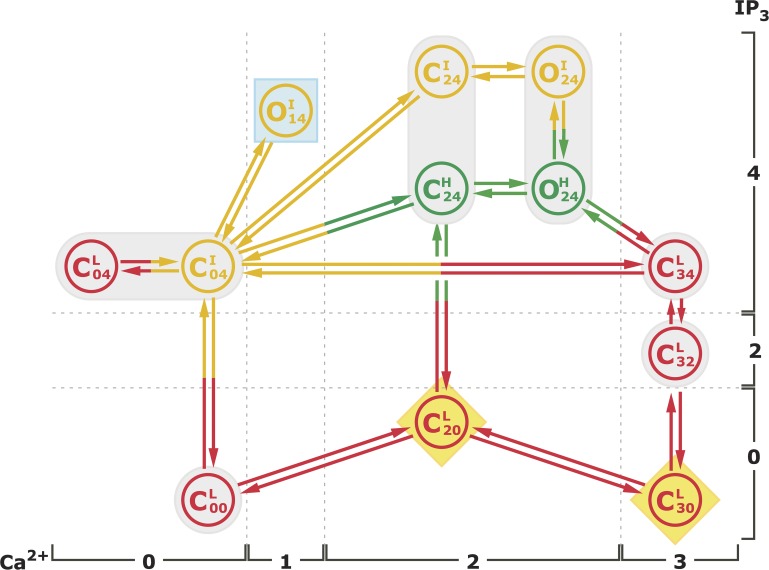
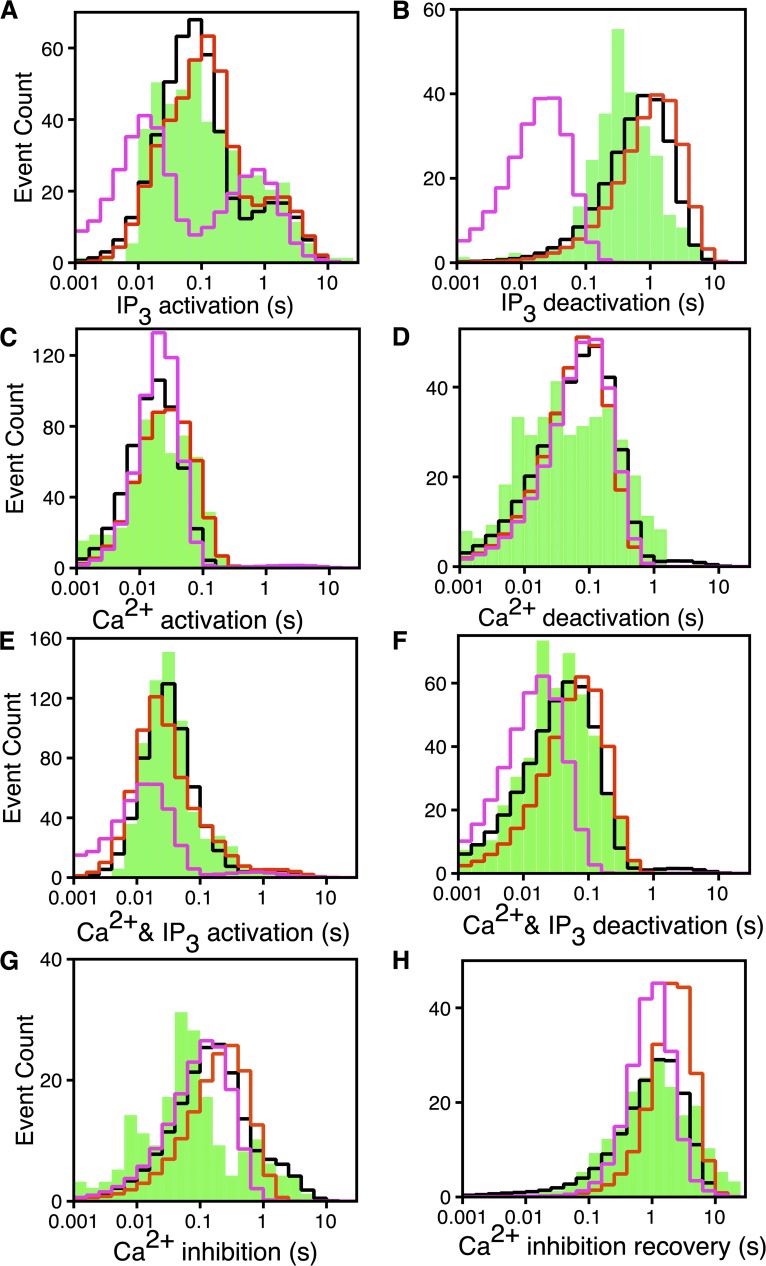
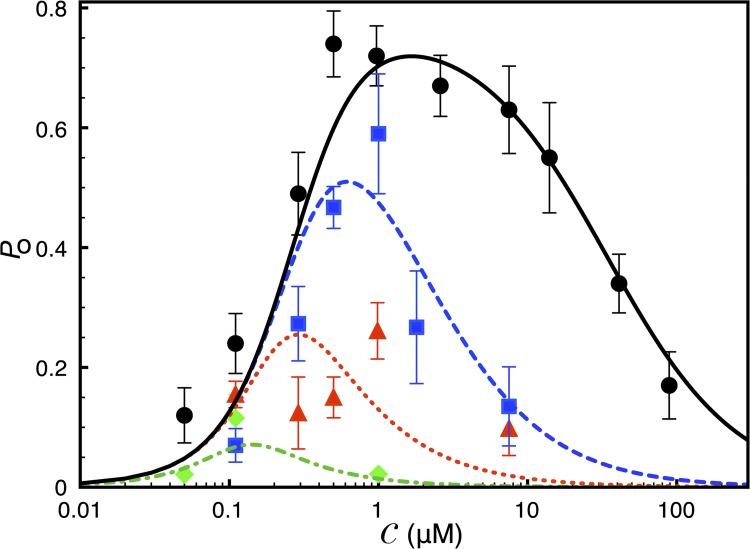
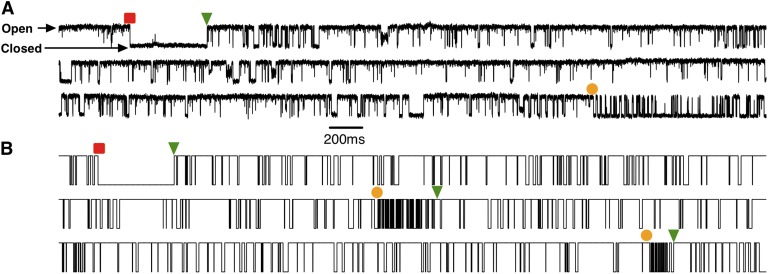
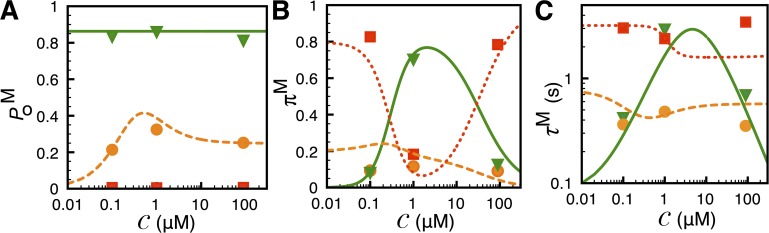
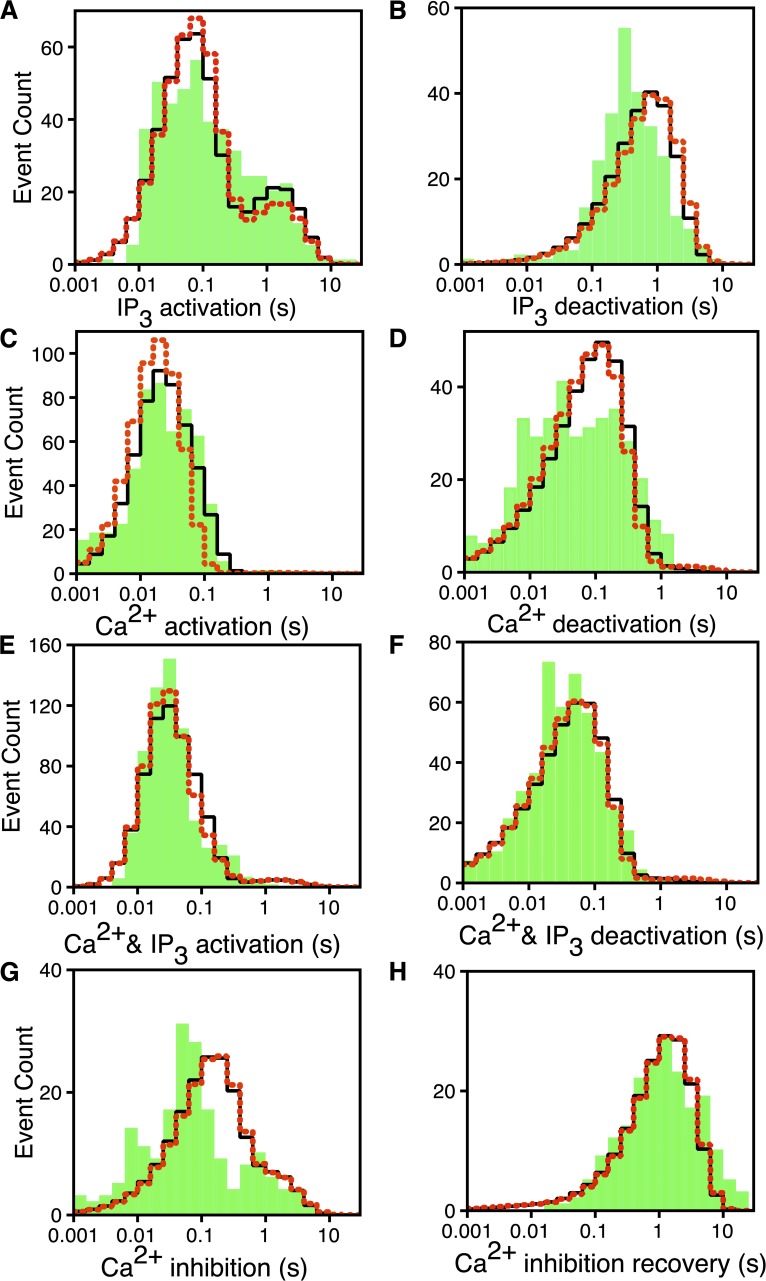
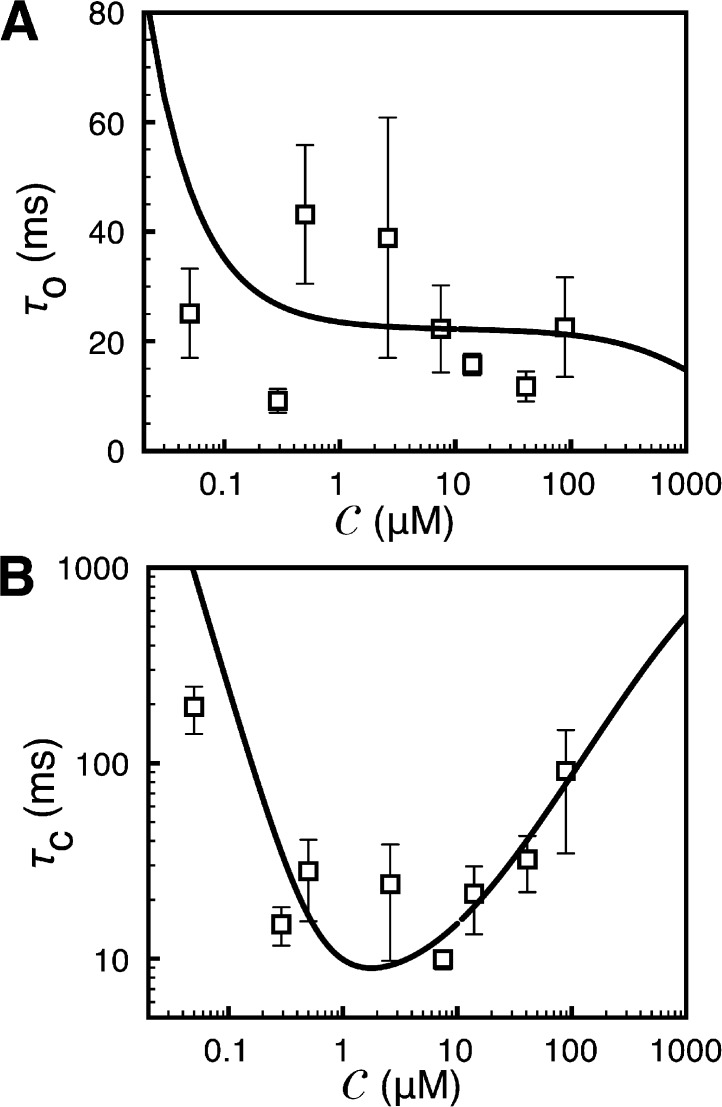
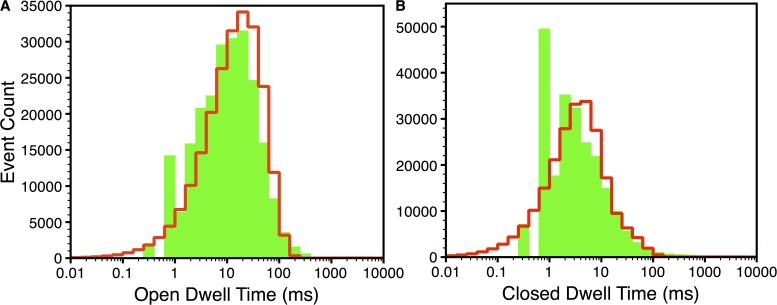
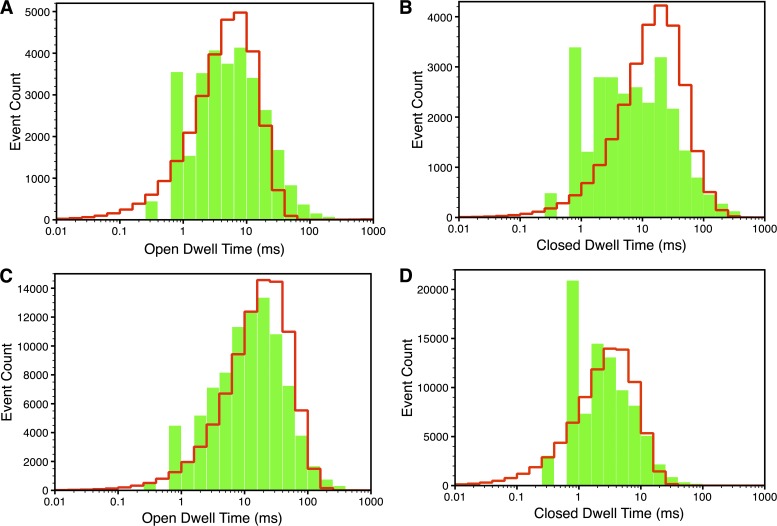
The inositol 1,4,5-trisphosphate (IP(3)) receptor (IP(3)R) channel is crucial for the generation and modulation of intracellular Ca(2+) signals in animal cells. To gain insight into the complicated ligand regulation of this ubiquitous channel, we constructed a simple quantitative continuous-time Markov-chain model from the data. Our model accounts for most experimentally observed gating behaviors of single native IP(3)R channels from insect Sf9 cells. Ligand (Ca(2+) and IP(3)) dependencies of channel activity established six main ligand-bound channel complexes, where a complex consists of one or more states with the same ligand stoichiometry and open or closed conformation. Channel gating in three distinct modes added one complex and indicated that three complexes gate in multiple modes. This also restricted the connectivity between channel complexes. Finally, latencies of channel responses to abrupt ligand concentration changes defined a model with specific network topology between 9 closed and 3 open states. The model with 28 parameters can closely reproduce the equilibrium gating statistics for all three gating modes over a broad range of ligand concentrations. It also captures the major features of channel response latency distributions. The model can generate falsifiable predictions of IP(3)R channel gating behaviors and provide insights to both guide future experiment development and improve IP(3)R channel gating analysis. Maximum likelihood estimates of the model parameters and of the parameters in the De Young-Keizer model yield strong statistical evidence in favor of our model. Our method is simple and easily applicable to the dynamics of other ion channels and molecules.
肌醇 1,4,5-三磷酸 (IP(3)) 受体 (IP(3)R) 通道对于动物细胞内 Ca(2+) 信号的产生和调节至关重要。为了深入了解这种普遍存在的通道的复杂配体调节,我们根据数据构建了一个简单的定量连续时间马尔可夫链模型。我们的模型解释了昆虫 Sf9 细胞中单个天然 IP(3)R 通道的大多数实验观察到的门控行为。通道活性的配体(Ca(2+) 和 IP(3)) 依赖性确定了六个主要的配体结合通道复合物,其中一个复合物由相同配体计量和开放或关闭构象的一个或多个状态组成。三种不同模式的通道门控增加了一个复合物,并表明三个复合物以多种模式门控。这也限制了通道复合物之间的连接。最后,通道对突然的配体浓度变化的响应延迟定义了一种具有特定网络拓扑的模型,其中包含 9 个关闭和 3 个开放状态。具有 28 个参数的模型可以在广泛的配体浓度范围内紧密再现所有三种门控模式的平衡门控统计数据。它还捕获了通道响应延迟分布的主要特征。该模型可以对 IP(3)R 通道门控行为产生可检验的预测,并为指导未来实验的发展和改善 IP(3)R 通道门控分析提供见解。模型参数和 De Young-Keizer 模型参数的最大似然估计为我们的模型提供了强有力的统计支持。我们的方法简单且易于应用于其他离子通道和分子的动力学。