Department of Clinical Sciences, Lund University, Malmö, Sweden.
Food Nutr Res. 2012;56. doi: 10.3402/fnr.v56i0.19104. Epub 2012 Jul 30.
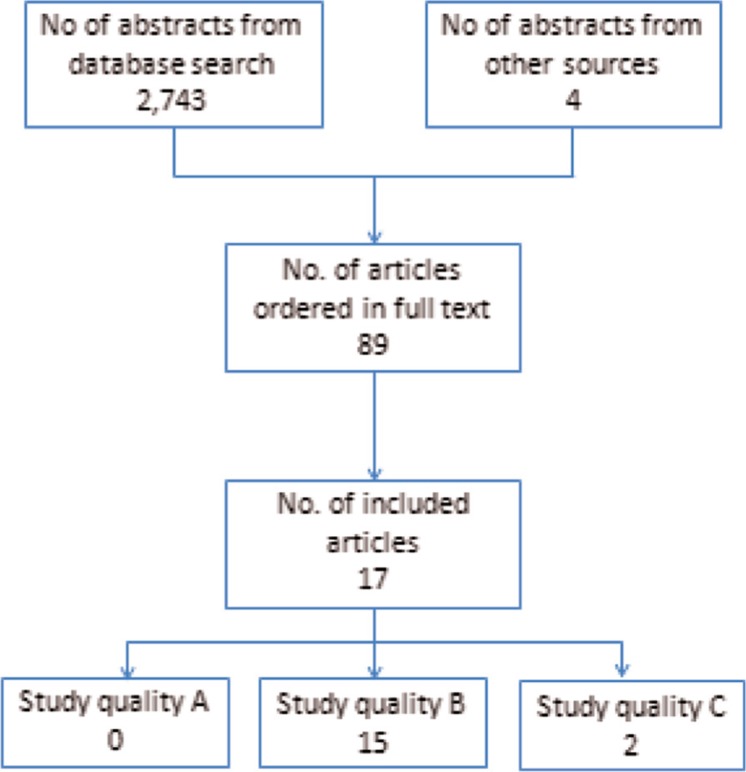
Consumption of sugar has been relatively high in the Nordic countries; the impact of sugar intake on metabolic risk factors and related diseases has been debated. The objectives were to assess the effect of sugar intake (sugar-sweetened beverages, sucrose and fructose) on association with type 2 diabetes, cardiovascular disease and related metabolic risk factors (impaired glucose tolerance, insulin sensitivity, dyslipidemia, blood pressure, uric acid, inflammation markers), and on all-cause mortality, through a systematic review of prospective cohort studies and randomised controlled intervention studies published between January 2000 and search dates. The methods adopted were as follows: the first search was run in PubMed in October 2010. A second search with uric acid as risk marker was run in April 2011. The total search strategy was rerun in April 2011 in SveMed+. An update was run in PubMed in January 2012. Two authors independently selected studies for inclusion from the 2,743 abstracts according to predefined eligibility criteria. The outcome was that out of the 17 studies extracted, 15 were prospective cohort studies and two were randomised controlled crossover trials. All of the studies included only adults. With respect to incident type 2 diabetes (nine studies), four of six prospective cohort studies found a significant positive association for sugar-sweetened beverage intake. In general, larger cohort studies with longer follow-up more often reported positive associations, and BMI seemed to mediate part of the increased risk. For other metabolic or cardiovascular risk factors or outcomes, too few studies have been published to draw conclusions. In conclusion, data from prospective cohort studies published in the years 2000-2011 suggest that sugar-sweetened beverages probably increase the risk of type 2 diabetes. For related metabolic risk factors, cardiovascular disease or all-cause mortality and other types of sugars, too few studies were available to draw conclusions.
糖的摄入量一直居高不下,因此关于糖摄入量对代谢风险因素和相关疾病的影响,一直存在争议。本研究旨在通过对 2000 年 1 月至检索日期间发表的前瞻性队列研究和随机对照干预研究进行系统评价,评估糖摄入量(含糖饮料、蔗糖和果糖)与 2 型糖尿病、心血管疾病及相关代谢风险因素(糖耐量受损、胰岛素敏感性、血脂异常、血压、尿酸、炎症标志物)的相关性,并评估其与全因死亡率的相关性。采用的方法如下:2010 年 10 月首次在 PubMed 中进行检索。2011 年 4 月,以尿酸为风险标志物进行了第二次检索。2011 年 4 月,在 SveMed+中重新运行了整个搜索策略。2012 年 1 月,在 PubMed 中进行了更新。两位作者根据预先确定的纳入标准,独立地从 2743 篇摘要中选择纳入的研究。在提取的 17 项研究中,有 15 项为前瞻性队列研究,2 项为随机对照交叉试验。所有研究仅纳入成年人。关于新发 2 型糖尿病(9 项研究),6 项前瞻性队列研究中有 4 项发现含糖饮料摄入与风险呈显著正相关。一般来说,随访时间更长、规模更大的队列研究更常报告阳性关联,而 BMI 似乎介导了部分风险增加。对于其他代谢或心血管风险因素或结局,发表的研究太少,无法得出结论。总之,2000 年至 2011 年发表的前瞻性队列研究数据表明,含糖饮料可能会增加 2 型糖尿病的风险。对于相关代谢风险因素、心血管疾病或全因死亡率以及其他类型的糖,由于可用的研究太少,无法得出结论。