Department of Molecular Biology, Max Planck Institute for Developmental Biology, 72076 Tübingen, Germany.
Genetics. 2012 Oct;192(2):729-39. doi: 10.1534/genetics.112.143958. Epub 2012 Aug 3.
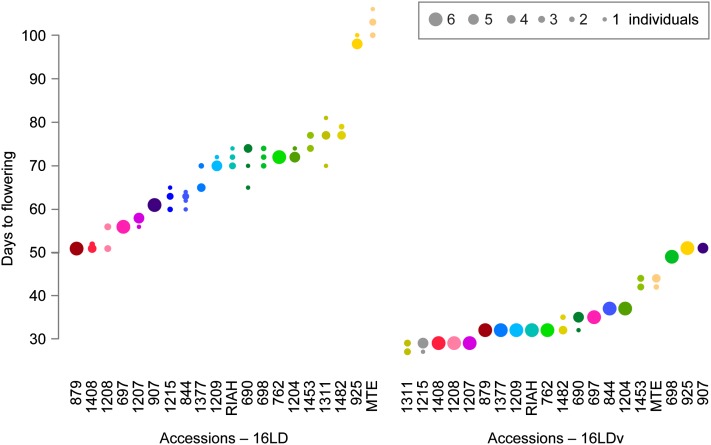
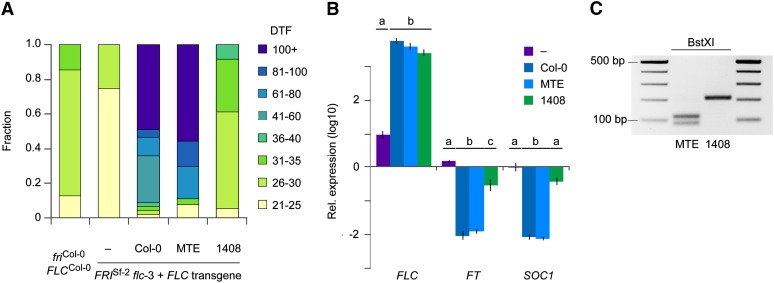
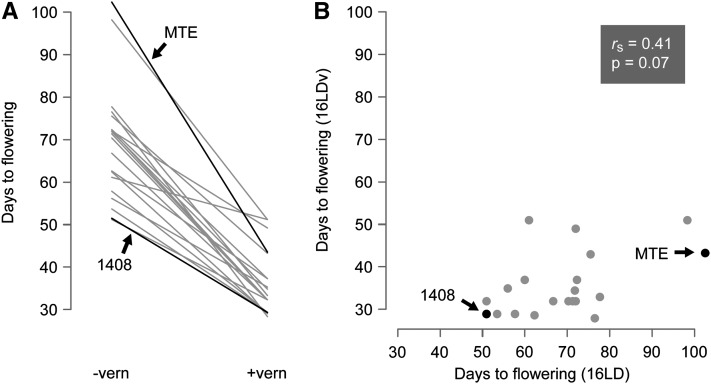
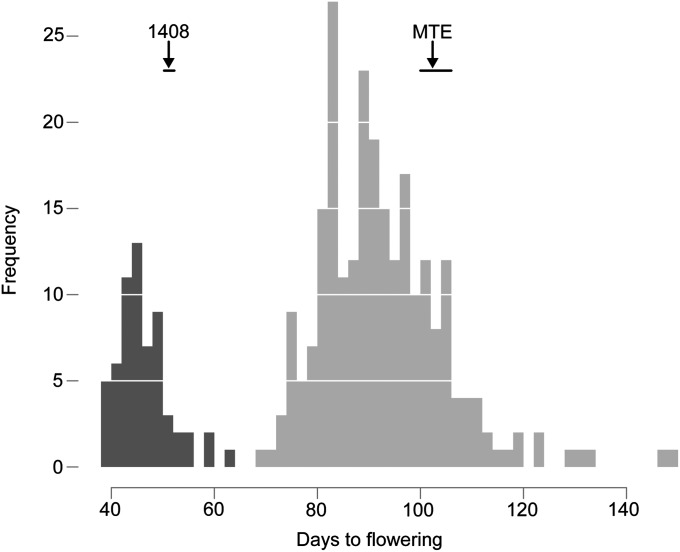
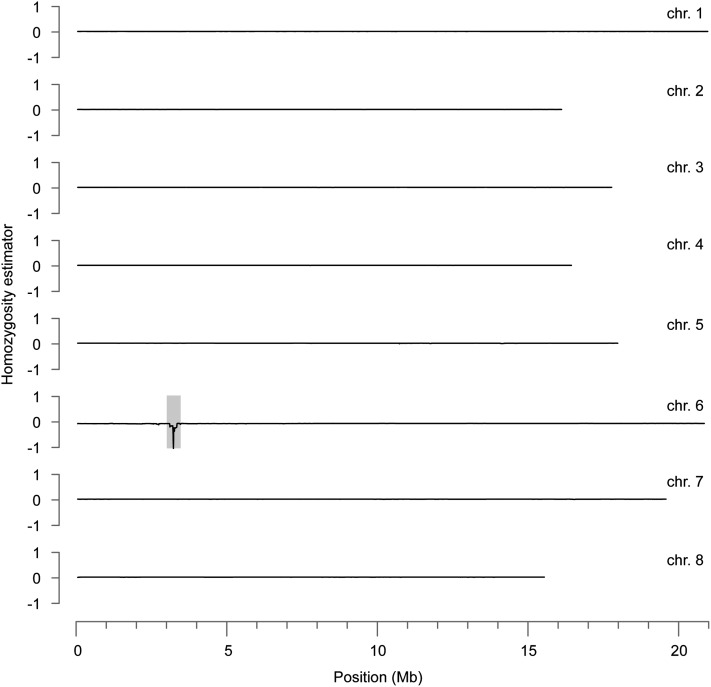
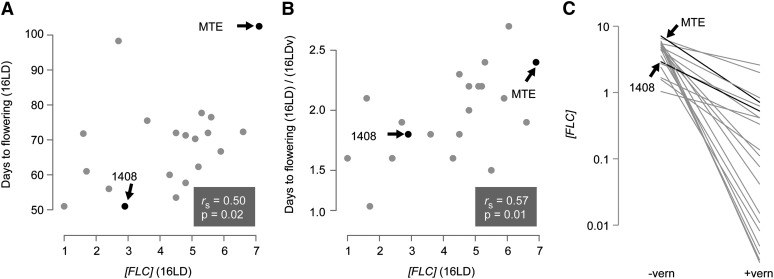
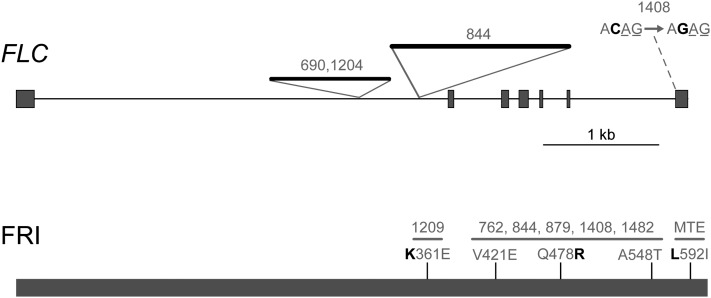
Capsella rubella is an inbreeding annual forb closely related to Arabidopsis thaliana, a model species widely used for studying natural variation in adaptive traits such as flowering time. Although mutations in dozens of genes can affect flowering of A. thaliana in the laboratory, only a handful of such genes vary in natural populations. Chief among these are FRIGIDA (FRI) and FLOWERING LOCUS C (FLC). Common and rare FRI mutations along with rare FLC mutations explain a large fraction of flowering-time variation in A. thaliana. Here we document flowering time under different conditions in 20 C. rubella accessions from across the species' range. Similar to A. thaliana, vernalization, long photoperiods and elevated ambient temperature generally promote flowering. In this collection of C. rubella accessions, we did not find any obvious loss-of-function FRI alleles. Using mapping-by-sequencing with two strains that have contrasting flowering behaviors, we identified a splice-site mutation in FLC as the likely cause of early flowering in accession 1408. However, other similarly early C. rubella accessions did not share this mutation. We conclude that the genetic basis of flowering-time variation in C. rubella is complex, despite this very young species having undergone an extreme genetic bottleneck when it split from C. grandiflora a few tens of thousands of years ago.
荠是一种近亲繁殖的一年生植物,与拟南芥密切相关,拟南芥是一种广泛用于研究开花时间等适应性特征自然变异的模式物种。尽管几十个基因的突变可以影响拟南芥的开花时间,但在自然种群中只有少数这样的基因发生变异。其中最重要的是 FRIGIDA(FRI)和 FLOWERING LOCUS C(FLC)。常见和罕见的 FRI 突变以及罕见的 FLC 突变解释了拟南芥开花时间变异的很大一部分。在这里,我们记录了 20 个荠属植物种在不同条件下的开花时间,这些植物种来自该物种的整个分布范围。与拟南芥相似,春化、长日照和环境温度升高通常会促进开花。在这组荠属植物中,我们没有发现任何明显的 FRI 功能丧失等位基因。通过对两个具有不同开花行为的品系进行测序定位,我们发现 FLC 的一个剪接位点突变可能是 accession 1408 早期开花的原因。然而,其他类似的早期荠属植物并没有共享这个突变。我们的结论是,荠属植物开花时间变异的遗传基础很复杂,尽管这个非常年轻的物种在数万年前从大荠属植物分裂出来时经历了极端的遗传瓶颈。