Division of TB Elimination, Centers for Disease Control and Prevention, 1600 Clifton Road NE Mailstop E-10, Atlanta, GA, USA.
BMC Public Health. 2012 Aug 7;12:621. doi: 10.1186/1471-2458-12-621.
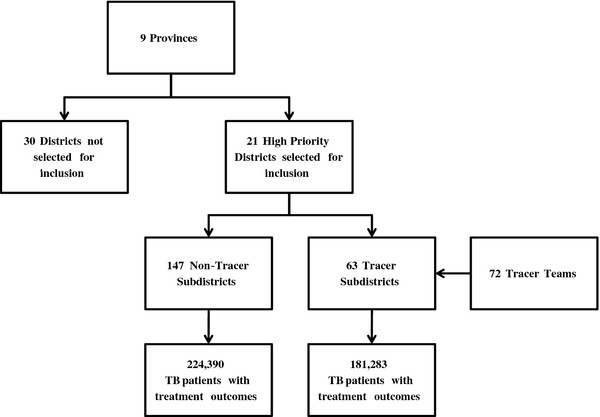
Tuberculosis (TB) indicators in South Africa currently remain well below global targets. In 2008, the National Tuberculosis Program (NTP) implemented a community mobilization program in all nine provinces to trace TB patients that had missed a treatment or clinic visit. Implementation sites were selected by TB program managers and teams liaised with health facilities to identify patients for tracing activities. The objective of this analysis was to assess the impact of the TB Tracer Project on treatment outcomes among TB patients.
The study population included all smear positive TB patients registered in the Electronic TB Registry from Quarter 1 2007-Quarter 1 2009 in South Africa. Subdistricts were used as the unit of analysis, with each designated as either tracer (standard TB program plus tracer project) or non-tracer (standard TB program only). Mixed linear regression models were utilized to calculate the percent quarterly change in treatment outcomes and to compare changes in treatment outcomes from Quarter 1 2007 to Quarter 1 2009 between tracer and non-tracer subdistricts.
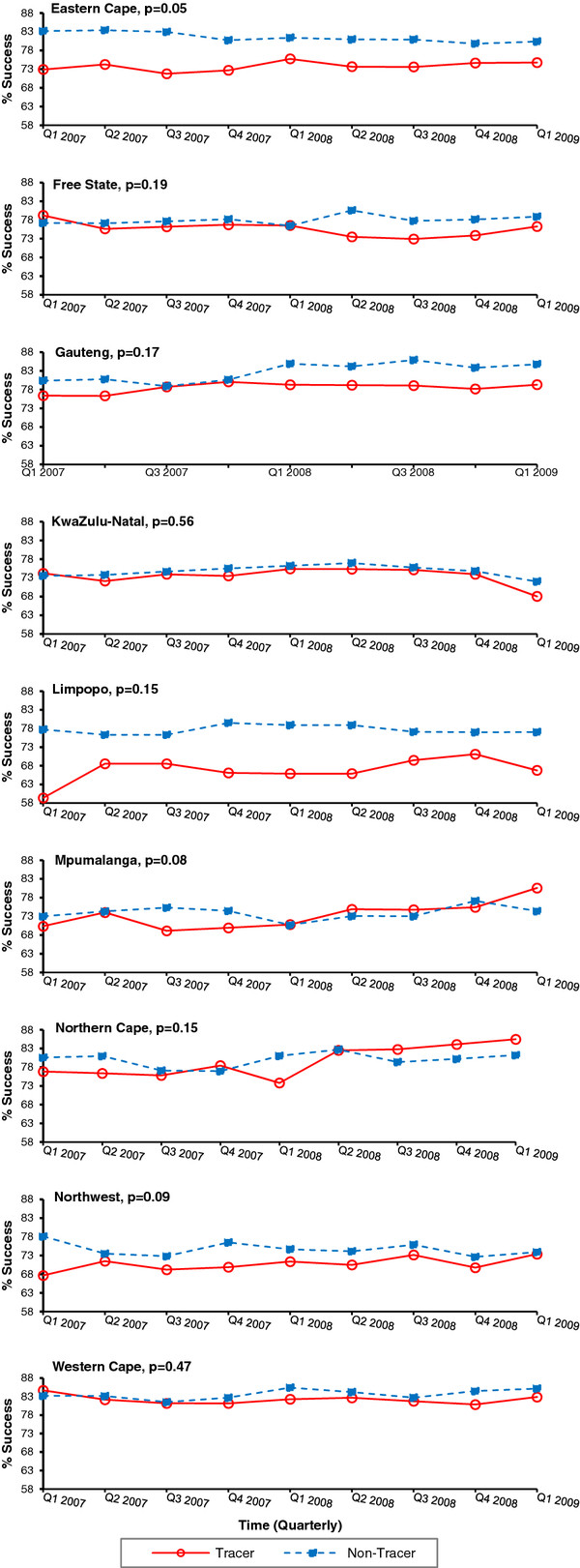
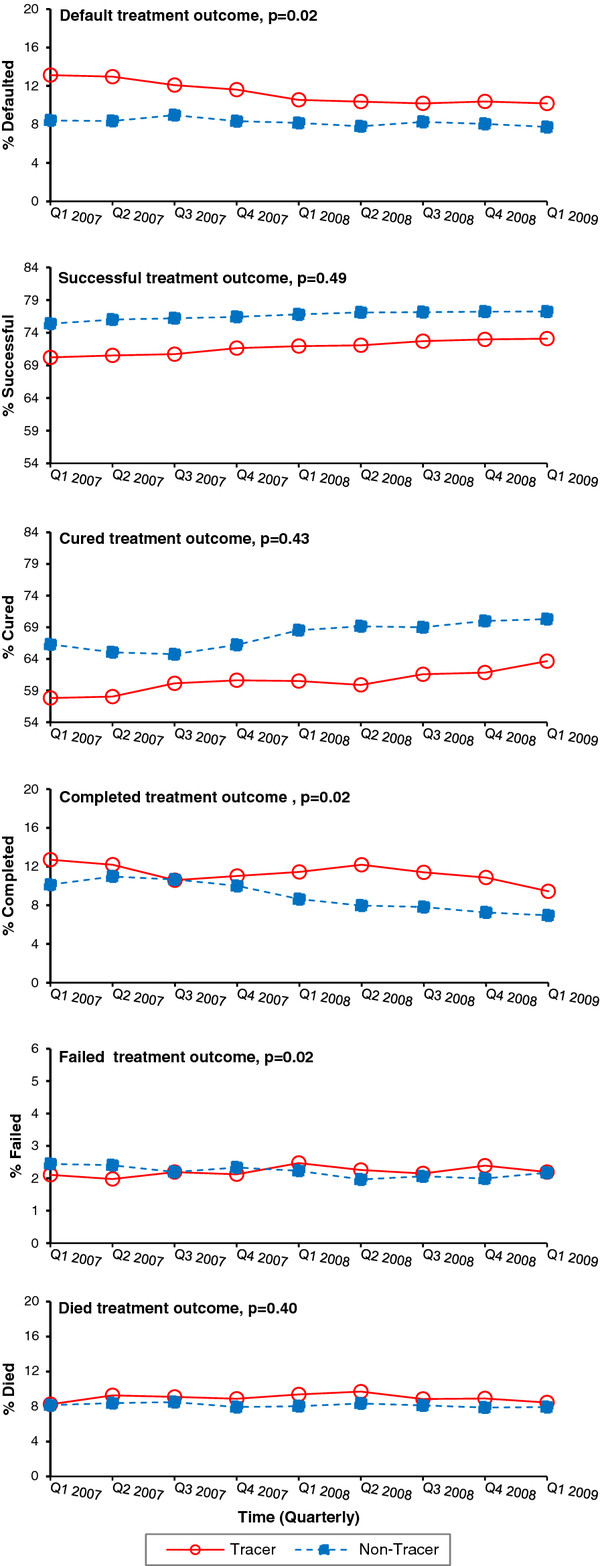
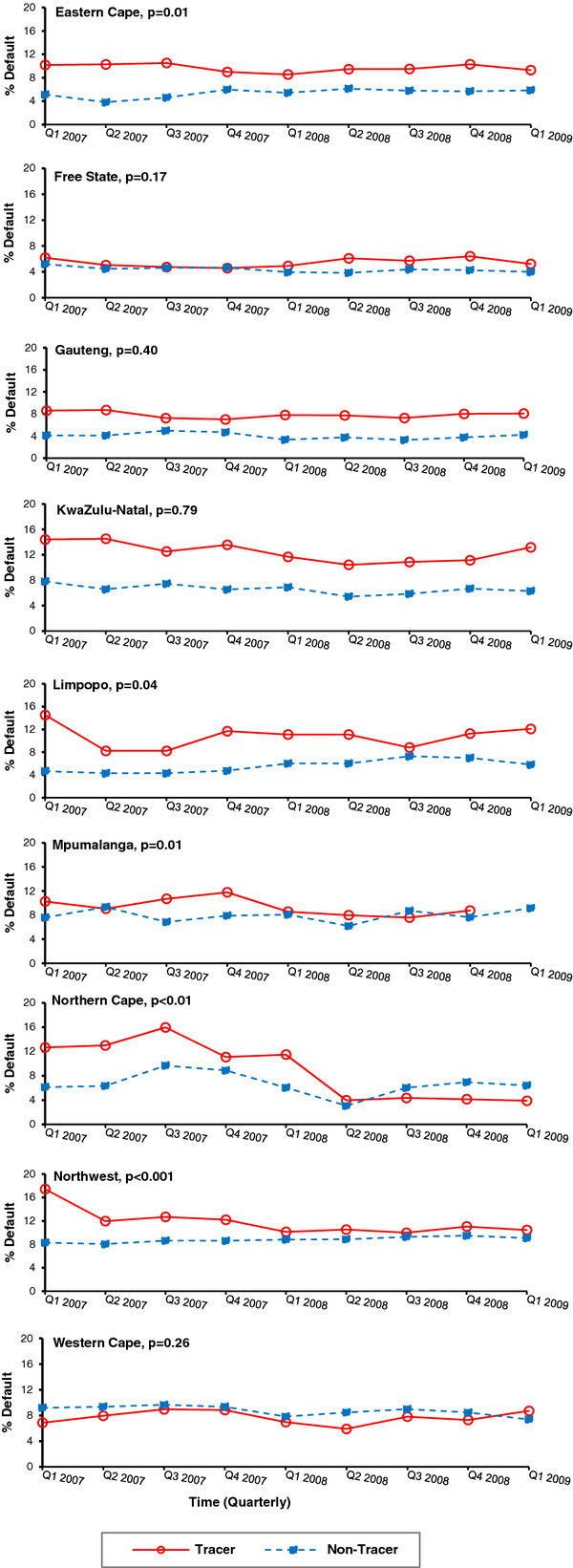
For all provinces combined, the percent quarterly change decreased significantly for default treatment outcomes among tracer subdistricts (-0.031%; p < 0.001) and increased significantly for successful treatment outcomes among tracer subdistricts (0.003%; p = 0.03). A significant decrease in the proportion of patient default was observed for all provinces combined over the time period comparing tracer and non-tracer subdistricts (p = 0.02). Examination in stratified models revealed the results were not consistent across all provinces; significant differences were observed between tracer and non-tracer subdistricts over time in five of nine provinces for treatment default.
Community mobilization of teams to trace TB patients that missed a clinic appointment or treatment dose may be an effective strategy to mitigate default rates and improve treatment outcomes. Additional information is necessary to identify best practices and elucidate discrepancies across provinces; these findings will help guide the NTP in optimizing the adoption of tracing activities for TB control.
南非的结核病(TB)指标目前仍远低于全球目标。2008 年,国家结核病规划(NTP)在所有 9 个省份实施了一项社区动员计划,以追踪错过治疗或就诊的结核病患者。实施地点由结核病规划管理人员选定,团队与卫生机构联系,以确定追踪活动的患者。本分析的目的是评估结核病追踪项目对结核病患者治疗结果的影响。
研究人群包括南非电子结核病登记册从 2007 年第一季度至 2009 年第一季度期间登记的所有涂片阳性结核病患者。使用分区作为分析单位,每个分区指定为追踪区(标准结核病规划加追踪项目)或非追踪区(仅标准结核病规划)。利用混合线性回归模型计算治疗结果每季度的百分比变化,并比较 2007 年第一季度至 2009 年第一季度追踪区和非追踪区之间治疗结果的变化。
所有省份综合来看,追踪区的失约治疗结果的每季度百分比变化显著降低(-0.031%;p<0.001),而追踪区的成功治疗结果显著增加(0.003%;p=0.03)。在整个时间段内,所有省份的追踪区和非追踪区比较,观察到患者失约比例显著下降(p=0.02)。分层模型的检查结果显示,并非所有省份都一致;在 9 个省份中的 5 个省份中,随着时间的推移,在追踪区和非追踪区之间观察到治疗失约方面的显著差异。
动员团队对错过诊所预约或治疗剂量的结核病患者进行追踪可能是减轻失约率和改善治疗结果的有效策略。需要更多信息来确定最佳实践并阐明各省之间的差异;这些发现将有助于指导 NTP 优化对结核病控制的追踪活动的采用。