Department of Plant Biology, University of Minnesota, St Paul, Minnesota, United States of America.
PLoS Genet. 2012;8(8):e1002868. doi: 10.1371/journal.pgen.1002868. Epub 2012 Aug 2.
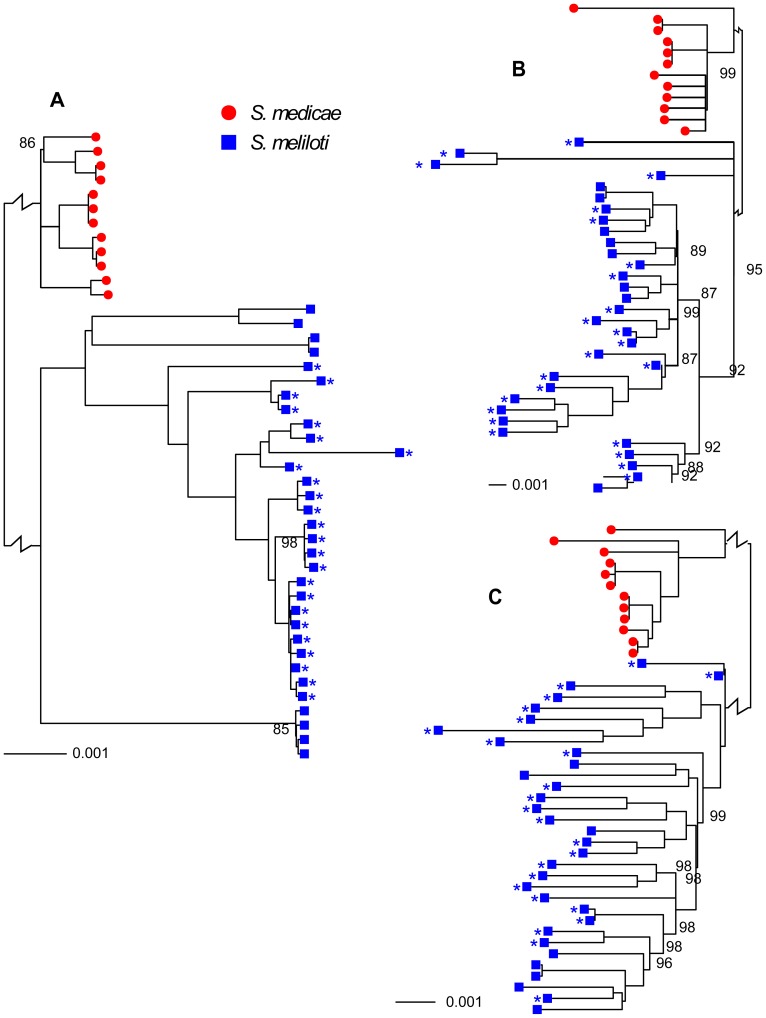
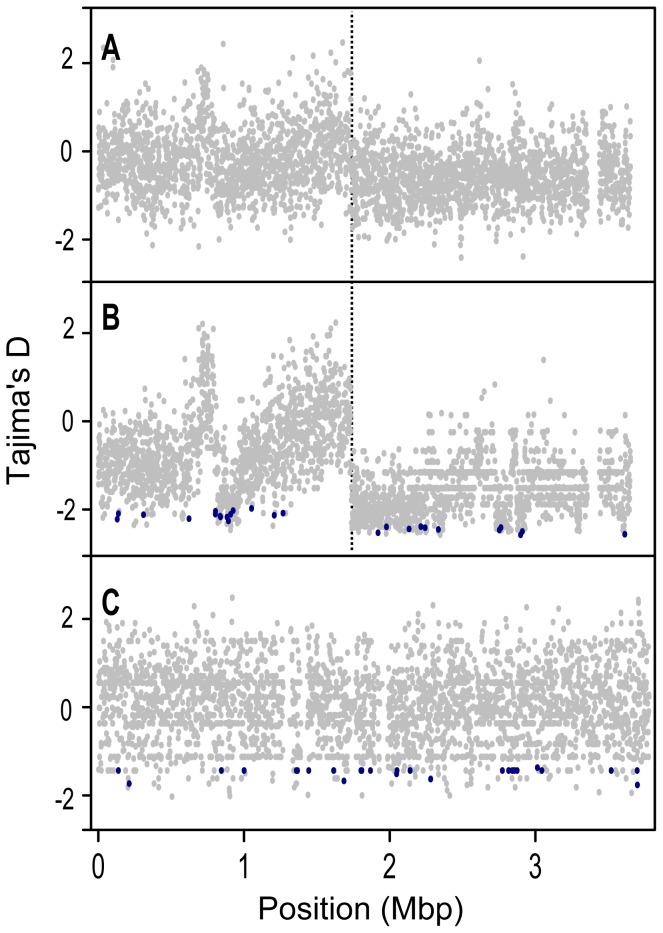
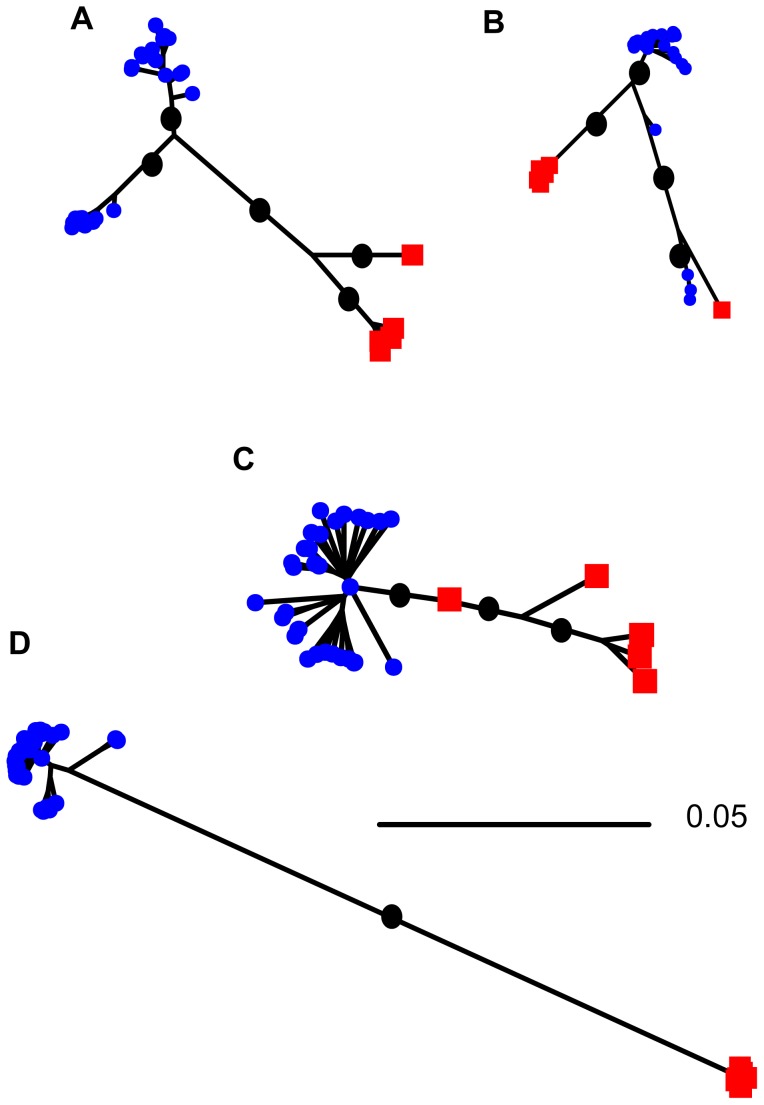
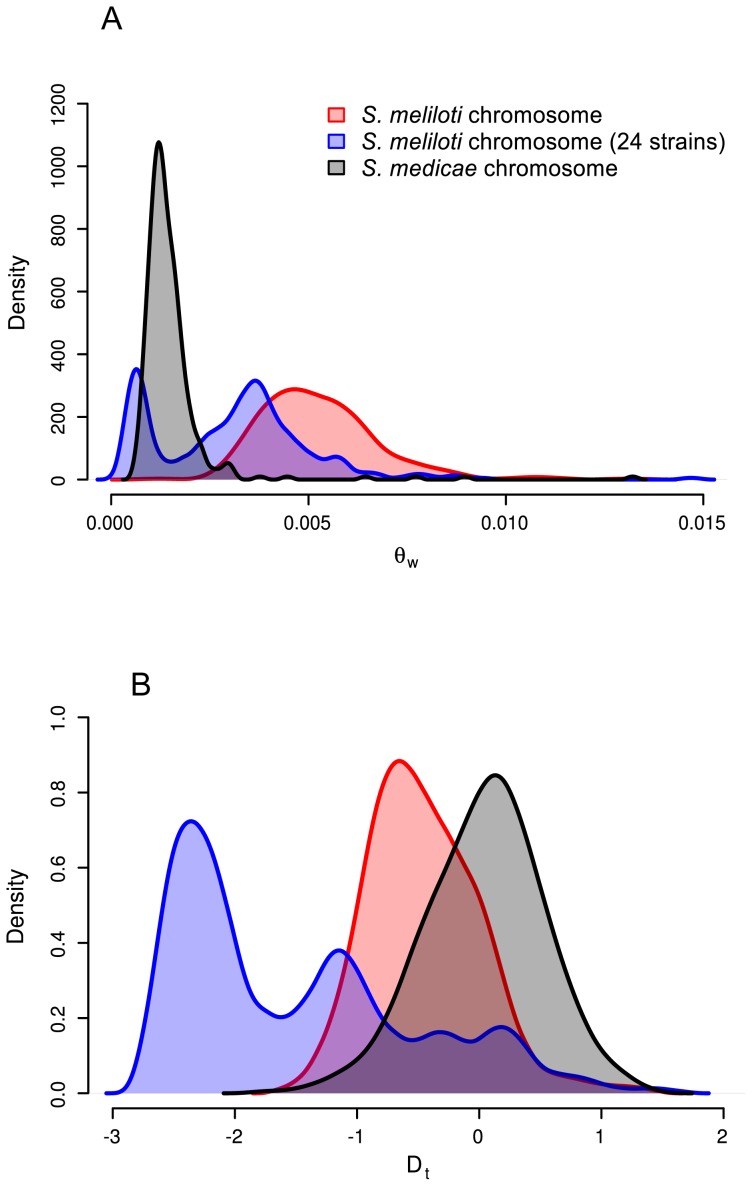
The symbiosis between rhizobial bacteria and legume plants has served as a model for investigating the genetics of nitrogen fixation and the evolution of facultative mutualism. We used deep sequence coverage (>100×) to characterize genomic diversity at the nucleotide level among 12 Sinorhizobium medicae and 32 S. meliloti strains. Although these species are closely related and share host plants, based on the ratio of shared polymorphisms to fixed differences we found that horizontal gene transfer (HGT) between these species was confined almost exclusively to plasmid genes. Three multi-genic regions that show the strongest evidence of HGT harbor genes directly involved in establishing or maintaining the mutualism with host plants. In both species, nucleotide diversity is 1.5-2.5 times greater on the plasmids than chromosomes. Interestingly, nucleotide diversity in S. meliloti but not S. medicae is highly structured along the chromosome - with mean diversity (θ(π)) on one half of the chromosome five times greater than mean diversity on the other half. Based on the ratio of plasmid to chromosome diversity, this appears to be due to severely reduced diversity on the chromosome half with less diversity, which is consistent with extensive hitchhiking along with a selective sweep. Frequency-spectrum based tests identified 82 genes with a signature of adaptive evolution in one species or another but none of the genes were identified in both species. Based upon available functional information, several genes identified as targets of selection are likely to alter the symbiosis with the host plant, making them attractive targets for further functional characterization.
根瘤菌与豆科植物之间的共生关系一直是研究固氮遗传学和兼性互利共生进化的模型。我们利用深度测序覆盖度(>100×)来描述 12 株中华根瘤菌(Sinorhizobium medicae)和 32 株苜蓿中华根瘤菌(S. meliloti)菌株在核苷酸水平上的基因组多样性。尽管这两个物种密切相关且共享宿主植物,但根据共享多态性与固定差异的比例,我们发现这两个物种之间的水平基因转移(HGT)几乎完全局限于质粒基因。三个显示出最强 HGT 证据的多基因区域携带有直接参与与宿主植物建立或维持共生关系的基因。在这两个物种中,质粒上的核苷酸多样性比染色体上高 1.5-2.5 倍。有趣的是,苜蓿中华根瘤菌而非中华根瘤菌的核苷酸多样性沿着染色体高度结构化-染色体一半上的平均多样性(θ(π))是另一半的五倍。根据质粒与染色体多样性的比例,这似乎是由于染色体一半上的多样性严重减少,与选择压力下的广泛 hitchhiking 一致。基于频率谱的测试在一个或另一个物种中鉴定出 82 个具有适应性进化特征的基因,但在两个物种中都没有鉴定出任何基因。根据现有功能信息,鉴定出的几个作为选择目标的基因可能会改变与宿主植物的共生关系,使它们成为进一步功能特征分析的有吸引力的目标。